 简体中文
简体中文 English
 русский
 Español
Fubang is a professional manufacturer specializing in the design, production and sales of stainless steel chains.
Our A series short pitch precision roller chains comply with various international standards and are...
See Details
Content
A snapped chain during harvest season doesn't just mean a repair bill. It means lost hours, delayed schedules, and grain left in the field while weather turns. Agricultural machinery chains are the mechanical backbone of modern farming equipment — yet they're one of the most frequently mismatched components on the market. This guide breaks down exactly what separates the types, what specs actually matter, and how to avoid the costly mistakes that farm managers and procurement engineers make every season.
Agricultural chains aren't just heavy-duty industrial chains in disguise. They're purpose-engineered for a specific combination of stressors that most industrial environments never face: shock loading from unpredictable crop density, continuous exposure to abrasive soil and plant debris, and significant temperature swings from pre-dawn cold to midday heat.
Three structural differences define them. First, thicker side plates handle the lateral shock loads generated by uneven terrain. Second, heat-treated rollers and pins resist the constant abrasive wear from chaff, grit, and field dust. Third, the open-barrel designs common in agricultural chains — unlike sealed industrial rollers — actively shed accumulated material rather than packing it in, which would otherwise generate internal friction and premature elongation.
Standard ANSI or DIN roller chains used in conveyors or machine tools simply aren't built for these failure modes. Using one in a combine or baler is a reliable path to an early breakdown.
Understanding the type differences is the fastest way to eliminate a bad procurement decision. The full range of agricultural chain variants can look overwhelming, but they break down cleanly into four categories by application:
For pure power transmission — drives on PTOs, gearboxes, and primary mechanical systems — a precision driving chain engineered for high-speed, high-tension performance is the correct choice rather than any of the above agricultural types.
Catalogs list dozens of parameters. In practice, three determine whether a chain survives the season or doesn't.
Pitch accuracy. Pitch is the center-to-center distance between pin holes, and it must match the sprocket exactly. Even a 0.5mm cumulative error across a long run creates polygon effect — the rhythmic vibration that accelerates wear on both chain and sprocket teeth. Before ordering a replacement or upgrade, measure the existing chain's pitch rather than assuming the model number is correct; worn chains stretch and the nominal spec no longer reflects the actual installed dimension.
Tensile strength and fatigue rating. Tensile strength (the one-time breaking load) is not the same as fatigue strength (the load a chain can sustain through thousands of load cycles). Many buyers compare tensile figures and miss that fatigue performance — which determines real service life — varies significantly between manufacturers based on heat treatment quality and pin hardness. For high-impact tasks like tillage or baling, request fatigue data, not just tensile ratings.
Material and surface treatment. Carbon steel handles most dry-field applications. For muddy or wet conditions — rice paddies, irrigation-adjacent operations — a nickel-plated or stainless option resists corrosion that would otherwise pit the pin surfaces and cause rapid elongation. Heat treatment on rollers and bushings isn't optional in high-abrasion environments; it's the difference between a chain that lasts one season and one that lasts three. Agricultural machinery chains built to ASABE voluntary consensus standards provide a verified baseline for material and dimensional specifications.
Agricultural chains require lubrication at regular intervals, but the lubricant type and application method matter as much as the frequency. Heavy greases that attract dust and soil grit act as an abrasive paste rather than a protectant — they accelerate pin wear. Use penetrating chain oils that reach the pin-bushing interface without creating a surface that traps debris.
The S-type agricultural chain in particular benefits from consistent tension management. Running too loose causes impact loads on engagement and accelerates side-plate fatigue; too tight creates constant tensile stress that fatigues pins at the joint. Check tension at the midpoint of the free-running span — a deflection of 1–2% of the span length is a reliable target range for most agricultural applications.
The two mistakes that end chains early: mixing old and new links when replacing sections (mismatched wear rates create immediate stress concentration at the joint), and assuming a chain that "looks fine" is fine. Elongation of 1.5–2% is the replacement threshold — measure it with a ruler rather than waiting for visible sag. By the time sag is visible, the sprocket teeth are already wearing asymmetrically.
Wrong orders are common and expensive. Three checks eliminate most of them. First, cross-reference the OEM part number in the machine's manual with the supplier's cross-reference chart — not just the chain type designation. Second, physically measure pitch, roller diameter, and inner link width on the chain being replaced. Third, confirm attachment geometry if the chain carries flights, pushers, or other material-handling features; attachment hole spacing and height must match the driven components.
If OEM documentation is unavailable, a reputable manufacturer's technical team should be able to reverse-match from measurements. What they can't do is guarantee compatibility from a model name alone — the same CA550 designation can have meaningfully different attachment configurations depending on the equipment generation.
Procurement teams sourcing at scale should also verify that supplier certifications cover the materials being supplied, not just general manufacturing capabilities. A supplier who produces compliant chain for one application doesn't automatically produce compliant chain for yours without documentation specific to the product ordered.
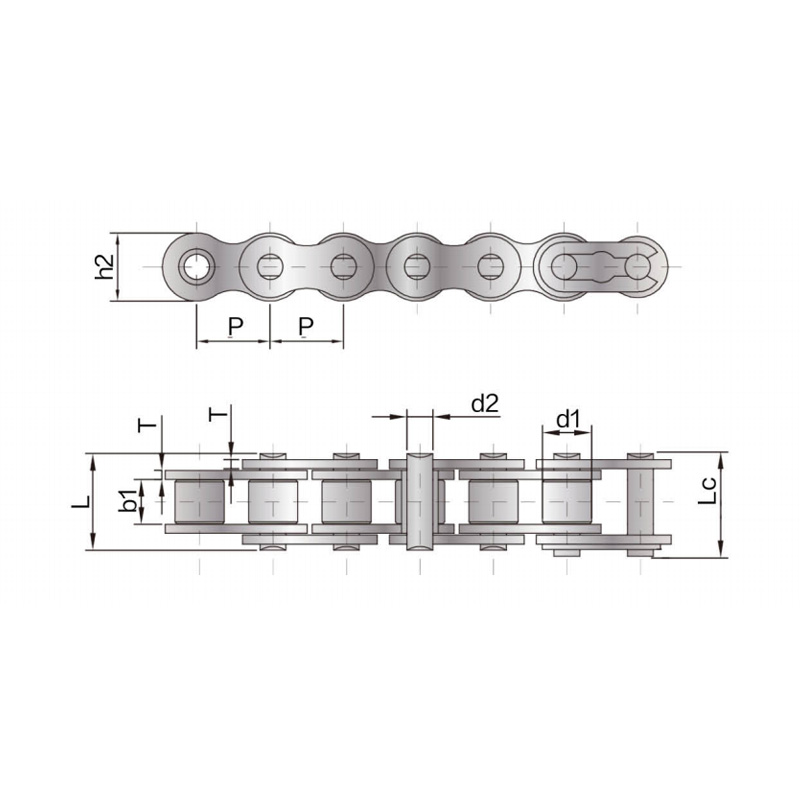
Our A series short pitch precision roller chains comply with various international standards and are...
See Details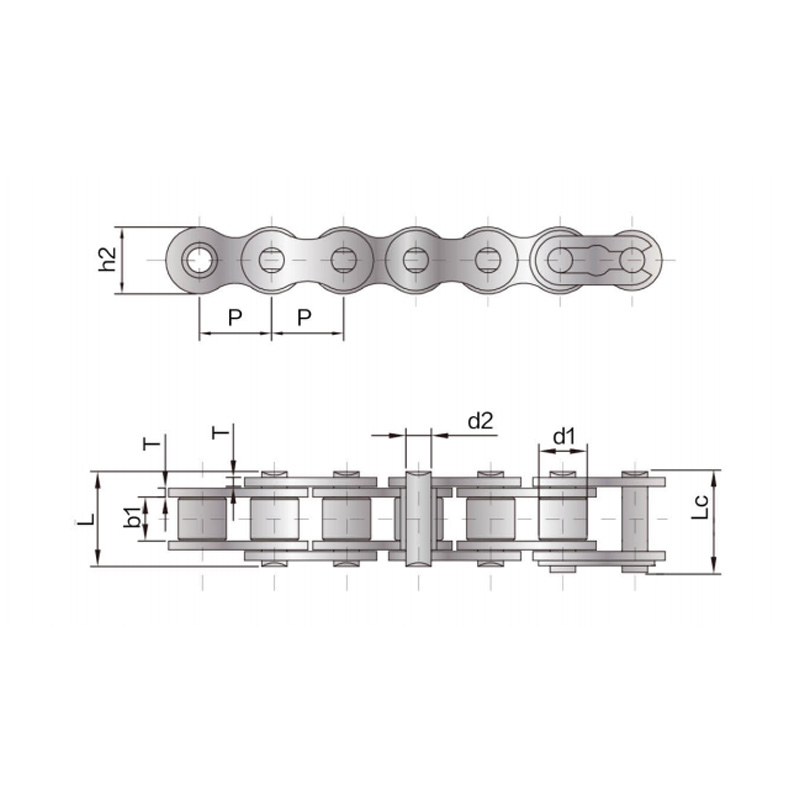
The tensile strength and fatigue strength of the B series short pitch precision roller chain reach 1...
See Details
The Heavy-duty precision roller chain adopts a thickened chain plate design based on the short-pitch...
See Details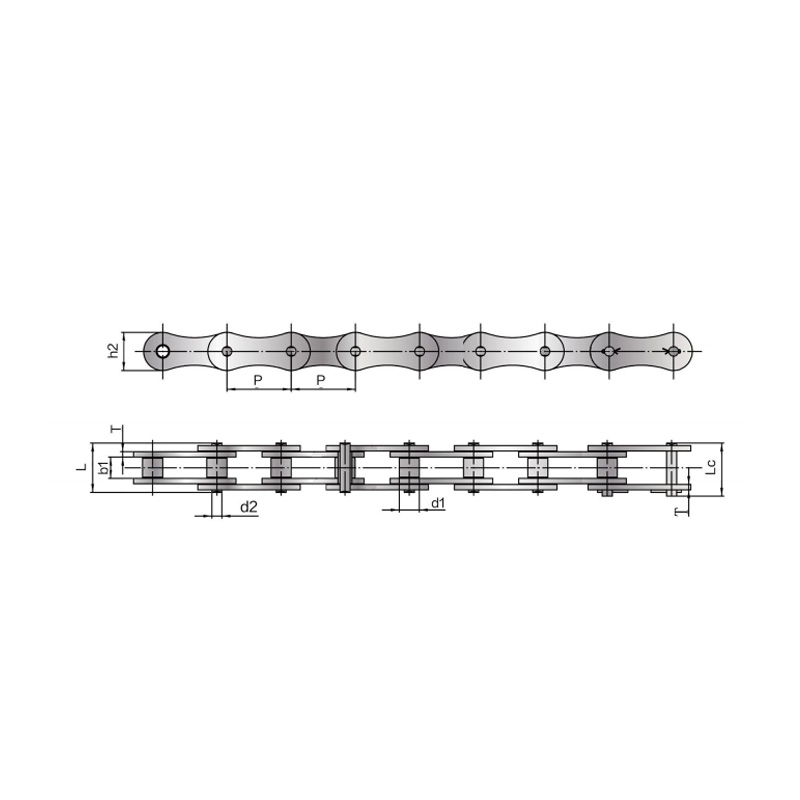
The double pitch driving chain complies with various international standards. The pitch of the doubl...
See Details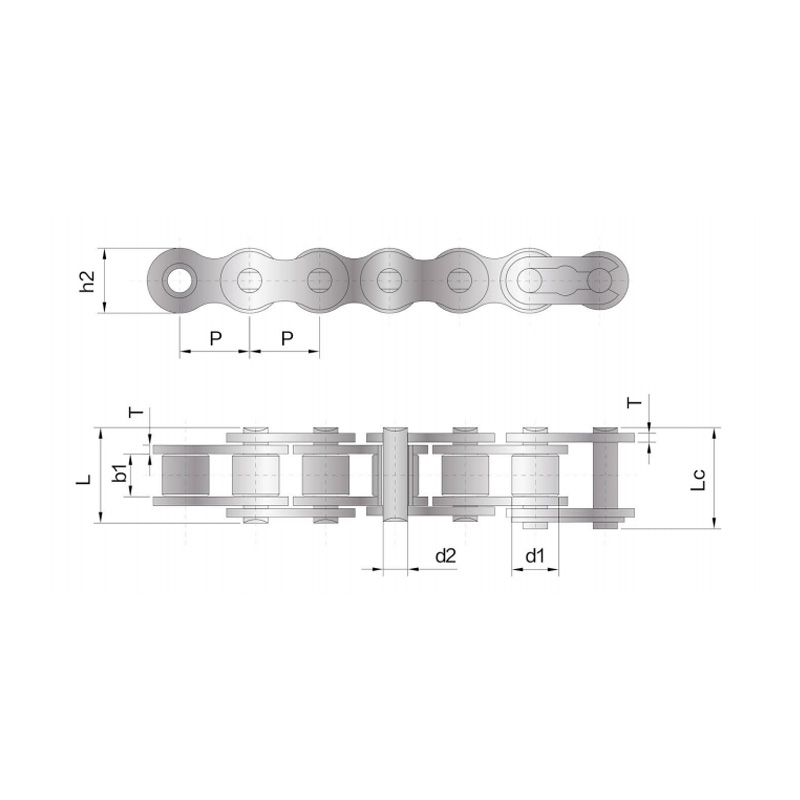
We also produce single row roller drive chains in more sizes and varieties. Customised products, sui...
See Details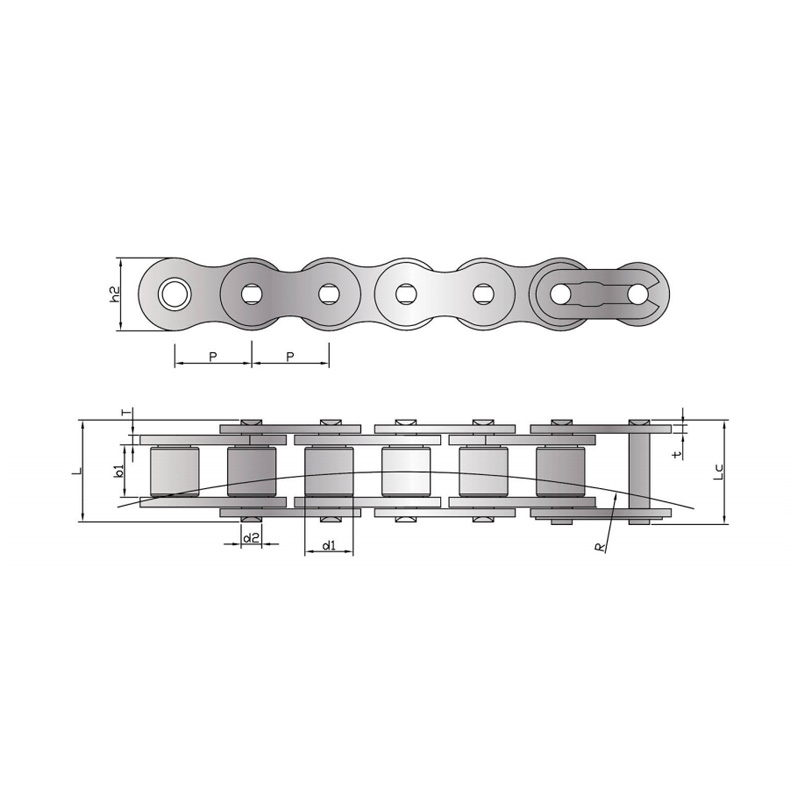
Side bow chain refers to changing the size of parts in the design of short-pitch precision roller ch...
See Details
The Anti-Sidebow chain for pushing window is a functional product with specially designed parts and ...
See Details
The A series short-pitch straight plate precision roller chain has a smaller pitch, a relatively lar...
See Details© Suzhou Fubang Machinery Chain Transmission Manufacturing Co., Ltd. Stainless Steel Roller Chains Manufacturers Conveyor Chains Suppliers
