 简体中文
简体中文 English
 русский
 Español
Fubang is a professional manufacturer specializing in the design, production and sales of stainless steel chains.
Our A series short pitch precision roller chains comply with various international standards and are...
See Details
Content
Stainless steel leaf chains are the definitive solution for applications demanding high tensile strength combined with superior corrosion resistance. Unlike standard carbon steel chains, they do not rely on surface coatings that can chip or wear away. The corrosion resistance is inherent to the material, making these chains ideal for food processing, marine environments, chemical washdowns, and outdoor applications where rust is unacceptable. While they typically offer a slightly lower tensile strength than their carbon steel counterparts of the same size, their ability to maintain structural integrity in wet or corrosive settings without degrading makes them the safest long-term choice for such conditions.
Not all stainless steel is created equal, and the performance of a leaf chain hinges on the specific alloy used. Understanding the differences between common grades is critical for matching the chain to the intended environment. The two most prevalent grades in leaf chain manufacturing are 304 and 316 stainless steel, with some high-strength variants also available.
The workhorse of the stainless steel family, 304 alloy offers excellent resistance to a wide range of atmospheric environments and many corrosive media. It is well-suited for food processing equipment, general outdoor machinery, and applications involving fresh water. However, 304 is susceptible to pitting and crevice corrosion in high-chloride environments, such as those with significant saltwater spray or harsh chemical cleaning agents containing chlorine. Its tensile strength in leaf chain applications is robust for standard industrial needs, providing a good balance between performance and cost.
For ultimate protection, 316 stainless steel is the preferred choice. The addition of molybdenum to the alloy composition significantly enhances its resistance to chlorides, making it essential for marine environments, sub-sea equipment, and pharmaceutical manufacturing where aggressive chemical washdowns are routine. A 316 leaf chain will dramatically outlast a 304 chain in a saltwater spray zone by resisting the pitting corrosion that leads to stress cracking and premature failure. The cost premium for 316 is justified by a substantially extended service life in these harsh conditions.
In applications where high corrosion resistance must be paired with tensile strength approaching that of carbon steel, precipitation-hardening (PH) stainless steels, such as 17-4 PH, are employed. These chains can achieve strength levels significantly higher than standard 304 or 316 grades. They are typically specified in aerospace, high-performance marine hydraulics, and other demanding sectors where a standard 316 chain's load capacity is insufficient, but the environment prohibits the use of carbon steel.
While stainless steel solves the corrosion problem, it behaves differently under load than standard alloy steel. Engineers must account for these differences to avoid unexpected failures. The design of a leaf chain, consisting of pin-linked plates, distributes stress in a specific way, and material choice directly impacts the chain's performance envelope.
A common misconception is that the minimum ultimate tensile strength is the primary design criterion. In reality, a leaf chain must be selected based on its maximum working load, which is typically 1/8th to 1/5th of the minimum breaking strength, depending on the safety factor required and whether loading is dynamic or static. Stainless steel, particularly 304, has a lower yield strength relative to its tensile strength than carbon steel. This means permanent deformation can occur at a lower percentage of the breaking load. Designers must prioritize the fatigue limit and yield strength, not just the ultimate tensile data, to ensure the chain's dimensional stability over time.
The table below provides a general comparison of material properties that directly influence leaf chain capacity. These values can vary based on the specific chain manufacturer's processing, but they highlight the fundamental differences between material choices.
| Material | Corrosion Resistance | Tensile Strength | Fatigue Strength |
|---|---|---|---|
| Carbon Steel (Heat Treated) | Poor (Requires Coating) | Very High | High |
| 304 Stainless Steel | Good | Moderate-High | Moderate |
| 316 Stainless Steel | Excellent | Moderate | Moderate |
| 17-4 PH Stainless | Excellent | Very High | High |
Galling is a critical failure mode specific to stainless steel that carbon steel chains rarely experience. It is a form of adhesive wear where microscopic high points on the pin and plate surfaces momentarily fuse under pressure and relative movement, tearing material from one surface and creating a rough, abrasive interface. This is not just surface damage; it can rapidly lead to seizing and catastrophic chain failure.
To combat galling, the physical design of stainless steel leaf chains often becomes as important as the material itself. Key mitigation strategies include:
The assumption that a stainless steel leaf chain is maintenance-free because it does not rust is a dangerous fallacy that leads to premature wear. Lubrication is mandatory for the internal pivoting joints, but the lubricant must be compatible with the application, especially in food-grade or chemical environments where contamination is a concern. The goal is to provide a durable lubricating film that resists water washout without attracting abrasive contaminants.
For chains in food, beverage, or pharmaceutical processing, only H1-registered lubricants, which are approved for incidental food contact, are permissible. These typically use white oil, polyalphaolefin (PAO) synthetic bases, or silicone fluids. They are chemically inert and non-toxic, but their film strength may be lower than conventional industrial oils. Re-lubrication intervals must be carefully established based on washdown frequency, as even the best H1 lubricant is designed to be safely flushed away, requiring frequent reapplication.
In marine and sub-sea applications, or anywhere a chain is continuously submerged in saltwater, a standard grease is simply an emulsion waiting to happen. Perfluoropolyether (PFPE) based lubricants are chemically inert, do not emulsify with water, and form a high-density barrier that literally displaces moisture from the metal surface. While extremely costly, they provide a service life that is unachievable with hydrocarbon-based lubricants in permanently wet environments, ensuring the stainless chain's corrosion resistance is complemented by a wear protection regime that matches its lifecycle.
A proactive inspection program is the single most effective method to prevent unplanned downtime from a stainless steel leaf chain. Unlike carbon steel, where red rust is an immediate visible alarm, stainless steel degrades in subtler ways. The inspection must be quantitative, measuring physical changes that indicate accumulated wear and tear.
Leaf chains do not stretch in the elastic sense; they elongate due to wear between the pins and the link plates. To measure this, the chain must be under nominal tension. Using a calibrated caliper or a specialized chain wear scale, measure a segment spanning a specific number of pitches—typically over 10 to 20 links—as specified by the manufacturer. A chain should be replaced when elongation exceeds 2% to 3% of its original pitch length. A 0.5% difference in elongation between multiple strands in a single application is a serious warning sign of uneven loading and requires immediate load distribution analysis.
Visual inspection with a magnifying glass or a low-power microscope is necessary. Look beyond the plate edges onto the flat surfaces for tiny pits, which are the starting points for stress corrosion cracking (SCC). Any chain with visible pitting, especially near the pitch holes, should be condemned. A dye penetrant inspection kit is a low-cost, highly effective method for detecting microscopic cracks that are invisible to the naked eye and is a standard practice for chains in safety-critical lifting applications.
Leaf chain life is not a fixed number of cycles; it is a function of the stress level, environment, and maintenance. A systematic approach to defining the duty cycle helps in creating a predictable replacement schedule and budget. An effective classification system might segment applications into four service classes, which directly inform the choice between 304 and 316 alloys and the required lubrication protocol.
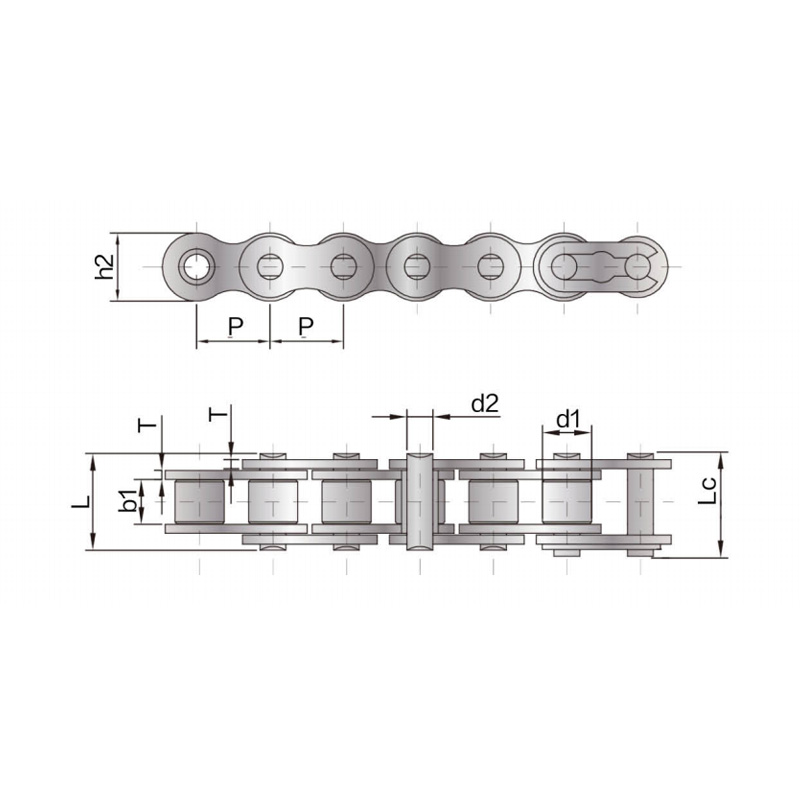
Our A series short pitch precision roller chains comply with various international standards and are...
See Details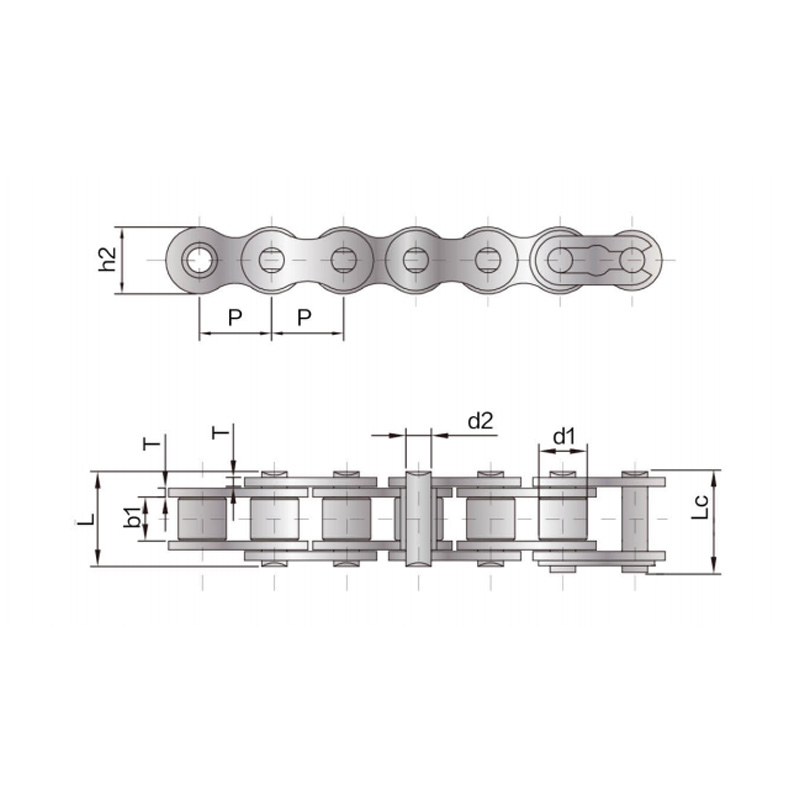
The tensile strength and fatigue strength of the B series short pitch precision roller chain reach 1...
See Details
The Heavy-duty precision roller chain adopts a thickened chain plate design based on the short-pitch...
See Details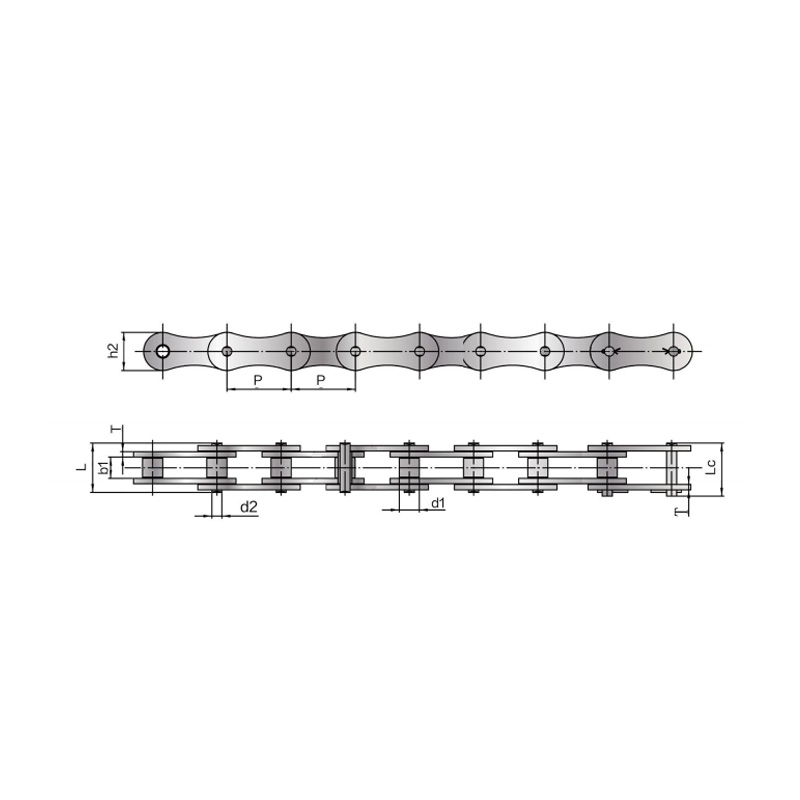
The double pitch driving chain complies with various international standards. The pitch of the doubl...
See Details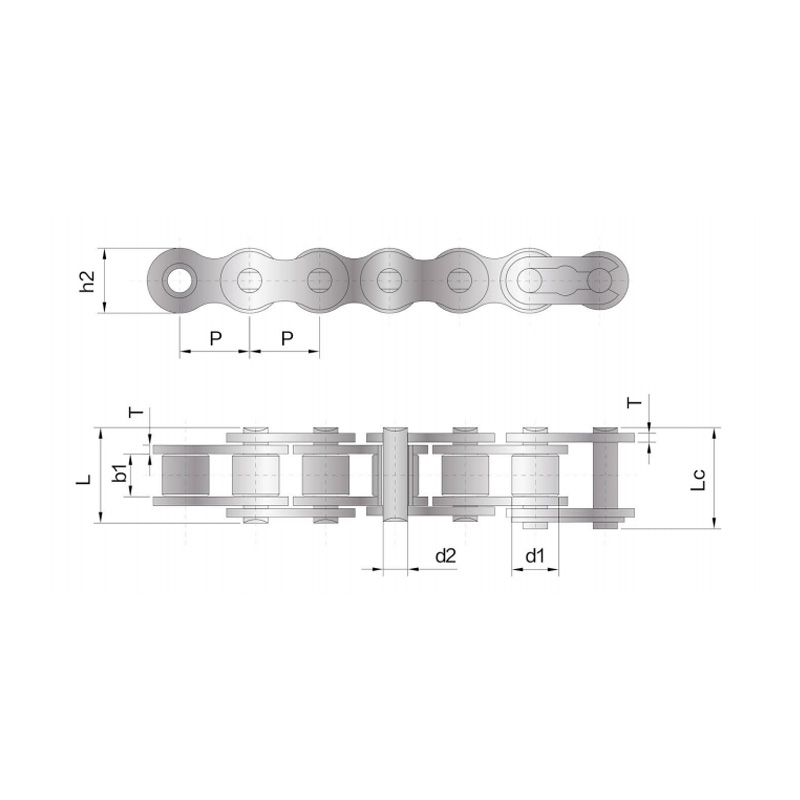
We also produce single row roller drive chains in more sizes and varieties. Customised products, sui...
See Details
Side bow chain refers to changing the size of parts in the design of short-pitch precision roller ch...
See Details
The Anti-Sidebow chain for pushing window is a functional product with specially designed parts and ...
See Details
The A series short-pitch straight plate precision roller chain has a smaller pitch, a relatively lar...
See Details© Suzhou Fubang Machinery Chain Transmission Manufacturing Co., Ltd. Stainless Steel Roller Chains Manufacturers Conveyor Chains Suppliers
