 简体中文
 English
 русский
 Español

Fubang is a professional manufacturer specializing in the design, production and sales of stainless steel chains.
Our A series short pitch precision roller chains comply with various international standards and are...
See Details
Content
ANSI roller chain dimensions are the set of physical values, namely pitch, roller diameter, inner width, pin diameter, plate height, overall width and transverse pitch, that decide whether a chain seats correctly on a sprocket and survives the load you calculated for it.
A #40 chain and an ISO 08B chain both measure 12.70 mm pitch. Their rollers measure 7.92 mm and 8.51 mm. Fit the 08B on a #40 sprocket and the roller rides high in the tooth root, contact shifts from a broad seating arc to two narrow points, and the sprocket takes a visible step long before the chain reaches its rated life. That single example explains why a dimension chart matters more than a part number on a purchase order.
Each dimension answers a separate engineering question: pitch fixes sprocket geometry, roller diameter fixes seating and articulation, inner width fixes lateral clearance, pin diameter fixes bearing pressure, and plate height fixes the tensile area available in the link plates.
Practical shortcut: pitch plus roller diameter will identify an ANSI chain with confidence. The remaining values confirm the match and reveal whether a lightweight or heavy variant has been substituted for the standard part.
The ANSI number is built from two parts: the leading digits multiplied by 1/8 in give the pitch, and the final digit gives the chain type.
A worked example is #60. Six eighths is 0.750 in, or 19.05 mm pitch, matched to an 11.91 mm roller. Add the H suffix and you have #60H: same pitch, same roller, thicker plates, roughly 20 to 25 percent more tensile strength. That gap matters at replacement time. If a drive was sized around an H-series chain and someone fits the standard version, the chain becomes the weakest component in the system.
The final digit is the other common trap. A zero marks a standard roller chain, a one marks a lightweight version with thinner plates, and a five marks a bushing chain without rollers for slow or abrasive duties. A #41, for instance, runs on #40 sprockets but carries noticeably less load, so it is a service part rather than a like-for-like swap.
For the application side of the same data, the site's ANSI chain dimension and selection guide walks through drive and conveyor examples using these same values.
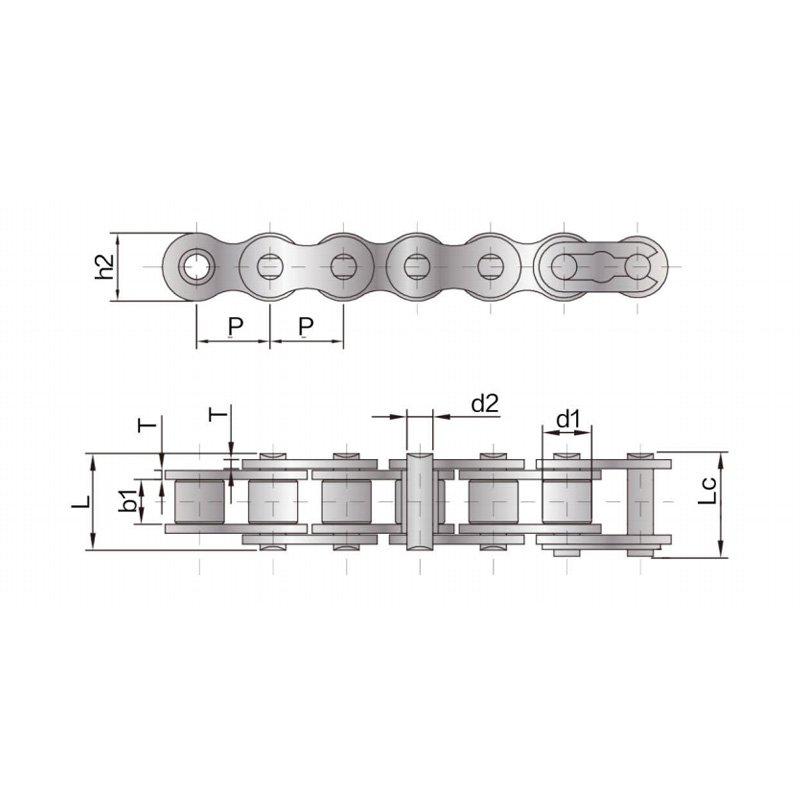 A-Series Short-Pitch Precision Roller ChainSingle-strand ANSI A-series chain from #25 to #240, with metric and inch dimensions and tensile data for drive and conveyor selection.View Product →
The table lists single-strand ANSI roller chain dimensions from #25 to #240, with metric values first and inch equivalents in brackets.
| Chain | Pitch mm (in) | Roller dia mm (in) | Inner width mm (in) | Pin dia mm (in) | Tensile kN (lbf) |
| #25 | 6.35 (0.250) | 3.30 (0.130) | 3.18 (0.125) | 2.31 (0.091) | 3.5 (780) |
| #35 | 9.53 (0.375) | 5.08 (0.200) | 4.78 (0.188) | 3.58 (0.141) | 7.9 (1,760) |
| #40 | 12.70 (0.500) | 7.92 (0.312) | 7.95 (0.312) | 3.97 (0.156) | 17.6 (3,970) |
| #50 | 15.88 (0.625) | 10.16 (0.400) | 9.53 (0.375) | 5.08 (0.200) | 27.0 (6,100) |
| #60 | 19.05 (0.750) | 11.91 (0.469) | 12.70 (0.500) | 5.94 (0.234) | 37.8 (8,500) |
| #80 | 25.40 (1.000) | 15.88 (0.625) | 15.88 (0.625) | 7.92 (0.312) | 64.5 (14,500) |
| #100 | 31.75 (1.250) | 19.05 (0.750) | 19.05 (0.750) | 9.53 (0.375) | 107 (24,000) |
| #120 | 38.10 (1.500) | 22.23 (0.875) | 25.40 (1.000) | 11.11 (0.437) | 151 (34,000) |
| #160 | 50.80 (2.000) | 28.58 (1.125) | 31.75 (1.250) | 14.29 (0.562) | 258 (58,000) |
| #200 | 63.50 (2.500) | 39.68 (1.562) | 38.10 (1.500) | 19.85 (0.781) | 378 (85,000) |
| #240 | 76.20 (3.000) | 47.63 (1.875) | 47.63 (1.875) | 23.81 (0.937) | 534 (120,000) |
Strength climbs faster than pitch. Moving from #40 to #80 multiplies minimum ultimate strength by roughly 3.7, which is why a modest step up in chain size so often solves an overload that lubrication and tensioning cannot.
Dimensional tolerances are real. ANSI B29.1 fixes pitch and roller diameter within a tolerance band, but plate profile and overall width can differ by a few tenths of a millimetre between manufacturers. If the chain runs in a guide rail with under 1 mm of side clearance, check the supplier's drawing rather than the catalogue headline.
Multi-strand ANSI chain keeps the single-strand pitch and roller diameter and adds one transverse pitch for every extra strand, while ISO B-series chain shares some imperial pitches but not the roller or width dimensions.
Apart from pitch, nothing on these two chains is interchangeable. Mixed plants running American and European equipment are where this goes wrong most often, and the failure is quiet: the chain runs, wears fast, and takes the sprockets with it.
Transverse pitch for common multi-strand sizes:
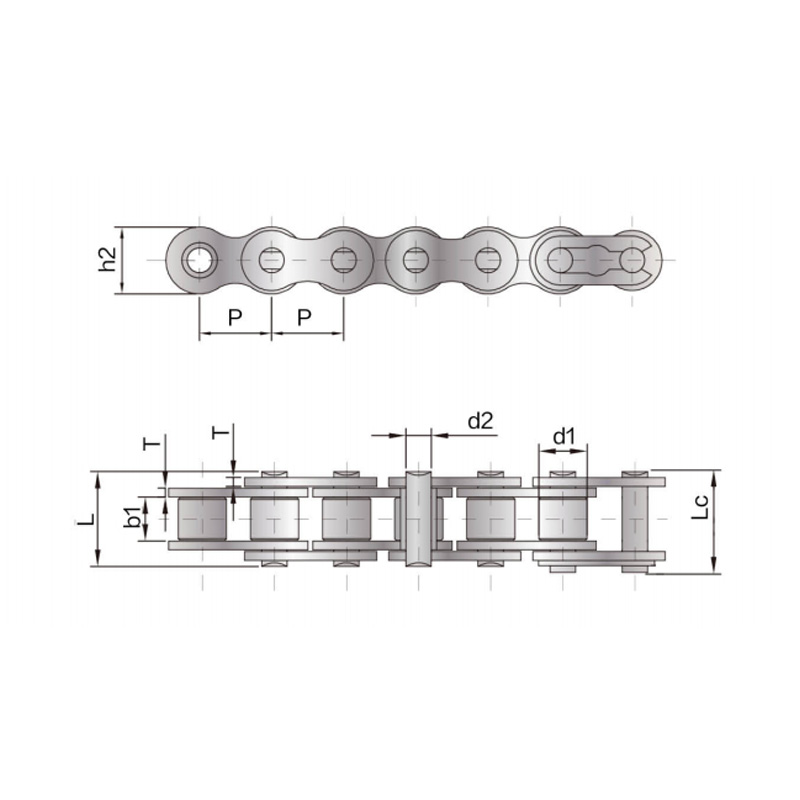 B-Series Short-Pitch Precision Roller ChainSingle-strand B-series chain from SS04B-1 to SS48B-1, with pitch, roller, pin and tensile data for precision drive and conveyor applications.View Product →
The dimensions that guide selection also work as a wear gauge: measure pitch across ten links, compare roller diameter with the chart, and you have a replacement trigger that beats any visual inspection.
 Industrial Sprockets for Chain TransmissionSprockets in flat, hub and assembly types, with stainless steel and custom options, matched to chain pitch and roller diameter for reliable transmission.View Product →
A worn sprocket will ruin a new chain within weeks, so chain and sprocket are best ordered together once pitch and roller diameter are confirmed.
Measure across eleven pin centres and divide by ten for the pitch, then measure roller diameter with a caliper. A 12.70 mm pitch with a 7.92 mm roller is #40, while the same pitch with an 8.51 mm roller is an ISO 08B chain.
Only at the pitch level, and even that is not universal across every size. Roller diameter, inner width and pin diameter differ, so a chain from one standard will not seat properly on sprockets cut to the other.
Heavy series. Pitch and roller diameter stay the same, the link plates are thicker, and minimum tensile strength is typically 20 to 25 percent higher than the standard part carrying the same number.
About 1.5 percent for most drive applications, measured over ten or more pitches. Past 2 percent, sprocket wear accelerates quickly and the chain's fatigue life is largely spent.
#240, with a 76.20 mm (3 in) pitch, a 47.63 mm roller and a minimum ultimate tensile strength near 534 kN.
Keep the sequence simple: identify by pitch and roller diameter, confirm with inner width, then size the sprocket from the same standard as the chain.
Matching a chain to an existing drive starts with three measurements: pitch, roller diameter and inner width. Send those numbers along with the application, duty cycle and environment, and the correct size, strand count and material can be confirmed before anything is ordered. Stainless versions follow the same ANSI dimensional envelope, yet their tensile ratings sit well below carbon steel, so the figure on the chart is a starting point rather than a final answer.
Contact the team with your measurements for a dimensional check.
Our A series short pitch precision roller chains comply with various international standards and are...
See Details
The tensile strength and fatigue strength of the B series short pitch precision roller chain reach 1...
See Details
The Heavy-duty precision roller chain adopts a thickened chain plate design based on the short-pitch...
See Details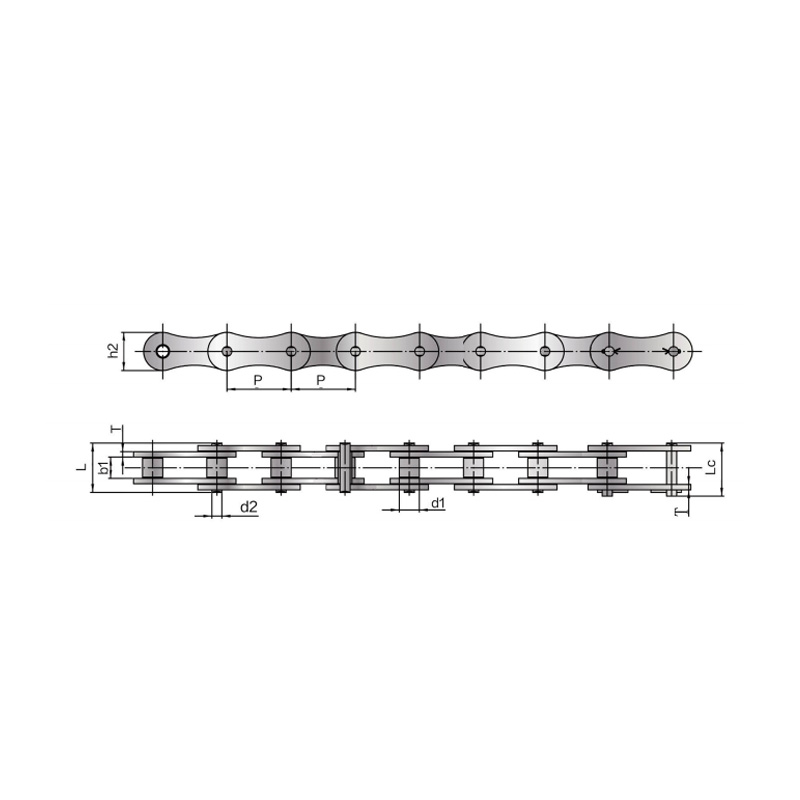
The double pitch driving chain complies with various international standards. The pitch of the doubl...
See Details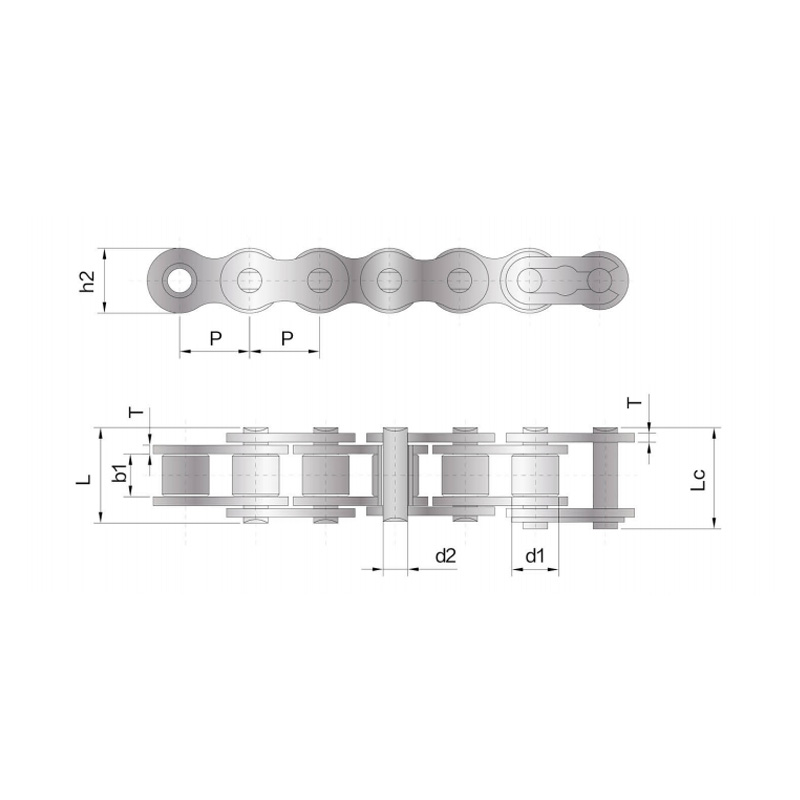
We also produce single row roller drive chains in more sizes and varieties. Customised products, sui...
See Details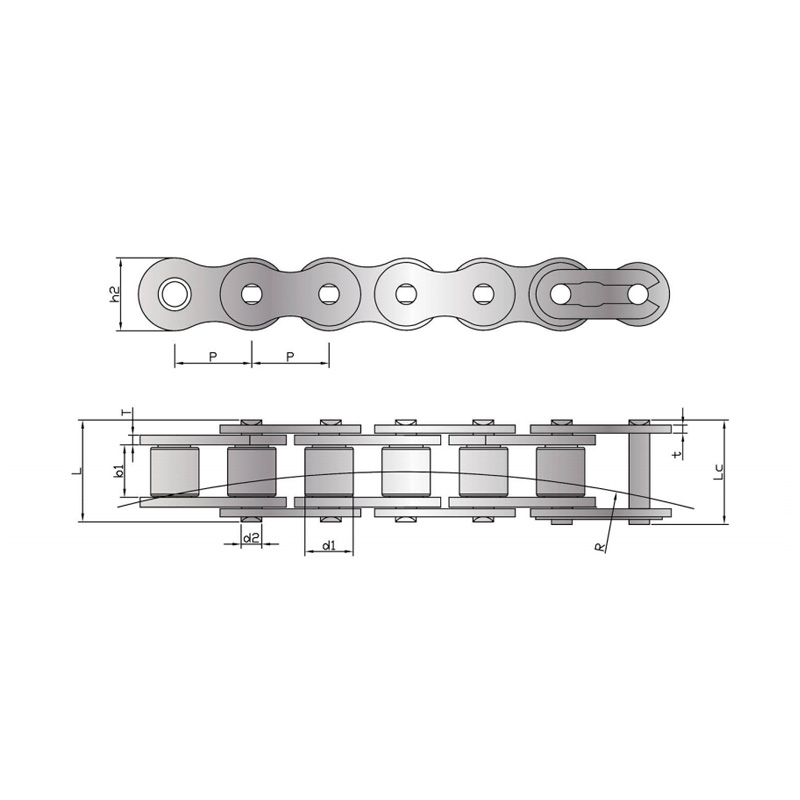
Side bow chain refers to changing the size of parts in the design of short-pitch precision roller ch...
See Details
The Anti-Sidebow chain for pushing window is a functional product with specially designed parts and ...
See Details
The A series short-pitch straight plate precision roller chain has a smaller pitch, a relatively lar...
See Details© Suzhou Fubang Machinery Chain Transmission Manufacturing Co., Ltd. Stainless Steel Roller Chains Manufacturers Conveyor Chains Suppliers
