 简体中文
 English
 русский
 Español

Fubang is a professional manufacturer specializing in the design, production and sales of stainless steel chains.
Our A series short pitch precision roller chains comply with various international standards and are...
See Details
Content
Chain No. 40 is not the fortieth size in a series. The first digit is read as eighths of an inch, so number 40 carries a 1/2 inch pitch, number 60 a 3/4 inch pitch, and number 100 a 1-1/4 inch pitch. Buyers who assume the numbers run in sequence order a chain that will not seat on the sprocket already bolted to the gearbox, and on a line that has to restart the same shift, that mistake is expensive. The rest of the ANSI roller chain code is just as literal, and decoding it takes about a minute.
An ANSI roller chain number encodes pitch in eighths of an inch in its leading digits and the roller and width variant in the final digit.
ANSI roller chain: a roller chain built to ASME B29.1, dimensioned in inches, where pitch is the centre-to-centre distance between adjacent pins and the roller diameter is controlled so the chain articulates correctly on a standard sprocket tooth form.
Two rules cover almost every size you will meet in a plant or a parts catalogue:
This is why No. 25 and No. 35 sit beside 40 and 50 rather than inside the sequence. They are independent pitches with their own sprocket families, not steps in a progression. It is also why a 40 from one supplier should dimensionally match a 40 from another: the standard fixes pitch, roller diameter and inner width, not just the label.
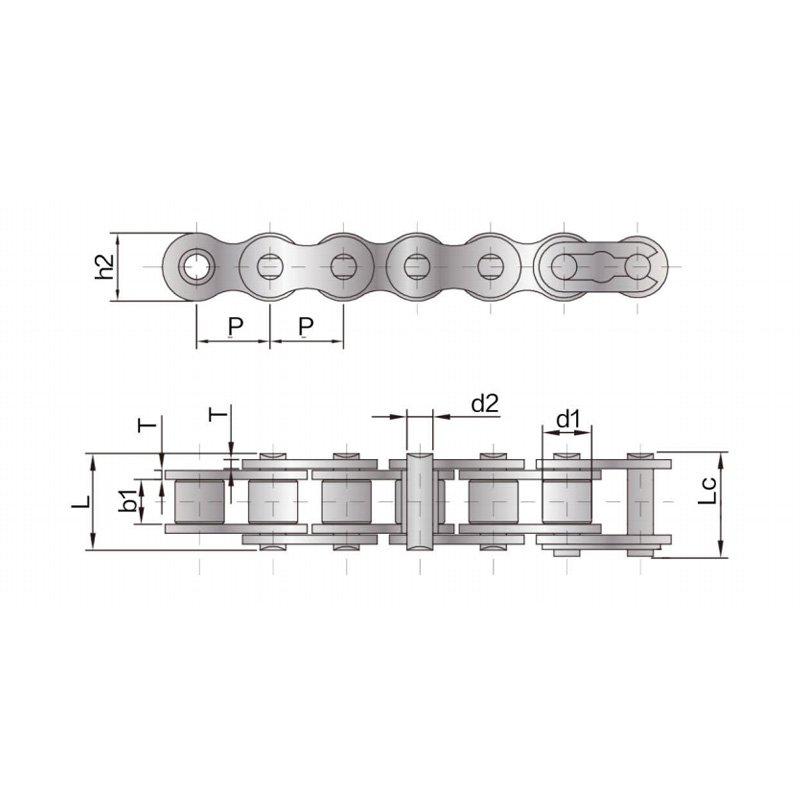 Short Pitch Precision Roller Chains, A SeriesStandardized A-series roller chains with listed pitch, roller diameter and inner width, helping match an existing drive before replacement.View Product →
Three dimensions decide whether a chain will run on an existing drive: pitch, roller diameter and inner width.
Pitch gets the chain onto the sprocket. Roller diameter decides whether it rolls cleanly through the tooth root or scrapes against it, and inner width decides whether the teeth fit between the plates. A chain can match on pitch and still fail on the other two, which is exactly how a cheap substitute turns into a wear problem six weeks later.
| Chain No. | Pitch (in) | Roller dia. (in) | Inner width (in) | Typical tensile (lbf) |
| 25 | 0.250 | 0.130 | 0.125 | 780 |
| 35 | 0.375 | 0.200 | 0.188 | 2,100 |
| 40 | 0.500 | 0.312 | 0.312 | 3,700 |
| 50 | 0.625 | 0.400 | 0.375 | 6,100 |
| 60 | 0.750 | 0.469 | 0.500 | 8,500 |
| 80 | 1.000 | 0.625 | 0.625 | 14,500 |
| 100 | 1.250 | 0.750 | 0.750 | 24,000 |
| 120 | 1.500 | 0.875 | 1.000 | 34,000 |
Worn chain does not stretch evenly. Elongation appears first at the most heavily loaded pitches, so a single caliper reading across a short span can under-report wear by half.
Measure across ten or twenty pitches under light tension and divide by the number of pitches, then compare with the nominal figure. The same three measurements identify an unmarked chain: pitch over a span, roller diameter with a micrometer, inner width with a caliper. The method works as reliably at the small end of the range as at the large end, and our No. 25 specification breakdown walks through it for the smallest common size.
The published tensile strength of an ANSI roller chain is the load at which a new sample breaks in a single pull test, and it is not the load the chain should carry in service.
Most drives are sized with a service factor of roughly six to one against tensile for smooth, continuous duty, and higher where the drive sees shock, reversing or frequent starts. A No. 40 chain rated near 3,700 lbf therefore lands around 600 lbf of working load before any correction for the application.
Typical tensile by size, carbon steel single strand
The failure mode that actually retires a chain is usually fatigue cracking of the plates around the pin holes, or plain pin and bushing wear, not a clean tensile break. That is why shot peening the plates and pre-stretching the assembled chain matter in a way a higher catalogue number does not capture. A pre-stretched chain holds its adjustment for a season; an untreated one needs re-tensioning inside a month.
An ANSI chain and a BS or ISO chain of the same pitch are not interchangeable, because roller diameter and inner width differ even when the pitch matches.
The classic collision is ANSI 40 against ISO 08B. Both are 12.70 mm pitch. The ANSI 40 roller is 7.92 mm against 8.51 mm on the 08B, and the inner widths differ as well, 7.85 mm against 7.75 mm. The chain hangs on the sprocket anyway, which is what makes the error so common, and then it wears the tooth flanks because the roller sits too high in the root.
Measure the roller before you assume a chain is interchangeable. Pitch matching is the least reliable confirmation available.
Sprockets have to match the chain family, and the tooth count has to match the ratio the drive needs, so the two decisions belong in the same conversation. Our
 Custom Sprockets Matching Chain FamiliesSprockets in A, B, C and D types, customizable in dimensions and tooth profiles, with stainless steel options and matching chain families for replacements.View Product →
range is cut to the same standards as the chains, which removes one variable from a replacement job.
Standard ANSI roller chain is carbon steel, and it survives washdown, food contact or coastal air only when pins, bushings and plates are a stainless grade matched to the chemistry of the environment.
Grade selection is not a luxury upgrade. It is a chemistry decision, and picking one grade too low is the most common reason a stainless chain underperforms its carbon equivalent in the same duty.
Stainless is not an upgrade in every direction. It trades tensile and fatigue strength for corrosion resistance, so a stainless chain often needs the next size up to carry the same load.
Because that trade-off is easy to get wrong, every batch we ship is checked for tensile and hardness on the test bench before packing; the manufacturing and testing process is documented page by page for buyers who need to audit it.
A complete roller chain enquiry states the chain number and standard, the strand count, the length in pitches, and the duty the chain will actually see.
Suppliers who receive all five items below can usually catch a mismatch before the chain is cut. Enquiries that carry only a part number tend to end in a returned shipment.
All five together take ten minutes to assemble and save weeks of back and forth. In our experience the enquiries that arrive complete are also the ones that install without a follow-up call.
Quick answers to the questions that come up most often when a drive chain is being replaced rather than designed from scratch.
No. Both have a 12.70 mm pitch, but the ANSI 40 roller measures 7.92 mm against 8.51 mm on the 08B, and the inner widths differ as well. The chain may hang on the sprocket, yet it will not seat correctly in the tooth root and will wear the sprocket faster than either part should.
Measure three things: pitch across ten or twenty pitches under light tension, roller diameter with a micrometer, and inner width between the plates. Compare those figures with a standard size table and the chain number usually resolves in a single pass, including worn chains that read slightly over nominal pitch.
Replace a drive chain at about 1.5 percent elongation, measured over a span rather than a single link. Slow, lightly loaded conveyors often tolerate 2 percent. If the sprocket teeth are visibly hooked, change the chain and the sprocket together, or the new chain will wear into the old profile within weeks.
Only with a lubricant and re-lubrication routine that matches the wash frequency, and even then corrosion at the pin and bushing joint is likely. SS304 or SS316 chain, sized up to compensate for lower tensile strength, is the more durable answer for regular washdown duty.
Our A series short pitch precision roller chains comply with various international standards and are...
See Details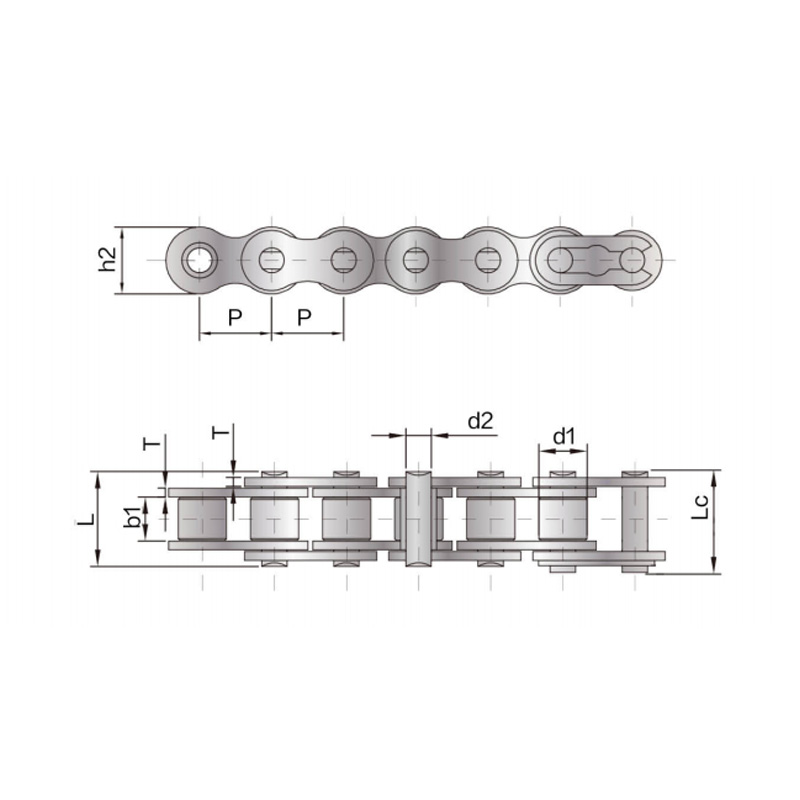
The tensile strength and fatigue strength of the B series short pitch precision roller chain reach 1...
See Details
The Heavy-duty precision roller chain adopts a thickened chain plate design based on the short-pitch...
See Details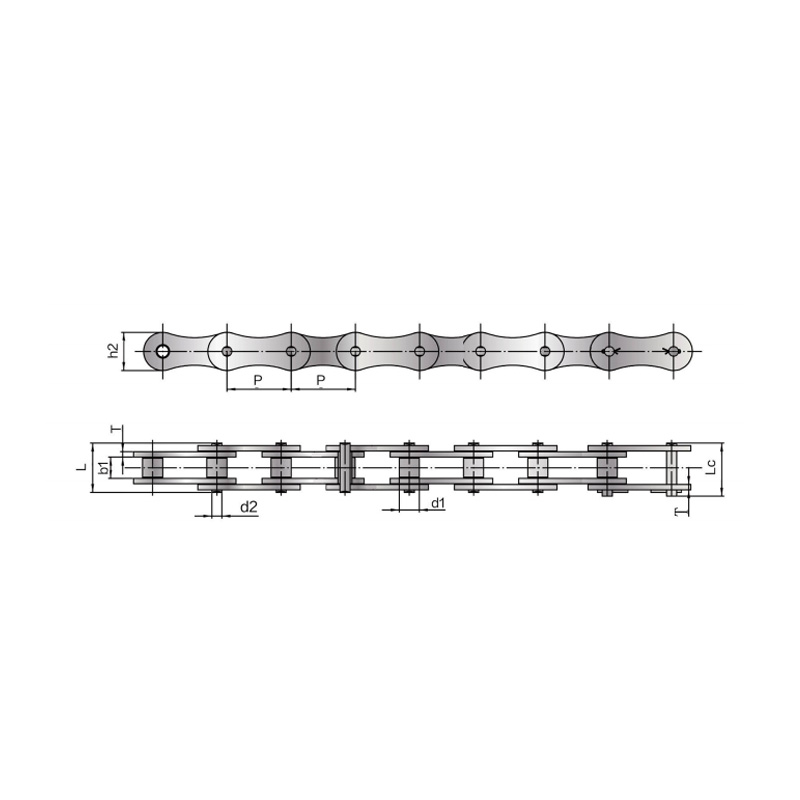
The double pitch driving chain complies with various international standards. The pitch of the doubl...
See Details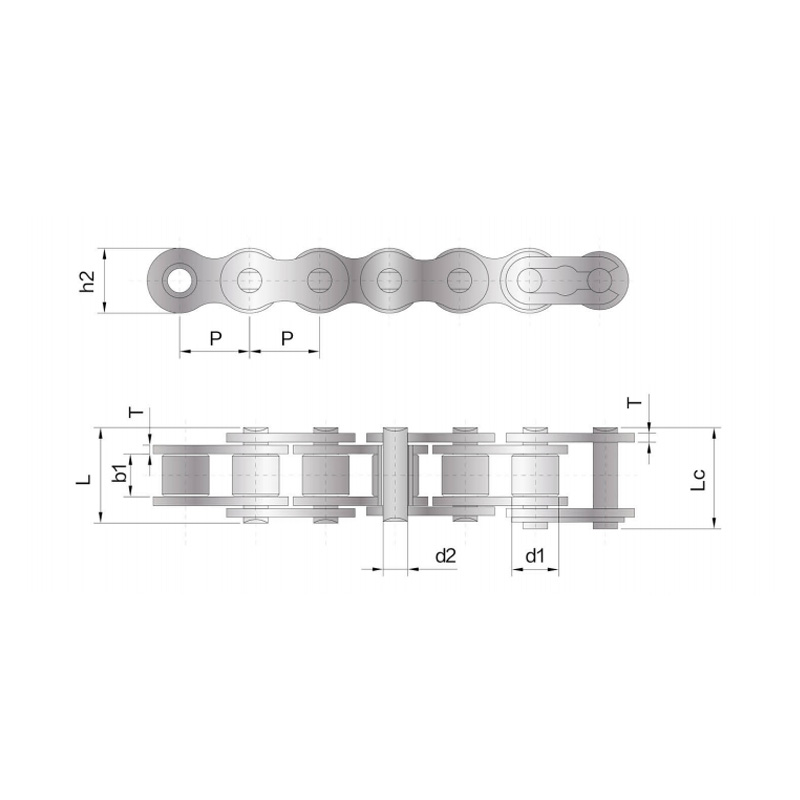
We also produce single row roller drive chains in more sizes and varieties. Customised products, sui...
See Details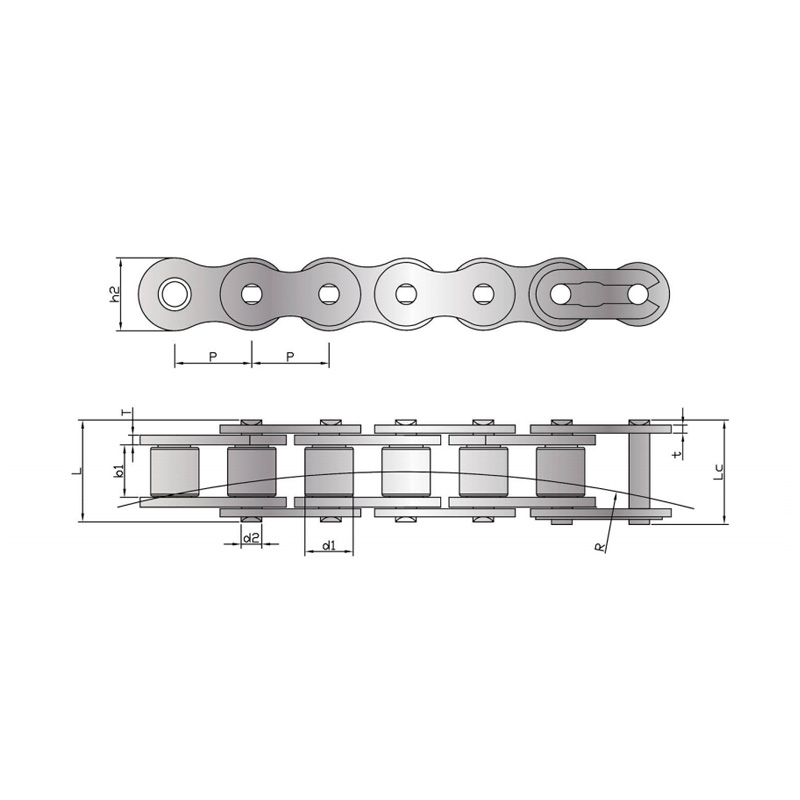
Side bow chain refers to changing the size of parts in the design of short-pitch precision roller ch...
See Details
The Anti-Sidebow chain for pushing window is a functional product with specially designed parts and ...
See Details
The A series short-pitch straight plate precision roller chain has a smaller pitch, a relatively lar...
See Details© Suzhou Fubang Machinery Chain Transmission Manufacturing Co., Ltd. Stainless Steel Roller Chains Manufacturers Conveyor Chains Suppliers
