 简体中文
简体中文 English
 русский
 Español
Fubang is a professional manufacturer specializing in the design, production and sales of stainless steel chains.
Our A series short pitch precision roller chains comply with various international standards and are...
See Details
Content
Choosing between a drive chain and a drive shaft is one of the most fundamental decisions in mechanical power transmission design. Both systems transfer torque from a power source to a driven component, but they do so in very different ways — and the right choice depends heavily on your specific application, environment, budget, and maintenance capacity. As a manufacturer with over 26 years focused on precision chain transmission, we work closely with engineers and procurement teams across industries. This article offers a straightforward technical comparison to help you make an informed decision.
A drive chain transmits power through a series of interlinked metal pins, bushings, and rollers that engage with toothed sprockets. The chain flexes around the sprockets, making it naturally suited to connecting shafts that are not collinear and to absorbing shock loads. Drive chains are the dominant choice in motorcycles, bicycles, industrial conveyors, agricultural machinery, and countless factory automation systems.
A drive shaft (also called a propeller shaft or cardan shaft) is a solid or hollow rotating rod that transmits torque between two points. It relies on universal joints or constant-velocity (CV) joints to accommodate angular misalignment. Drive shafts are most commonly seen in automotive rear-wheel-drive and four-wheel-drive systems, as well as in certain heavy industrial applications requiring enclosed, long-distance torque transmission.
The table below summarizes how the two systems stack up across the most important engineering and operational criteria:
| Factor | Drive Chain | Drive Shaft |
|---|---|---|
| Power Transmission Efficiency | 97–99% (well-lubricated) | 95–98% |
| Shaft Center Distance Flexibility | High — easily adjustable | Fixed by design |
| Speed Ratio Variability | Easy by changing sprockets | Requires gearbox |
| Shock Load Tolerance | Excellent | Moderate |
| Maintenance Requirement | Regular lubrication & tensioning | Low (sealed systems) |
| Noise Level | Moderate (higher at speed) | Low |
| Initial Cost | Low | Higher |
| Replacement Cost | Low | High |
| Suitability for High Torque | Very High (multi-strand options) | High |
| Operating Environment | Open or enclosed; corrosive-resistant grades available | Typically enclosed/protected |
Under proper lubrication, a precision roller chain can achieve mechanical efficiency of up to 98–99% — comparable to or exceeding a well-engineered drive shaft system. This is because the chain's engagement with the sprocket teeth is a direct mechanical interlock, with minimal slip or energy loss.
One of the biggest practical advantages of drive chains is the ability to connect shafts at varying center distances without redesigning the entire drivetrain. Simply add or remove links. This also allows a single power source to drive multiple shafts simultaneously using sprocket and chain routing — something a drive shaft cannot achieve without additional gearboxes and components.
In applications like agricultural machinery, mining equipment, and heavy-duty conveyors, sudden load spikes are common. Drive chains flex and distribute these shock loads across multiple links, protecting the driving motor and other downstream components. A rigid drive shaft transmits shock directly, which can stress universal joints and bearings more severely.
The initial purchase cost of a standard roller chain and sprocket set is significantly lower than a comparable drive shaft assembly with universal joints. When a chain eventually wears out, replacing it is straightforward and inexpensive. A failed drive shaft, by contrast, often requires specialized labor and costly replacement parts, especially in sealed industrial gearbox applications.
For applications where access for lubrication and inspection is difficult — such as inside a vehicle chassis or a fully enclosed gearbox — a drive shaft's sealed, low-maintenance nature is a genuine benefit. Modern sealed propeller shafts can run for hundreds of thousands of kilometers in automotive applications with minimal service.
At very high rotational speeds — for example, automotive drivelines running at 3,000–6,000 RPM over distances of 1–2 meters — a drive shaft is generally more practical. Drive chains operating at high speeds produce more noise, vibration, and polygon effect (velocity variation caused by the chain wrapping around sprockets), making them less ideal for smooth, high-speed power transfer over long spans.
In environments where oil or lubricant contamination is unacceptable — such as food processing, pharmaceuticals, or medical equipment — a fully enclosed drive shaft may be preferable. That said, stainless steel chains with self-lubricating bushings or food-grade lubricants are increasingly used to address this challenge in chain-driven systems as well.
Based on our experience supplying transmission components to clients worldwide, here is how the choice typically breaks down by industry:
One of the most common reasons engineers shift away from chain drives is premature failure — and in our experience, this almost always traces back to using substandard chain, not an inherent weakness of the technology. A poorly manufactured chain will stretch rapidly, skip sprocket teeth, and generate excessive heat. A high-quality precision roller chain, manufactured to tight tolerances, holds its pitch length far longer, operates quietly, and delivers the near-99% efficiency figures the technology is capable of.
Material selection also matters significantly. Carbon steel chains are the standard choice for most applications, but in corrosive, wet, or hygienic environments, stainless steel chains offer substantially longer service life without the risk of rust contamination. For applications with extreme temperatures or chemical exposure, nickel-plated or polymer-coated chains extend service intervals even further.
At Fubang, we manufacture a full range of industrial drive chains — including A and B series standard precision roller chains, stainless steel variants, and heavy-duty specialty chains — designed to meet international standards and deliver consistent performance across demanding applications.
If you're evaluating which system fits your application, work through these key questions:
For the majority of industrial, agricultural, and manufacturing applications, a drive chain remains the more versatile, cost-effective, and mechanically efficient solution. The drive shaft earns its place in specific scenarios — primarily automotive drivelines, long-span enclosed transmissions, and maintenance-restricted installations — but it is rarely the better option for the types of multi-point, variable-load industrial systems we supply.
If you are specifying or upgrading a chain drive system, we welcome the opportunity to discuss your requirements. You can explore our full industrial chain product range or contact us directly for technical support and custom solutions.
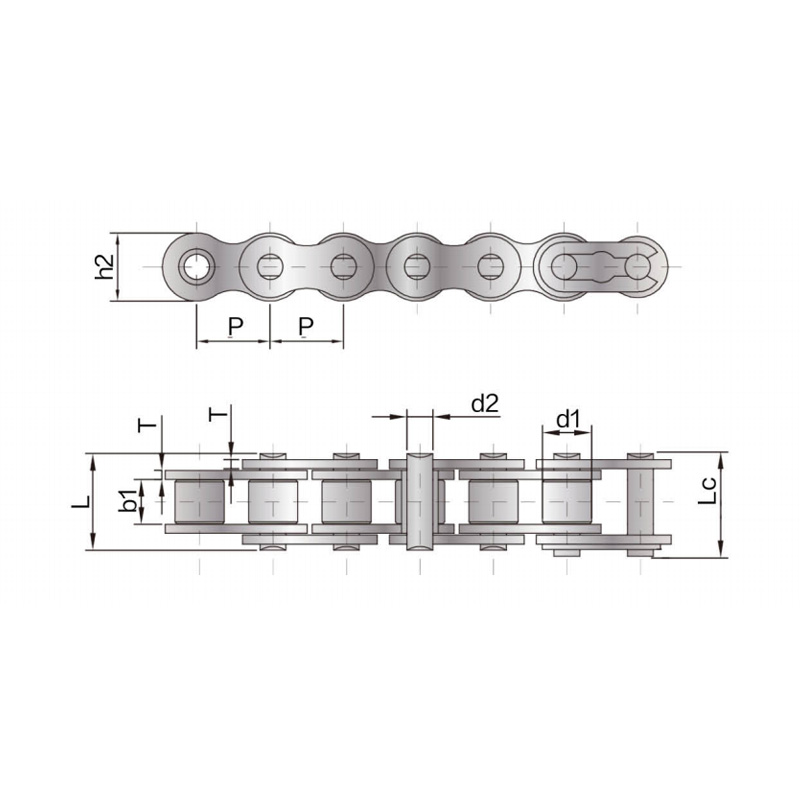
Our A series short pitch precision roller chains comply with various international standards and are...
See Details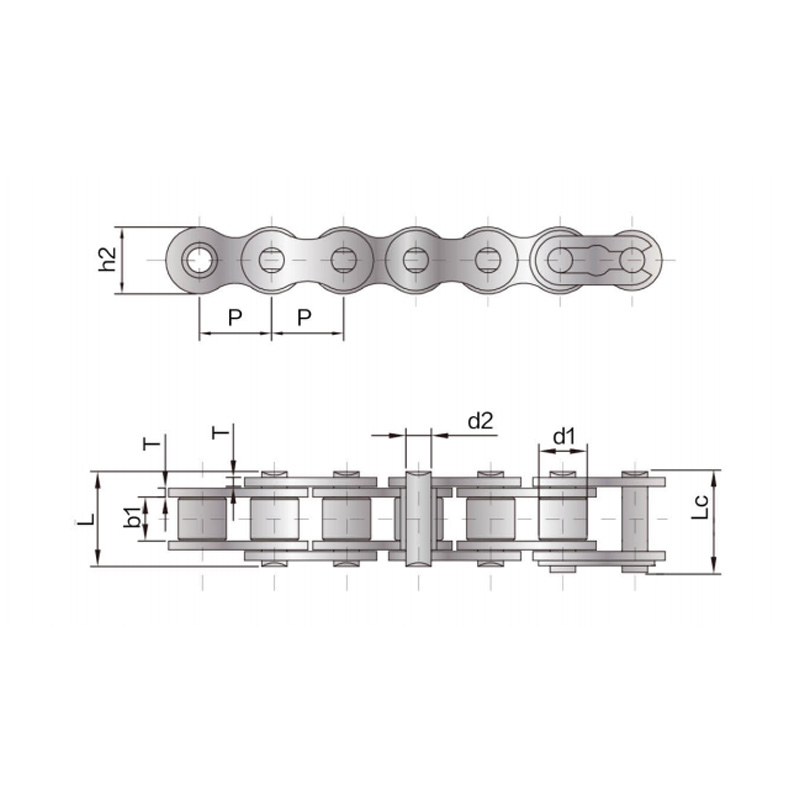
The tensile strength and fatigue strength of the B series short pitch precision roller chain reach 1...
See Details
The Heavy-duty precision roller chain adopts a thickened chain plate design based on the short-pitch...
See Details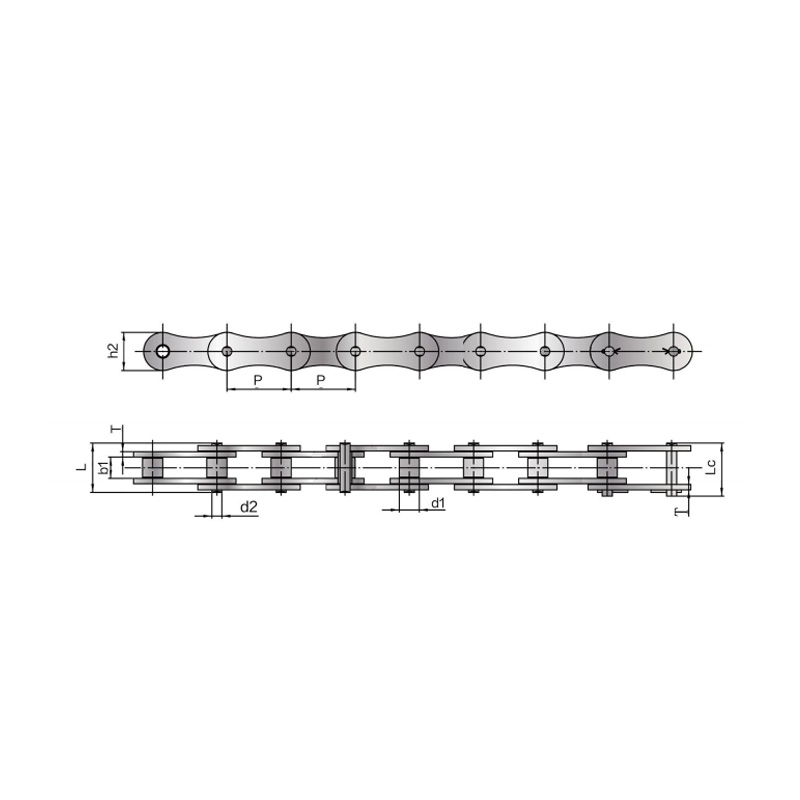
The double pitch driving chain complies with various international standards. The pitch of the doubl...
See Details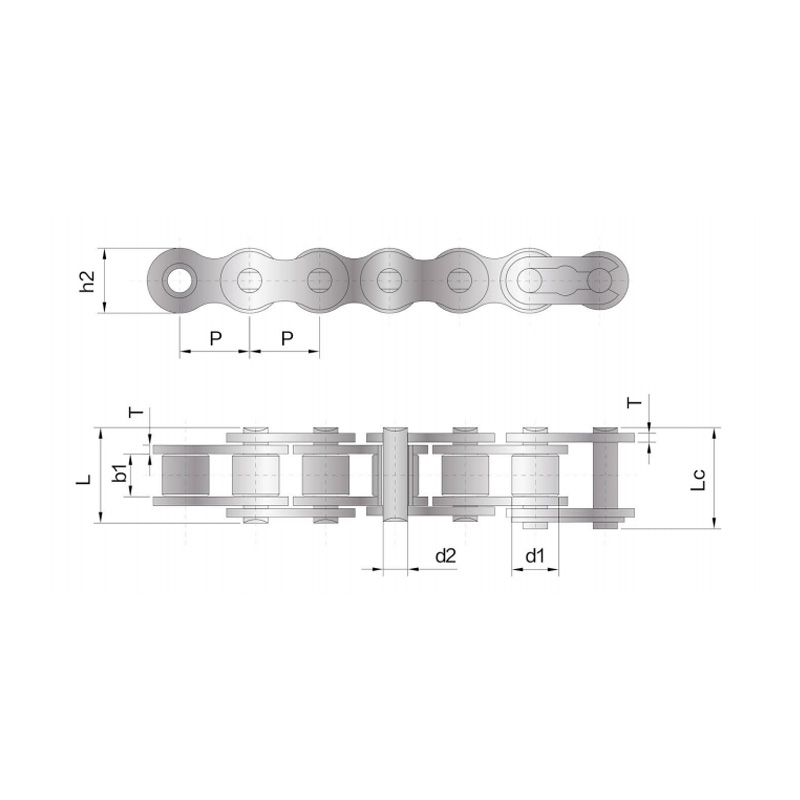
We also produce single row roller drive chains in more sizes and varieties. Customised products, sui...
See Details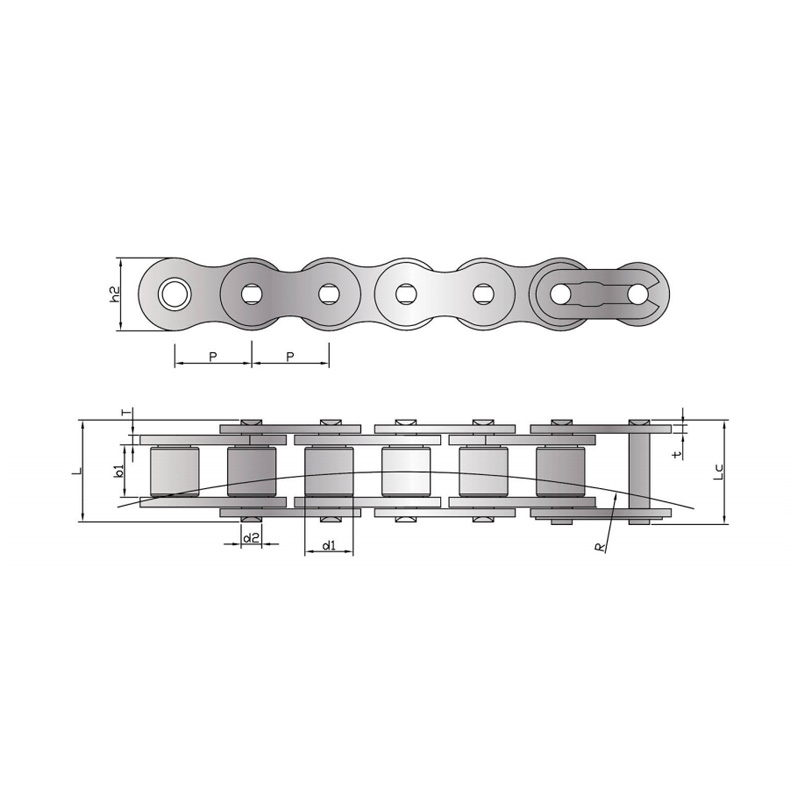
Side bow chain refers to changing the size of parts in the design of short-pitch precision roller ch...
See Details
The Anti-Sidebow chain for pushing window is a functional product with specially designed parts and ...
See Details
The A series short-pitch straight plate precision roller chain has a smaller pitch, a relatively lar...
See Details© Suzhou Fubang Machinery Chain Transmission Manufacturing Co., Ltd. Stainless Steel Roller Chains Manufacturers Conveyor Chains Suppliers
