 简体中文
简体中文 English
 русский
 Español
Fubang is a professional manufacturer specializing in the design, production and sales of stainless steel chains.
Our A series short pitch precision roller chains comply with various international standards and are...
See Details
Content
A stainless steel roller chain is functionally identical in geometry to a standard carbon steel chain — it consists of inner and outer link plates, rollers, bushings, and pins — but every component is manufactured from corrosion-resistant stainless steel alloy rather than case-hardened carbon steel. That single material change produces a dramatically different performance profile.
Carbon steel chains rely on a protective lubricant film to prevent rust. Remove that lubricant — through washdown, submersion, or high humidity — and corrosion begins within hours. Stainless steel roller chains resist oxidation at the alloy level, making continuous lubrication optional in many installations and eliminating the rust-induced elongation that causes premature sprocket wear.
The trade-off is tensile strength. Stainless steel alloys used in chain manufacturing typically yield 20–30% lower break loads than equivalent pitch carbon steel chains. This means stainless steel roller chain is selected specifically for environmental reasons, not for maximum load capacity.
Not all stainless steel is equal. Chain manufacturers use several grades, each suited to different environments:
| Grade | Key Composition | Corrosion Resistance | Typical Use |
|---|---|---|---|
| 304 (A2) | 18% Cr, 8% Ni | Good — general corrosion | Food processing, light washdown |
| 316 (A4) | 18% Cr, 10% Ni, 2% Mo | Excellent — chlorides & acids | Marine, chemical, pharmaceutical |
| 410 | 12% Cr (martensitic) | Moderate | Higher-strength needs, dry environments |
316-grade stainless steel roller chain is the most specified option in demanding environments because the 2% molybdenum content significantly improves resistance to chloride pitting — a failure mode that affects 304 in saltwater or cleaning-agent exposure.
The adoption of stainless steel roller chain is concentrated in industries where contamination control, chemical exposure, or temperature extremes make carbon steel impractical:
Beyond these primary sectors, stainless steel roller chain is also used in wastewater treatment, aquaculture feeding systems, and outdoor signage drives — anywhere moisture and oxidation are unavoidable operating conditions.
Choosing correctly requires evaluating four parameters in sequence:
A frequently overlooked factor is galvanic corrosion. When a stainless steel roller chain runs on carbon steel sprockets in a wet environment, the dissimilar metals can accelerate corrosion at contact points. For best results in corrosive installations, pair stainless steel chain with stainless steel or engineered-plastic sprockets.
Stainless steel roller chains do not require the same lubrication frequency as carbon steel chains, but they are not maintenance-free. The primary wear mechanism shifts from corrosion to adhesive wear between pin and bushing — a process accelerated by running a chain dry under high loads.
In practice, well-maintained stainless steel roller chains in food processing applications commonly achieve 8,000–15,000 operating hours before reaching the 3% elongation replacement threshold defined by most OEM specifications. Chains running in abrasive environments such as sand or mineral dust may reach this point significantly sooner regardless of material grade.
Routine maintenance best practices include:
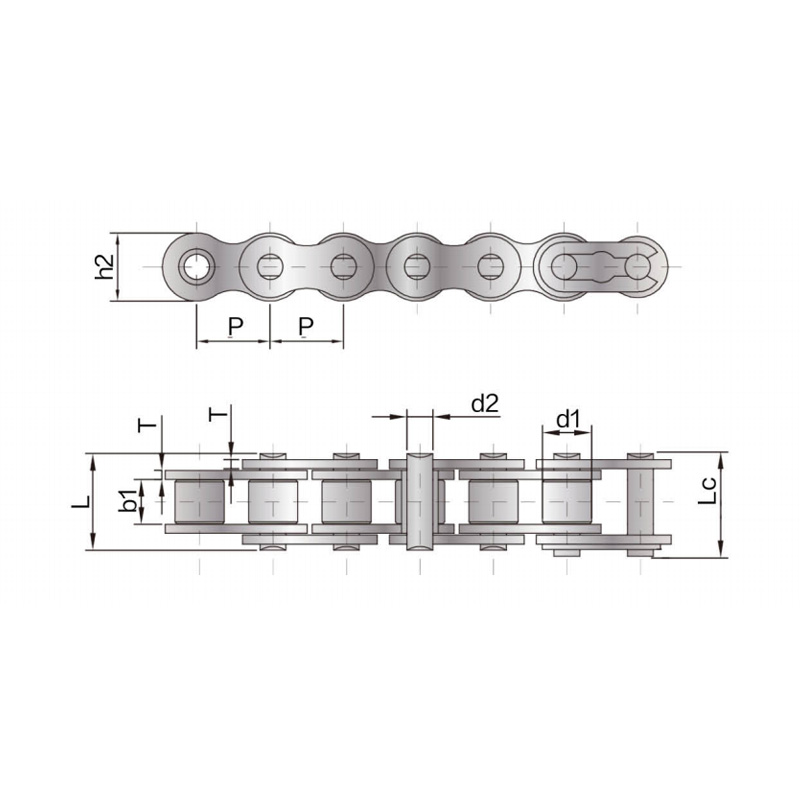
Our A series short pitch precision roller chains comply with various international standards and are...
See Details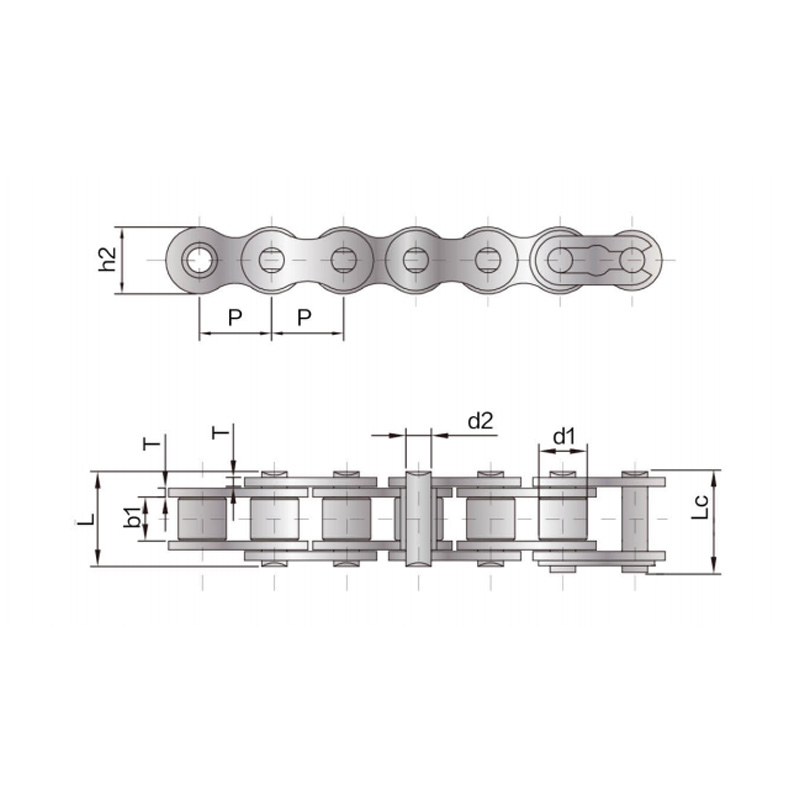
The tensile strength and fatigue strength of the B series short pitch precision roller chain reach 1...
See Details
The Heavy-duty precision roller chain adopts a thickened chain plate design based on the short-pitch...
See Details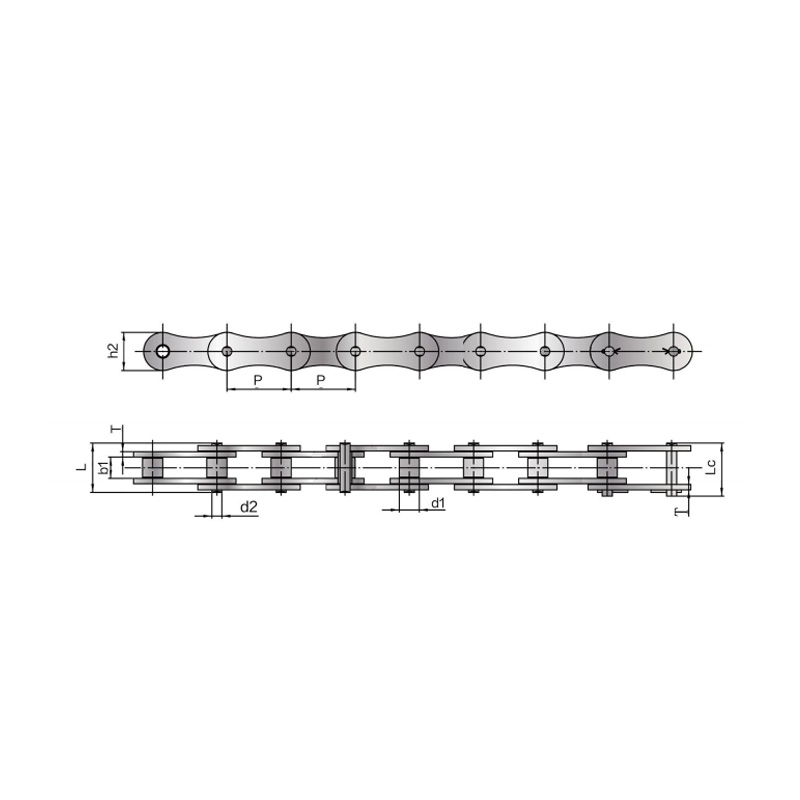
The double pitch driving chain complies with various international standards. The pitch of the doubl...
See Details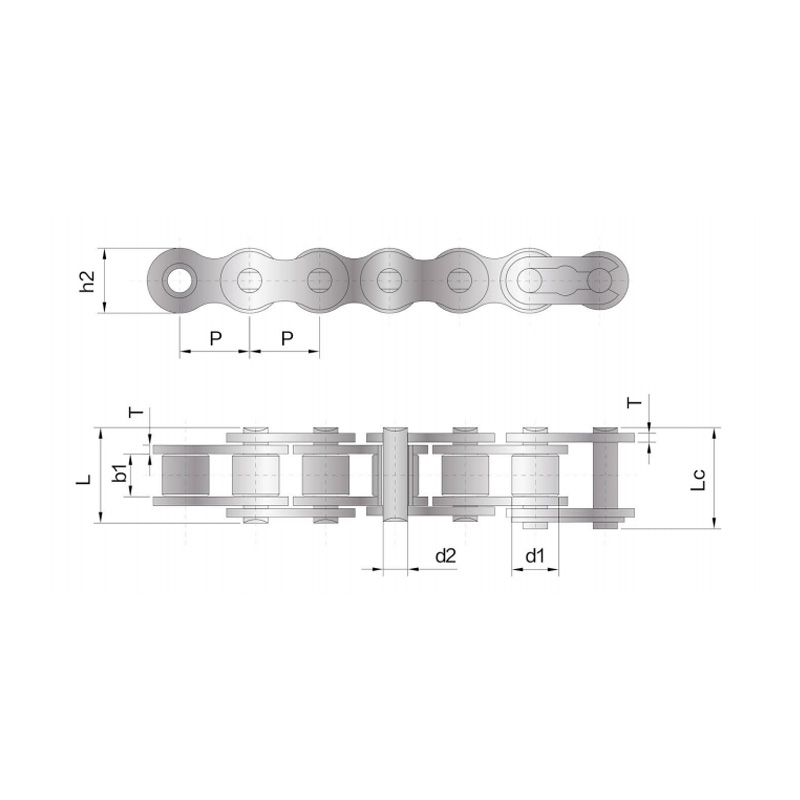
We also produce single row roller drive chains in more sizes and varieties. Customised products, sui...
See Details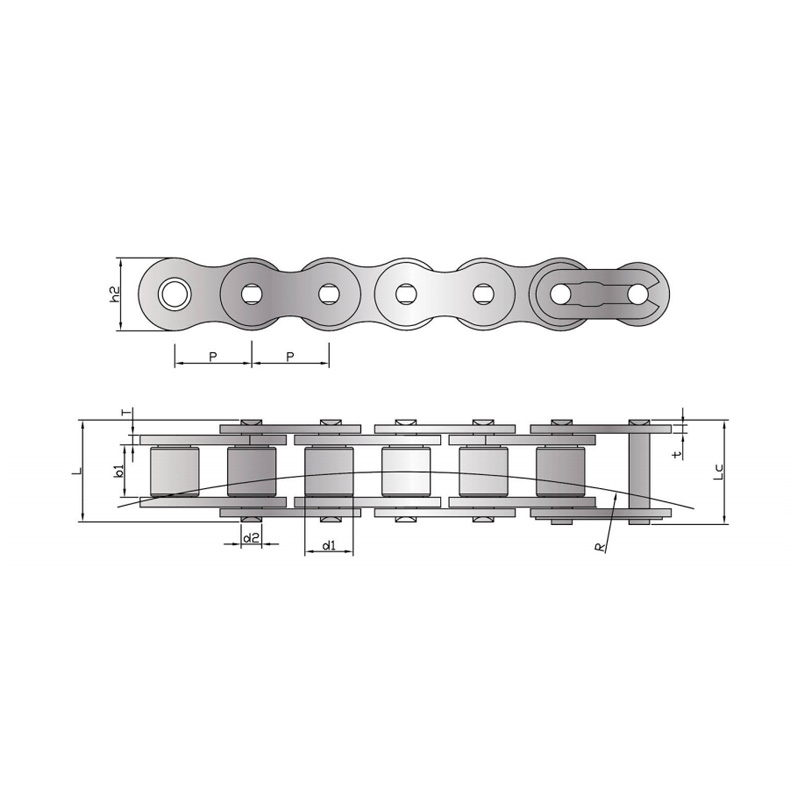
Side bow chain refers to changing the size of parts in the design of short-pitch precision roller ch...
See Details
The Anti-Sidebow chain for pushing window is a functional product with specially designed parts and ...
See Details
The A series short-pitch straight plate precision roller chain has a smaller pitch, a relatively lar...
See Details© Suzhou Fubang Machinery Chain Transmission Manufacturing Co., Ltd. Stainless Steel Roller Chains Manufacturers Conveyor Chains Suppliers
