 简体中文
简体中文 English
 русский
 Español
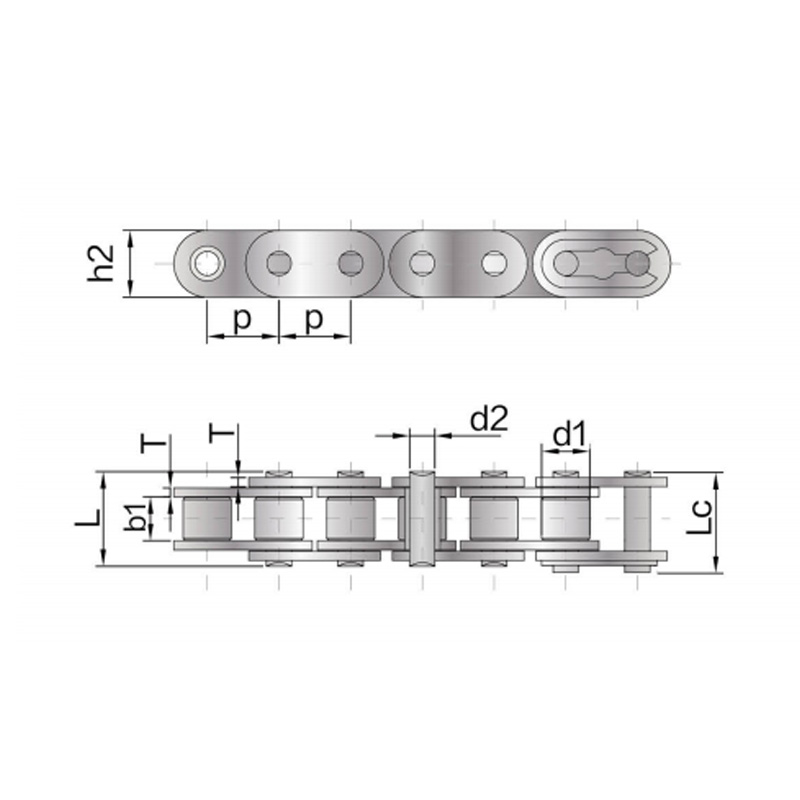
Fubang is a professional manufacturer specializing in the design, production and sales of stainless steel chains.
Our A series short pitch precision roller chains comply with various international standards and are...
See Details
Content
Corrosion-related chain failure causes more than 30% of unplanned downtime in food processing lines. That single statistic explains why engineers are replacing carbon steel drives with stainless steel roller chain at every opportunity. A washdown cycle should not bring production to a halt. When a chain rusts, seizes, or contaminates product, the expense goes far beyond the replacement part itself — it includes lost output, rework, and regulatory risk.
Stainless steel roller chain eliminates this failure mode almost entirely. It retains strength in wet, acidic, and high-humidity conditions where standard chains degrade in weeks. The upfront premium typically pays back within the first avoided breakdown. This guide breaks down exactly what you need to know to specify, install, and maintain these chains for maximum service life.
At its core, a stainless steel roller chain follows the same ANSI or ISO dimensional standards as a carbon steel chain. The difference lies in the base material. Pins, bushings, rollers, and link plates are all manufactured from austenitic stainless steel — most commonly grade 304 or 316. This full-alloy construction provides uniform corrosion resistance throughout the component stack.
Unlike plated chains, where a surface coating can wear or flake off, a stainless chain resists corrosion even after thousands of hours of sliding contact. The absence of a coating also means there is no risk of hydrogen embrittlement from electroplating. For applications that demand consistent performance under chemical exposure or frequent washdowns, the alloy-through design is non-negotiable.
Typical pitch sizes range from 06B to 24B (or 35 to 160 in ANSI), covering light instrument drives up to heavy industrial conveyors. Attachment variants — extended pins, bent plates, or welded lugs — are widely available and covered under the same material specifications. A standard example is the HSS stainless steel conveyor chain with attachment, which permits direct mounting of flights or pushers without compromising corrosion integrity.
Grade 304 stainless steel accounts for the majority of roller chains in service. It offers excellent resistance to oxidation, organic acids, and mild chemical agents. In food, beverage, and general humid environments, 304 performs reliably at temperatures up to 400 degrees Celsius. Its tensile strength is comparable to that of hardened carbon steel, though slightly lower yield strength requires designers to verify load ratings carefully.
Grade 316 adds molybdenum to the alloy, elevating resistance to chloride pitting. This makes it the preferred choice in marine atmospheres, salt spray, and chemical processing lines where even trace chlorine can attack 304. The cost adder ranges from 20 to 40 percent, but in a pulp and paper mill or a coastal wastewater plant, the extended service life justifies the investment. Select 316 whenever the operating environment exposes the chain to halides or saline solutions.
Less common but still available are duplex stainless steels and precipitation-hardening grades like 17-4PH. These serve niche high-strength applications — think heavy sludge scrapers — where standard 304 would lack fatigue resistance. For example, the HSS424-HB78 stainless steel bush chain uses a hardened stainless bushing designed specifically for abrasive mud collection that would wear out a standard roller chain prematurely.
Carbon steel chains protected by zinc plating, nickel plating, or thin-film coatings inevitably lose their shield at the articulation points. Once the pin-bushing interface starts to corrode, friction rises sharply, elongation accelerates, and the chain fails well before its fatigue life. Stainless steel chain bypasses this failure mode entirely. The matrix stays passive even as surface asperities wear away.
Lower maintenance demand is another driver. Facilities running washdowns or outdoor equipment can often eliminate manual lubrication routines altogether when they switch to stainless steel, provided the chain operates at moderate speeds and loads. This allows designers to follow clean-in-place protocols without worrying that the lubricant will contaminate the product or attract dirt. In pharmaceutical and dairy plants, the hygiene benefit alone can justify the material upgrade.
It is important to check that other drive components — sprockets, shafts, bearing housings — are also corrosion resistant. Pairing a stainless chain with a carbon steel sprocket creates a galvanic couple that accelerates rust on the sprocket. Specify stainless steel sprockets or a compatible surface treatment to preserve the system’s longevity.
In each of these sectors, the chain’s ability to shrug off moisture and mild acids reduces unplanned stoppages and extends replacement intervals beyond what a coated carbon chain could deliver. The economic picture shifts from purchase price to total cost of ownership, and stainless steel wins that analysis consistently.
The first step is to calculate the working load and verify it against the manufacturer’s allowable tension. Stainless steel chains typically exhibit a minimum tensile strength 10 to 15 percent lower than the equivalent carbon steel part, so do not assume a direct one-for-one swap without checking the rating. Confirm the chain’s factor of safety remains above 7 for uniform loads and above 10 for shock-loaded drives.
Next, define the ambient conditions. Is the chain exposed to chlorine-based sanitizers, acids, or salt? Does it operate in submerged or semi-submerged service? Will it see rapid temperature swings? Match the alloy grade to the most aggressive chemical species present. Do not rely on a generic “stainless” specification without stating the grade. In borderline cases, request corrosion test data or run an in-situ coupon exposure.
Consider the need for attachments. Standard straight-link plates can be replaced with extended-pin or bent-plate variants that carry flights, pushers, or product directly. Many manufacturers offer the HSS-HSC-SAV stainless steel conveyor chain series, which integrates custom attachment geometry while maintaining the same material integrity. Attachments should be designed so that welding or forming does not compromise the passive layer at load-bearing points.
Mount the chain with the correct initial tension. Too slack, and it will whip and jump teeth; too tight, and it will overload bearings and accelerate wear. A rule of thumb is a sag of 2 to 3 percent of the center distance on horizontal drives. Use a tensioning idler or take-up unit where adjustability is needed — especially important because stainless steel has a higher thermal expansion coefficient than carbon steel.
Even though stainless steel can run dry in light-duty washdown environments, applying a thin food-grade lubricant to the pin-bushing interface can double wear life. Select a synthetic lubricant with EP additives that resist wash-off. For high-temperature applications, a PTFE-based dry film coating on the pins reduces fretting without attracting contaminants. The key is to never let the chain run metal-to-metal under load for extended periods without some form of boundary protection.
| Chain Type | Corrosion Resistance | Maintenance Need | Relative Cost |
|---|---|---|---|
| Carbon steel (uncoated) | Poor | High | Low |
| Nickel-plated | Moderate, surface-only | Medium | Low-Medium |
| Stainless 304 | High | Low | Medium |
| Stainless 316 | Very high | Low | High |
Leaf chains, hollow-pin chains, and welded steel chains each solve specific mechanical problems, but they all require corrosion mitigation when moisture is present. A hollow-pin stainless roller chain, for example, can carry product carriers while resisting rust, something that simply cannot be achieved with a carbon steel alternative. The trade-off is always between initial capital and long-term operating continuity. For any process where a chain failure stops the line, stainless steel proves its worth rapidly.
Verify that the chain conforms to ISO 606 or ANSI B29.1 dimensional standards, as interchangeability with sprockets depends on it. Reputable suppliers also provide material certification per ASTM A276 or equivalent, confirming the actual alloy makeup. For food applications, ask for FDA-compliant statements for any incidental contact components.
Check that pre-lubrication, if supplied, uses NSF H1 registered lubricant for incidental food contact. Demand a test certificate that shows the chain has passed a proof-load test of at least 1.5 times the working load. These documentation steps catch counterfeit or mixed-material product before it reaches the field.
The decision rarely hinges on unit price alone. A stainless steel roller chain typically costs two to four times more than an equivalent carbon steel chain, but the service life often exceeds five to ten times in corrosive service. Combined with the elimination of frequent lubrication, the net present value swings heavily in favour of stainless. Plants that track overall equipment effectiveness (OEE) typically recover the premium within the first year of installation.
Engineers who treat the chain as a non-lubricated, inherently clean drive element unlock simpler machine designs, smaller guarding envelopes, and far fewer compliance headaches. When the environment wants to destroy your chain, the material choice becomes the simplest and most effective countermeasure.
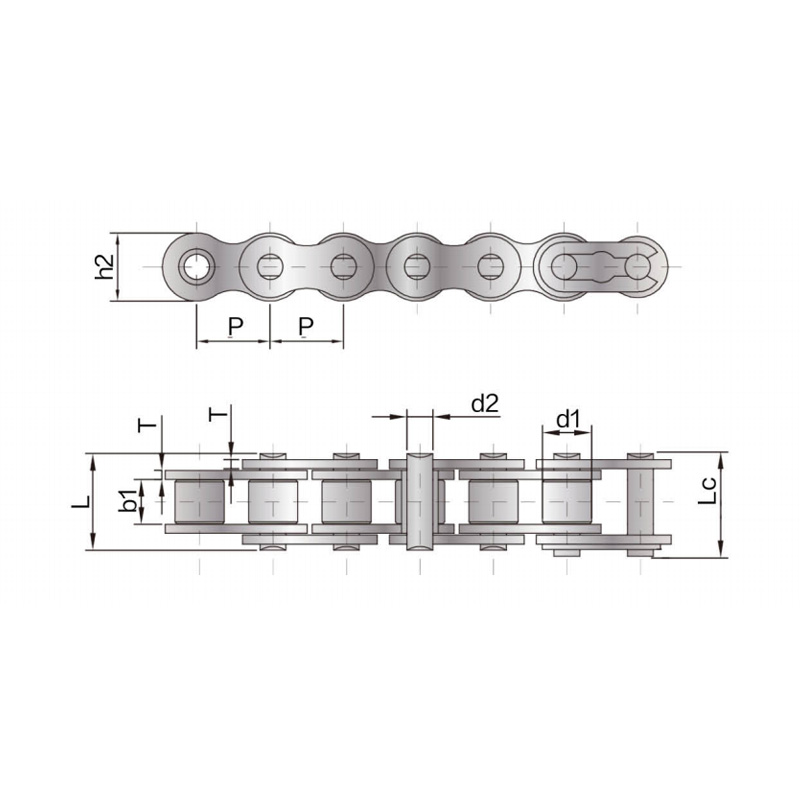
Our A series short pitch precision roller chains comply with various international standards and are...
See Details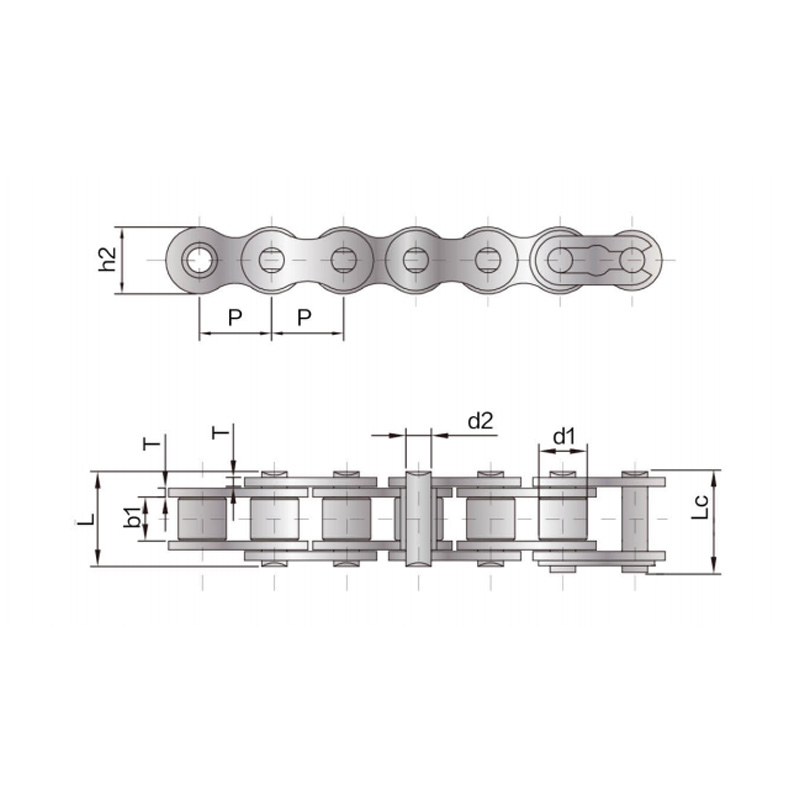
The tensile strength and fatigue strength of the B series short pitch precision roller chain reach 1...
See Details
The Heavy-duty precision roller chain adopts a thickened chain plate design based on the short-pitch...
See Details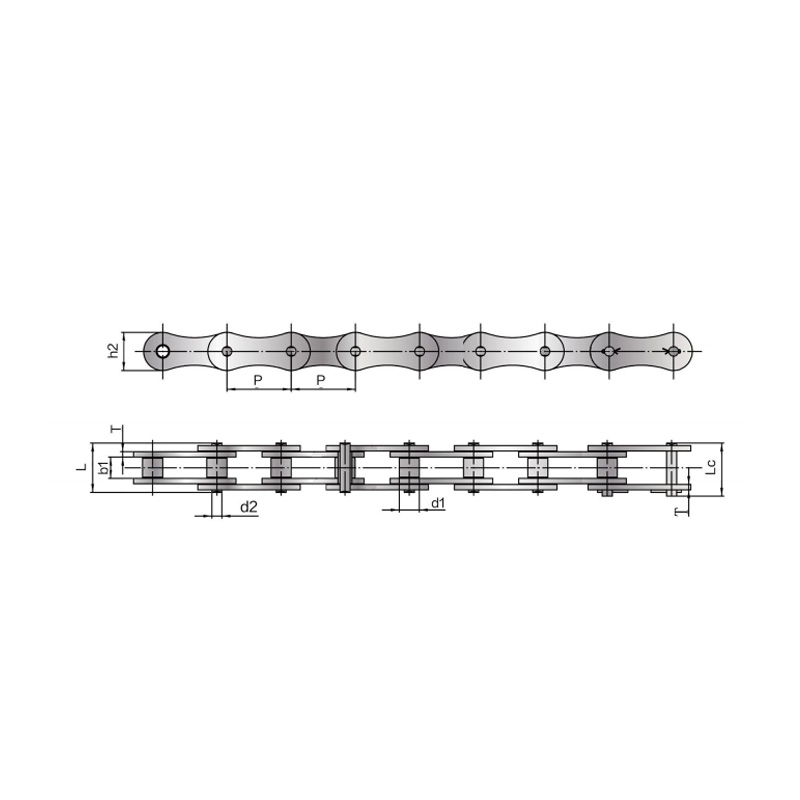
The double pitch driving chain complies with various international standards. The pitch of the doubl...
See Details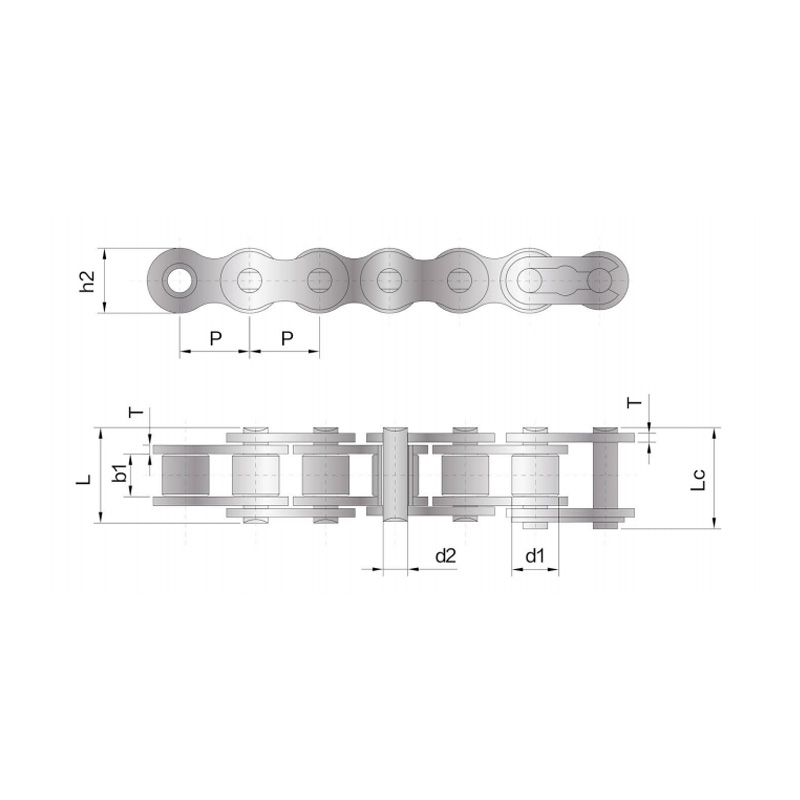
We also produce single row roller drive chains in more sizes and varieties. Customised products, sui...
See Details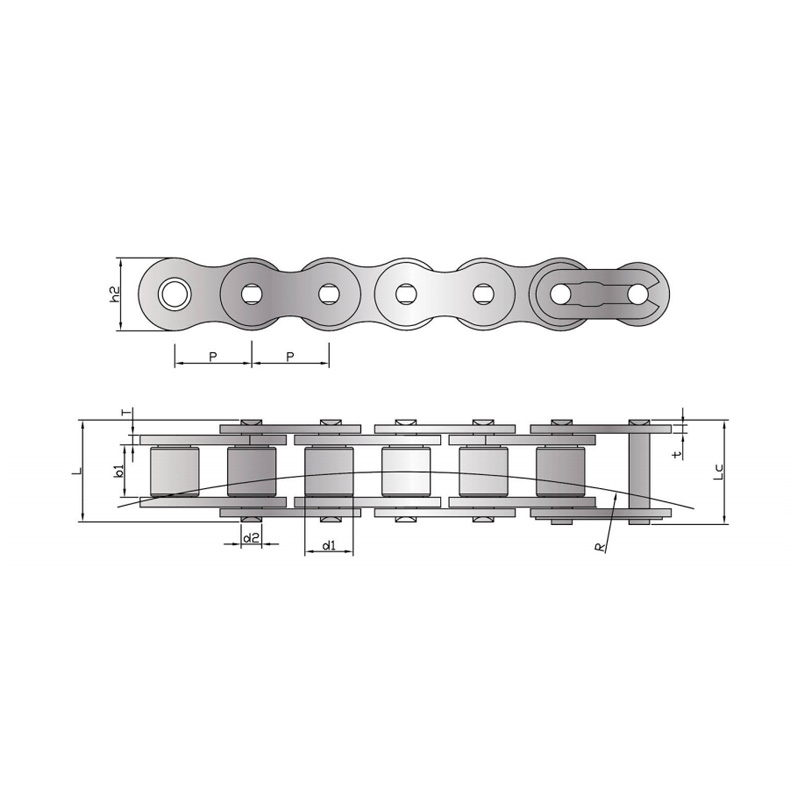
Side bow chain refers to changing the size of parts in the design of short-pitch precision roller ch...
See Details
The Anti-Sidebow chain for pushing window is a functional product with specially designed parts and ...
See Details
The A series short-pitch straight plate precision roller chain has a smaller pitch, a relatively lar...
See Details© Suzhou Fubang Machinery Chain Transmission Manufacturing Co., Ltd. Stainless Steel Roller Chains Manufacturers Conveyor Chains Suppliers
