 简体中文
简体中文 English
 русский
 Español
Fubang is a professional manufacturer specializing in the design, production and sales of stainless steel chains.
Our A series short pitch precision roller chains comply with various international standards and are...
See Details
Content
A food processing plant in the Midwest replaced the carbon steel leaf chains on its pallet lifts every four to six months. The constant alkaline washdowns caused rapid surface rust and pin corrosion, forcing unplanned downtime. The operations team switched to stainless steel leaf chains and extended the replacement interval to over three years—without a single corrosion-related failure. This shift isn’t just about material; it’s about matching the chain’s metallurgy to the real operating environment.
Stainless steel leaf chains are designed for vertical lifting and reciprocating motion where high static tensile strength and resistance to chemical attack are non-negotiable. Unlike roller chains, leaf chains consist of link plates and pins without rollers or bushings, making them compact and ideal for fork truck masts, overhead cranes, and stage lifts. When fabricated from 304 or 316 stainless steel, they handle wet, acidic, and caustic conditions that quickly destroy hardened carbon steel.
A stainless steel leaf chain achieves its corrosion resistance through the passive chromium oxide layer formed during passivation. For most industrial washing and outdoor applications, 304 (A2) stainless steel provides sufficient protection. In chloride-heavy environments—such as seafood processing or coastal installations—316 (A4) with added molybdenum delivers significantly better pitting resistance. The trade-off is a slight reduction in tensile strength: a 316 chain typically offers about 10–15% lower minimum tensile strength than an equivalent 304 chain of the same dimensions.
Material selection directly impacts safe working load (SWL). Manufacturers specify a minimum tensile strength, and SWL is usually calculated as one-fifth to one-eighth of that value for vertical lifting. Crucially, stainless steel leaf chains retain a higher percentage of their room-temperature strength at elevated temperatures compared to some carbon steels, making them suitable for oven or autoclave transfer mechanisms up to 400°C with appropriate lubrication.
Leaf chains follow established dimensional standards (ISO 4347 and DIN 8156) and are grouped into series based on plate thickness and pin diameter. The three most common series for stainless steel variants are AL (light duty), BL (medium duty), and LL (heavy duty). The number of link plates—also called leaves—determines both the thickness of the chain strand and the ultimate tensile strength.
Chain specification tables list the combination of outer links and inner link plates. For instance, a 2×3 lacing means two outer plates sandwiching three inner plates, giving a total of five leaf plates per pin link. More leaves increase cross-sectional area and tensile capacity, but also require a larger sheave diameter. Leaf count and lacing pattern directly influence chain fatigue life; a 4×4 lacing in an LL series chain can support over 200 kN minimum tensile strength, suitable for heavy-duty stacker cranes.
| Series | Typical Pitch (mm) | Lacing Example | Min. Tensile Strength (kN) (304 SS) |
Primary Use |
|---|---|---|---|---|
| AL | 12.7 – 25.4 | 2×2, 2×3 | 15 – 50 | Light lifting, dock levelers |
| BL | 15.875 – 38.1 | 3×3, 4×4 | 60 – 160 | Forklift masts, scissor lifts |
| LL | 19.05 – 50.8 | 4×4, 6×6 | 180 – 400+ | Heavy overhead cranes, steel coil manipulators |
For light-duty washdown applications such as food zone lifting platforms, AL-series stainless steel leaf chains combine corrosion resistance with a slim profile and cost efficiency. BL-series stainless steel leaf chains are the workhorse for most industrial lifts, balancing tensile capacity and guide clearance. When loads approach 15 tons or shock loading is frequent, LL-series stainless steel leaf chains provide the necessary safety margin without sacrificing corrosion resistance.
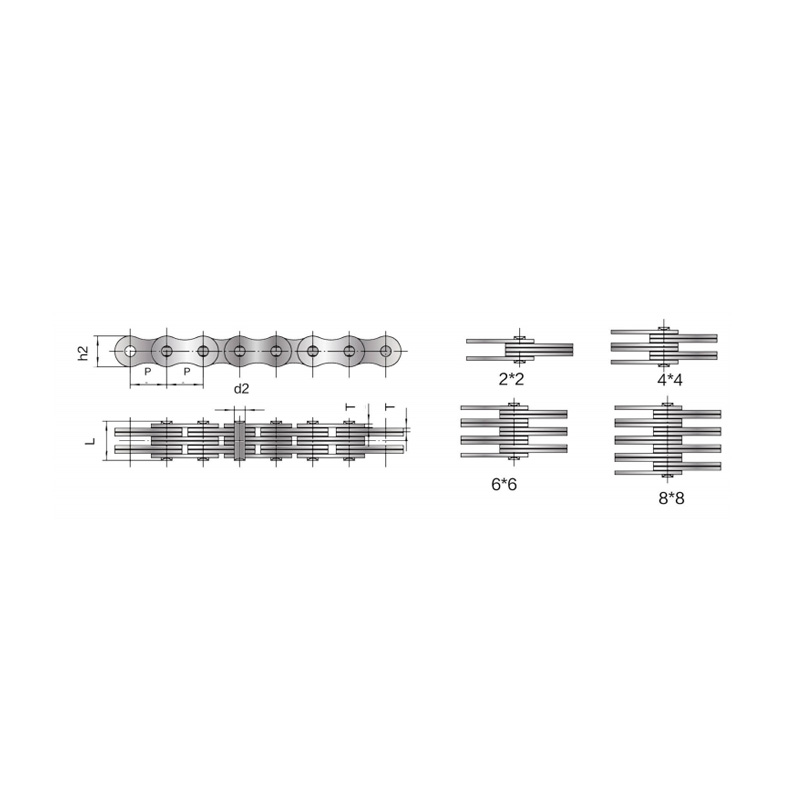 Leaf Chains (LL Series ) Suppliers, Factory - Suzhou Fubang Machinery Chain TranSuzhou Fubang Machinery Chain: Wholesale Leaf Chain (LL Series ) Suppliers and Leaf Chain (LL Series ) Factory in China,The LL series Lea...View Product →
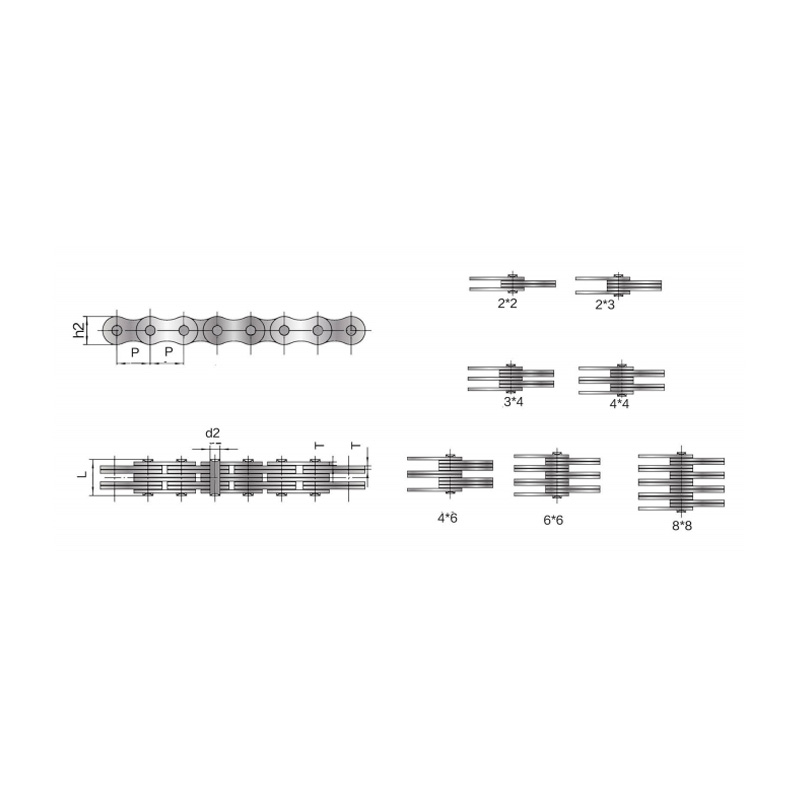 Leaf Chains ( BL Series ) Suppliers, Factory - Suzhou Fubang Machinery Chain TraSuzhou Fubang Machinery Chain: Wholesale Leaf Chain ( BL Series ) Suppliers and Leaf Chain ( BL Series ) Factory in China,BL series leaf ...View Product →
 Leaf Chains ( AL Series ) Suppliers, Factory - Suzhou Fubang Machinery Chain TraSuzhou Fubang Machinery Chain: Wholesale Leaf Chain ( AL Series ) Suppliers and Leaf Chain ( AL Series ) Factory in China,AL series Leaf ...View Product →
Leaf chains experience permanent elongation during the first hours of operation as link plates seat and pin surfaces burnish. Skipping a proper preload procedure can lead to uneven load sharing among link plates and early fatigue failure. A controlled static preload at approximately 30% of the minimum tensile strength for 3–5 minutes allows the chain to reach its bedded length before the lift carriage is calibrated. After bedding, measure the chain elongation using the specified gauge length; if elongation exceeds 2% of the installed length, the chain is already beyond its service limit.
Lubrication of stainless steel leaf chains remains critical to prevent galling between pin and plate surfaces, yet the lubricant must be compatible with the operating environment. In food-contact zones, NSF H1 food-grade lubricants with good adhesion and water resistance are mandatory. For dry or dust-laden environments, dry-film lubricants based on PTFE or molybdenum disulfide reduce particle attraction while still protecting against adhesive wear.
When specifying a stainless steel leaf chain, avoid the temptation to simply match an old part number. Review the specific corrosive agents, load spectrum, and duty cycle first. A chain used in a marine ship lift subject to salt spray requires 316 material and possibly additional pin surface hardening. In contrast, a cleanroom overhead hoist may need a chain with electropolished link plates to minimize particle shedding, even if 304 stainless is the base material.
Examine the chain end connections: clevis pins, anchors, and tensioners must be of equal or better corrosion resistance than the chain itself. Galvanic corrosion from mixed materials is a common failure point when stainless steel chains are mated with zinc-plated anchors. Always request material certifications (EN 10204 3.1) for both chain and connection components.
Not every stainless steel leaf chain delivered to the US market meets the advertised tensile values. Low-cost imports frequently skip the thorough preload and proof-testing step, leaving the user to discover excessive bed-down elongation only after installation. A partner with a dedicated engineering facility can adjust plate edge preparation, pin surface finish, and assembly fit to match the specific dynamic loading of your lift. For a deeper dive into corrosion resistance mechanisms, refer to our detailed guide on stainless steel leaf chain corrosion protection.
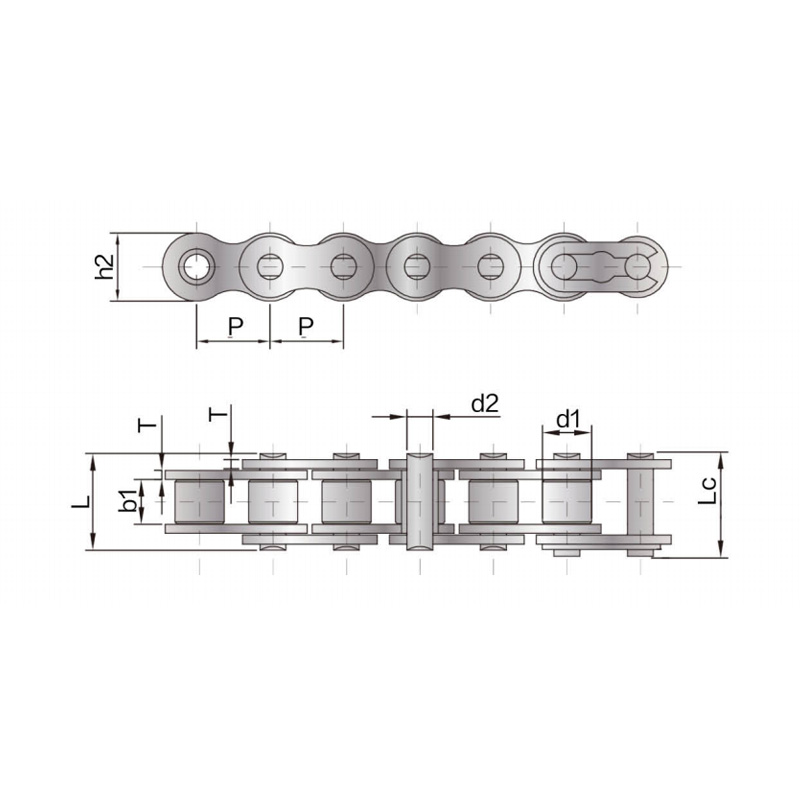
Our A series short pitch precision roller chains comply with various international standards and are...
See Details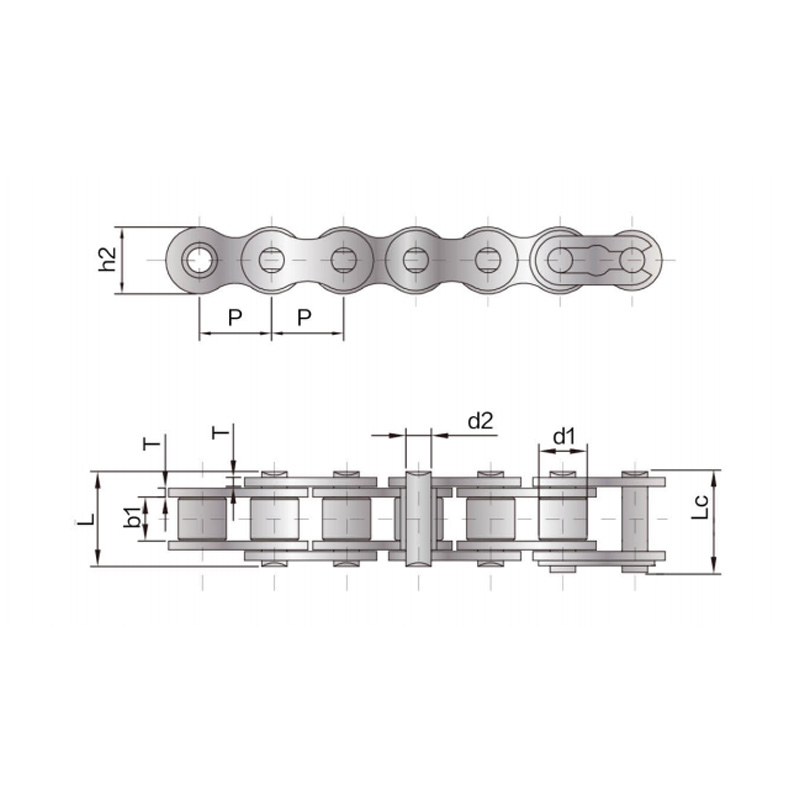
The tensile strength and fatigue strength of the B series short pitch precision roller chain reach 1...
See Details
The Heavy-duty precision roller chain adopts a thickened chain plate design based on the short-pitch...
See Details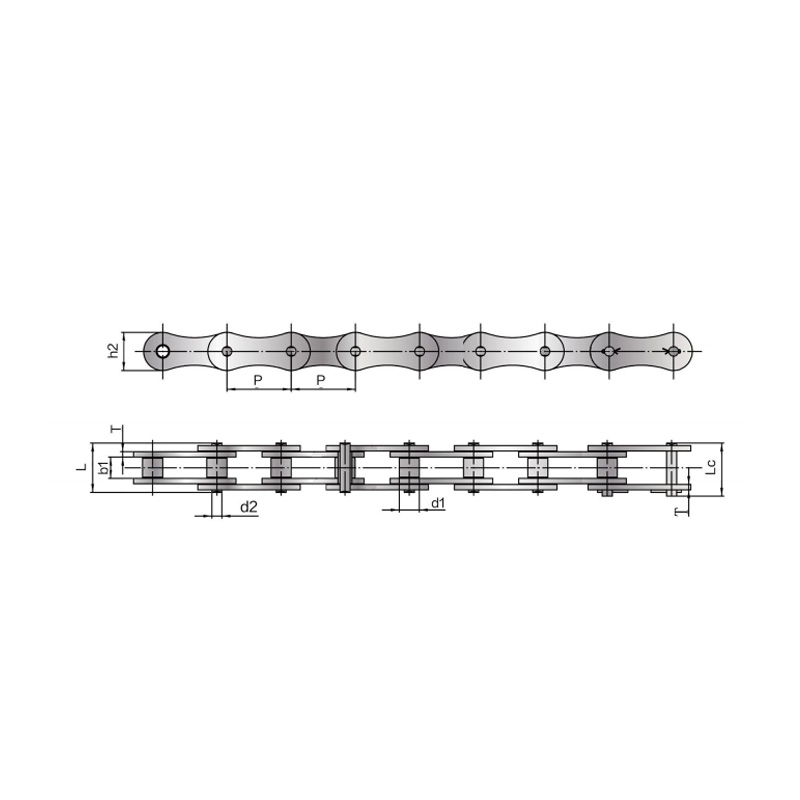
The double pitch driving chain complies with various international standards. The pitch of the doubl...
See Details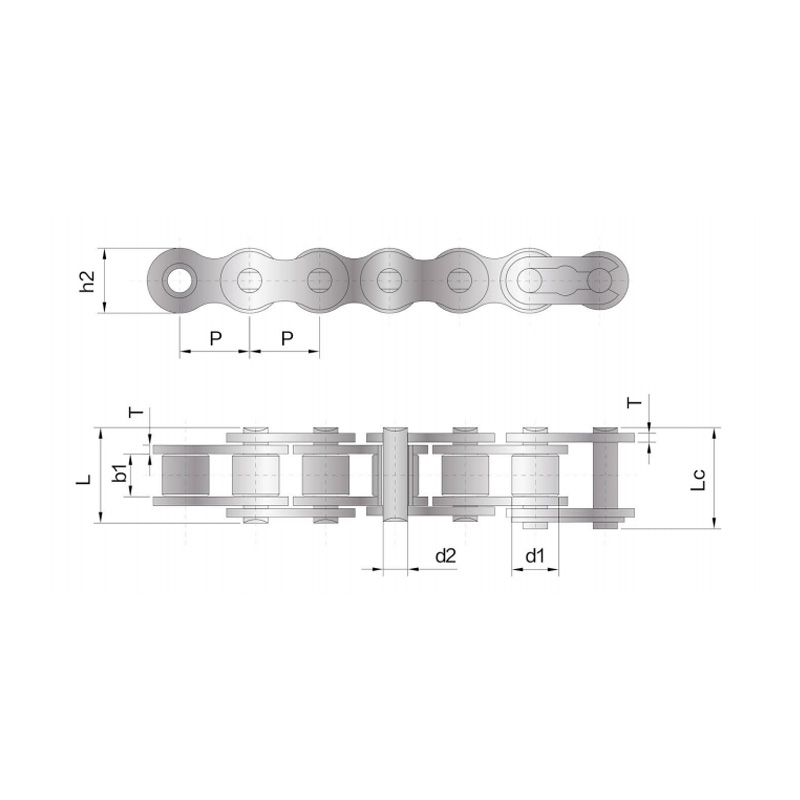
We also produce single row roller drive chains in more sizes and varieties. Customised products, sui...
See Details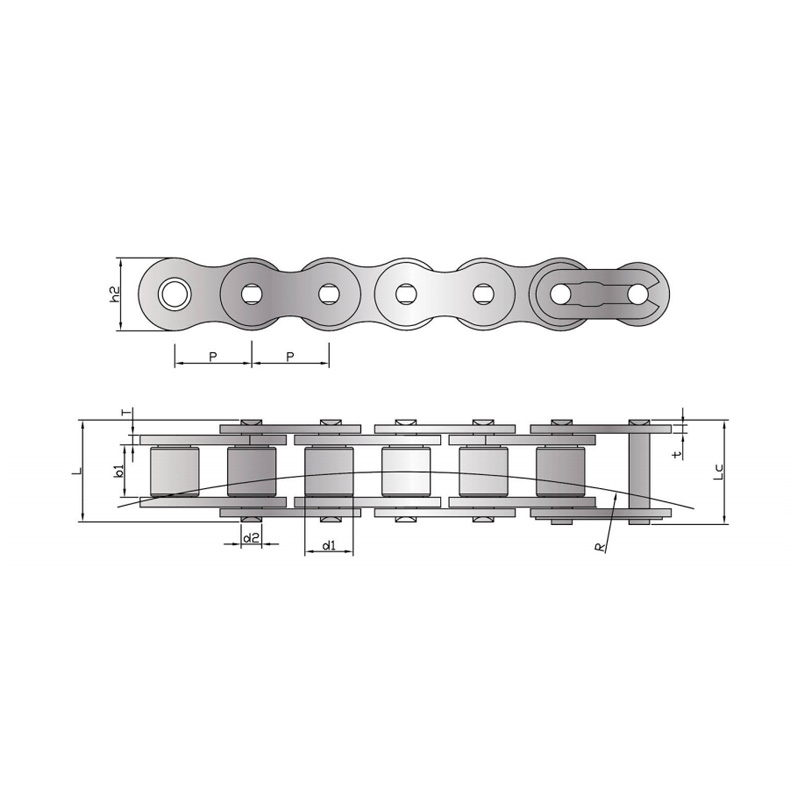
Side bow chain refers to changing the size of parts in the design of short-pitch precision roller ch...
See Details
The Anti-Sidebow chain for pushing window is a functional product with specially designed parts and ...
See Details
The A series short-pitch straight plate precision roller chain has a smaller pitch, a relatively lar...
See Details© Suzhou Fubang Machinery Chain Transmission Manufacturing Co., Ltd. Stainless Steel Roller Chains Manufacturers Conveyor Chains Suppliers
