 简体中文
简体中文 English
 русский
 Español
Fubang is a professional manufacturer specializing in the design, production and sales of stainless steel chains.
Our A series short pitch precision roller chains comply with various international standards and are...
See Details
Content
The 06B chain master link is the spring-clip connecting link built for 3/8 in (9.525 mm) pitch British Standard roller chain, and it deserves more attention than it usually gets: it is the only part of the chain assembled by hand, which makes it the most common starting point for joint failures. A clip fitted backwards, a connecting pin reused past its service life, or a joint closed onto a stretched chain will bring the drive back down within weeks. The sections below cover what the link contains, how to break the chain to length, how to seat the clip so it stays seated, and which material and fit checks matter before you close the loop.
A master link, also called a connecting link, replaces the outer link at the point where the two chain ends meet. In 06B sizes it has three functional parts: two pins machined with grooves just below the heads, a connecting plate that seats over those grooves, and a spring clip that snaps across the grooves to lock the plate in place. Because the joint opens with pliers and closes by hand, it permits chain removal, length changes, and reinstallation without a press.
The designation 06B identifies the smallest pitch in the B series of ISO 606: a nominal 3/8 in. The suffix gives the strand count — 06B-1 simplex, 06B-2 duplex, 06B-3 triplex. Duplex and triplex connecting links use staggered pin lengths so their plates do not collide between strands, which means a single-strand link cannot be substituted on a multi-strand chain.
| Dimension | 06B-1 Value | Why It Matters at the Joint |
|---|---|---|
| Nominal pitch | 9.525 mm (3/8 in) | Pin spacing must match exactly or the joint binds under load. |
| Roller diameter | 6.35 mm | The end links joined by the master link carry rollers of this size. |
| Width between inner plates | 5.72 mm | Controls clearance so the connecting plate articulates freely. |
| Pin diameter | 3.28 mm | Clip grooves are cut for this diameter; another size will not seat. |
| Minimum tensile strength | approx. 8.9 kN | The joint should match the chain, not become the weak point. |
Two fit details matter more than buyers expect. The connecting plate should match the thickness of the chain's own outer plates, or the joint sees higher bending stress every revolution. Clip groove position also varies slightly between makers at the same nominal size, which is why most chain manufacturers advise against mixing connecting hardware between brands.
Spring clip connecting links are the standard supply at 06B size. Loads per strand are light at this pitch, and a correctly seated clip holds reliably while still allowing tool-free service. Cotter-pin connecting links, where a split pin through the pin end locks the plate, appear mainly on larger B-series pitches such as 16B and above, where working loads exceed what a clip leg is designed to retain.
Offset links, sometimes called half links, come into play only when the required length lands on an odd number of pitches. An offset joint combines a pin end and a roller end in one link, which cuts fatigue strength and adds an articulation point. Most drive designers avoid them by adjusting center distance, using a tensioner, or taking the next longer even-pitch length with take-up. On a chain running anywhere near its tensile limit, an offset link is the wrong place to save a few millimeters.
Count pitches before cutting anything. The chain should end on an even number of pitches so both ends are inner links and the master link closes them as a normal outer link; an odd count forces an offset joint with the drawbacks described above.
Use a chain breaker sized for 3/8 in pitch and support the pin on the tool anvil so the side plate does not bend as the pin is driven out. Push the pin fully through and remove the outer plate together with the unwanted pitches. Where pins are pre-staked — with heads clinched into the plate on reinforced chains — grind the staked heads flush before pressing, or the plate deforms before the pin moves.
Leave room for take-up. Check the tensioner or sliding motor base travel against the final length, and expect a new chain to elongate slightly during its first hours under load as the parts bed in.
Clip orientation is the detail most often missed. On the sprocket, the closed solid end of the clip should lead the open legs as the link passes over, so contact forces keep the clip captured instead of peeling it away. Reversing and frequently stopping drives work the joint harder, so check clip seating more often there.
For the same procedure set in the context of a full drive installation, our guide on how to connect or master link a driving chain walks through joining, tensioning, and first-run checks.
Standard 06B chains and connecting links are carbon steel with hardened pins, which is correct for dry industrial drives. In food processing, beverage filling, pharmaceutical equipment, chemical plants, and outdoor machinery, washdown and humidity change the calculation: SS304 covers most wet applications, while SS316 is preferred where chlorides, salt, or mild acids are present. The connecting link should match the chain material, because the joint is the part handled at every service stop and often the first place corrosion starts. A mild-steel clip on a stainless chain rusts first, seizes, and complicates the next break-in.
B series short pitch precision roller chains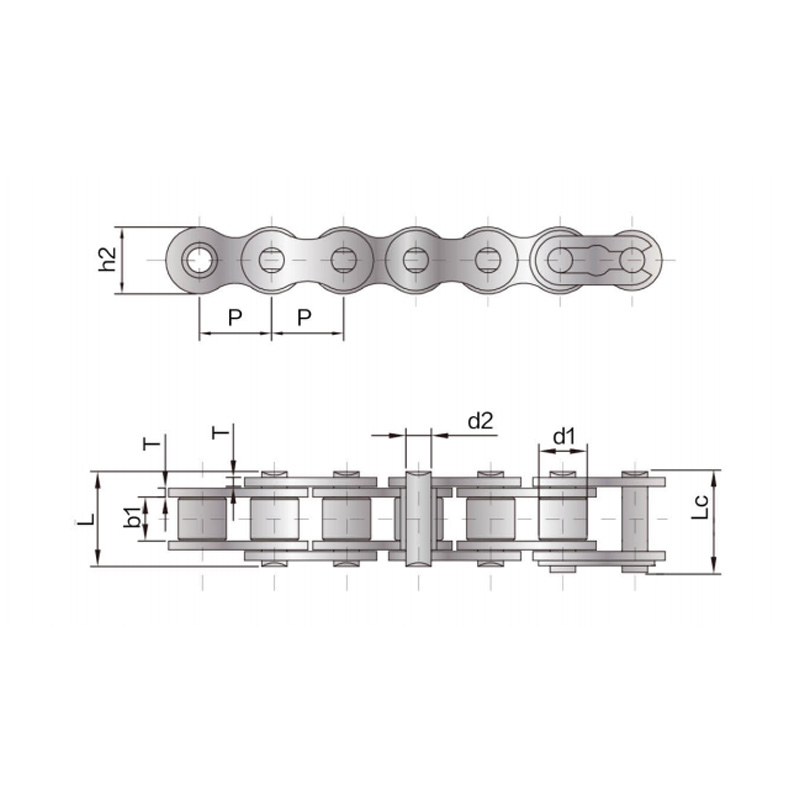 B Series Short Pitch Precision Roller ChainB series roller chains exceed ISO minimum tensile and fatigue strength values. Available in SS304 and SS316 to ISO, GB, ANSI, and DIN dimensions, they suit washdown and corrosive service in food, beverage, pharmaceutical, and outdoor applications.View Product →
These B series chains are produced in stainless grades including SS304 and SS316 to ISO, GB, ANSI, and DIN dimensions, so connecting links can be ordered in matching grades for corrosive service.
The 9.525 mm pitch is not limited to drives. Short-pitch conveyor chains built on the same B-series geometry use straight side plates that give fixtures and product carriers a flat mounting surface, and their connecting links often include attachment holes or extended pins.
short pitch precision roller chain with straight plate (B series)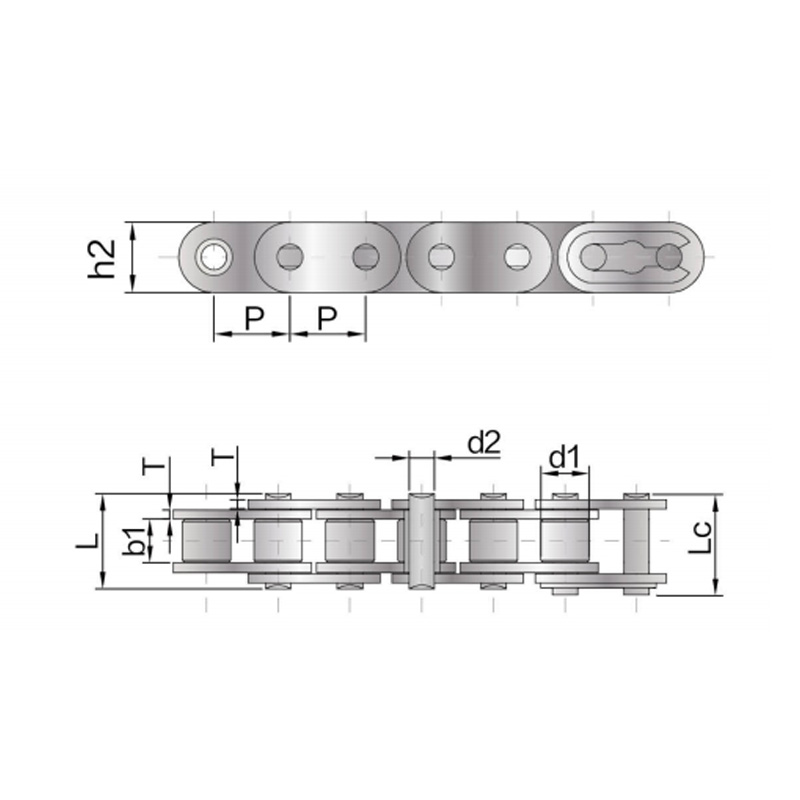 B Series Straight Plate Short Pitch Conveyor ChainBuilt on 9.525 mm B-series geometry, these conveyor chains use straight side plates providing flat mounting surfaces for fixtures and carriers, with attachment holes or extended pins on connecting links for production line use.View Product →
On conveyor versions, confirm the attachment pattern and pin style before ordering spare joints, because a plain connecting link will not accept the fixtures already mounted along the run.
A new master link running on worn sprockets is a short-lived repair. Hooked tooth profiles left by years of running with an elongated chain hammer the new joint and speed up its wear. Inspect tooth roots and profile while the chain is off, and replace sprockets together with the chain on any drive where downtime is expensive.
sprockets matched to 06B roller chain Industrial Roller Chain SprocketSprockets in A, B, C, and D hub types for chemical, textile, food, and petroleum machinery. Replace sprockets together with the chain, since worn tooth profiles accelerate wear on any newly installed connecting link.View Product →
Match sprockets by pitch, tooth count, and bore so meshing loads stay even across every link, including the joint itself.
None of these checks costs more than a few minutes, and all of them happen with the chain already off the machine — the cheapest point in the maintenance cycle to prevent a failure.
A 06B joint that lasts comes down to three things: an even pitch count before cutting, a clip seated with the closed end leading, and hardware matched to the chain in size, strength, and material. Get those right and the master link will serve as long as the chain around it.
Suzhou Fubang Machinery Chain Transmission manufactures roller chains and sprockets in carbon and stainless steel grades at its ISO 9001 and ISO 14001 certified plant in Suzhou, China, supported by in-house testing of materials and finished parts. For 06B chain, matching connecting links, or custom stainless grades for a specific environment, send us your chain specification and request a quote, noting pitch, strand count, length, and operating conditions so the joint hardware can be matched to the application.
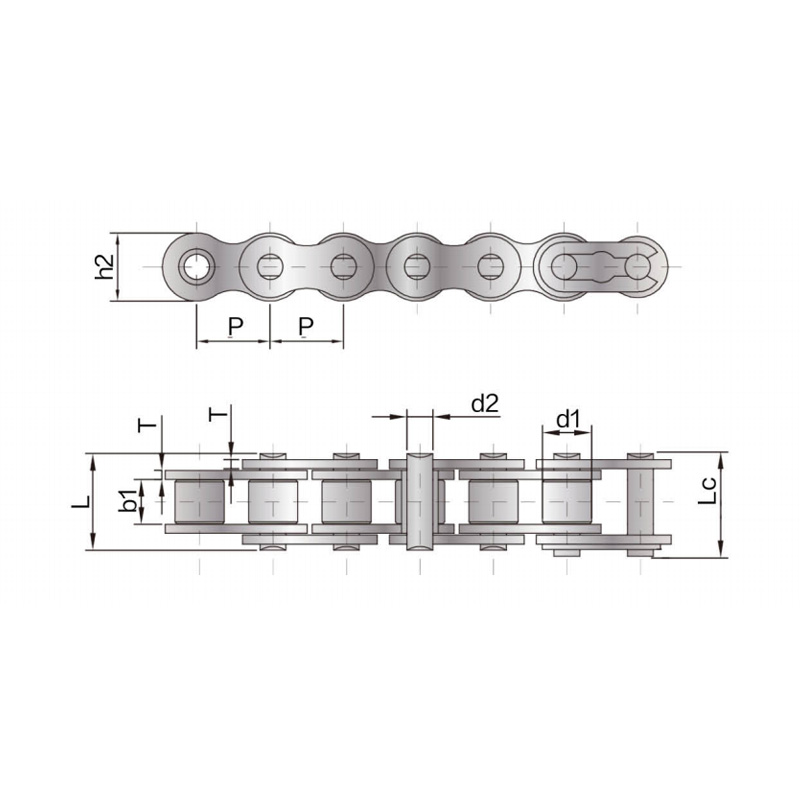
Our A series short pitch precision roller chains comply with various international standards and are...
See Details
The tensile strength and fatigue strength of the B series short pitch precision roller chain reach 1...
See Details
The Heavy-duty precision roller chain adopts a thickened chain plate design based on the short-pitch...
See Details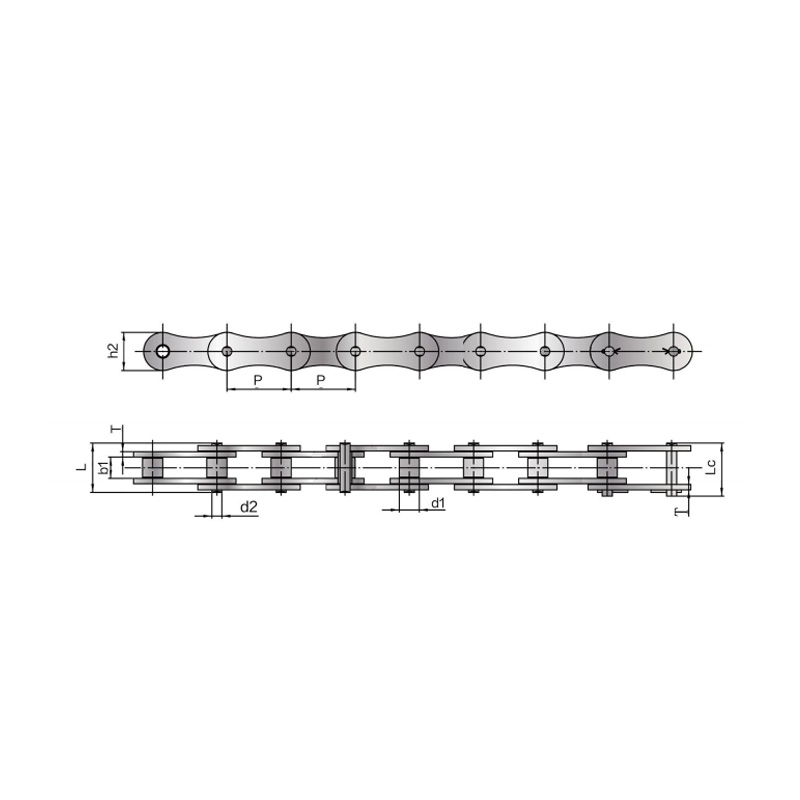
The double pitch driving chain complies with various international standards. The pitch of the doubl...
See Details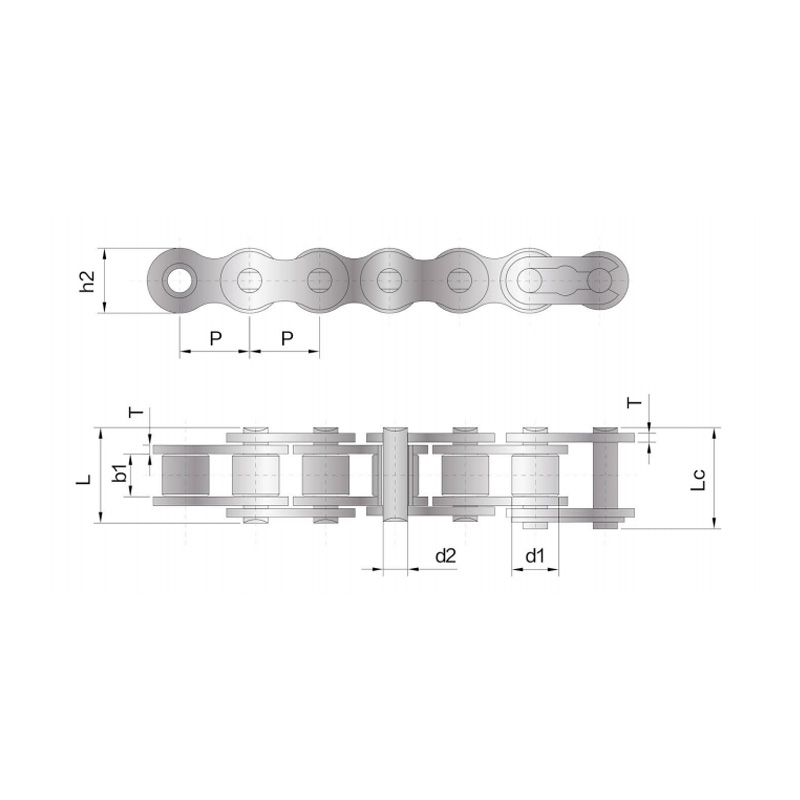
We also produce single row roller drive chains in more sizes and varieties. Customised products, sui...
See Details
Side bow chain refers to changing the size of parts in the design of short-pitch precision roller ch...
See Details
The Anti-Sidebow chain for pushing window is a functional product with specially designed parts and ...
See Details
The A series short-pitch straight plate precision roller chain has a smaller pitch, a relatively lar...
See Details© Suzhou Fubang Machinery Chain Transmission Manufacturing Co., Ltd. Stainless Steel Roller Chains Manufacturers Conveyor Chains Suppliers
