 简体中文
简体中文 English
 русский
 Español
Fubang is a professional manufacturer specializing in the design, production and sales of stainless steel chains.
Our A series short pitch precision roller chains comply with various international standards and are...
See Details
Content
A carton former is rated at 42 cases per minute, but the conveyor feeding it delivers only 40. A machine builder's first instinct is often to increase motor speed or install a variable-frequency drive, yet many plants solve the same problem with one component: an 18-tooth sprocket replacing a 19-tooth unit on the driven shaft. It is one of the simplest ratio changes available, but it affects speed, torque, chain engagement, and component wear in ways that are easy to underestimate. Here is what actually changes, why the numbers matter, and what to check before you fit one.
Every chain drive transmits motion according to a simple relationship: output speed equals input speed multiplied by the number of teeth on the driving sprocket and divided by the number of teeth on the driven sprocket. Starting with an 18-tooth driver at 1750 rpm, a 19-tooth driven sprocket produces 1658 rpm at the output shaft. Replace it with an 18-tooth driven sprocket, and the output rises to 1750 rpm, an increase of about 5.5 percent. Because the chain now acts on a smaller pitch circle, relative torque drops by roughly 5.3 percent.
| Driven sprocket | Drive ratio | Output speed | Torque factor |
|---|---|---|---|
| 19 teeth | 0.947:1 | 1658 rpm | 1.06 |
| 18 teeth | 1.000:1 | 1750 rpm | 1.00 |
The direction of the change depends on which sprocket you replace. Swapping a 19-tooth driver for an 18-tooth driver, as is common on engine-driven equipment, lowers output speed and increases torque at the driven shaft. Replacing the driven sprocket, as in the table above, does the opposite. Confirm which sprocket is the driver before you interpret the effect. In both cases, the percentage change is small enough that a 19-tooth to 18-tooth swap will not dramatically alter machine behavior, which is precisely why it is used for fine-tuning rather than major redesigns.
Eighteen teeth sit near the lower end of the recommended range for standard roller chain at moderate speed. A sprocket with fewer teeth produces more chordal action: the chain enters and leaves the sprocket along a polygon rather than a true circle, creating pulsation, vibration, and increased wear on pins and bushings. At 17 teeth these effects begin to show, and at 18 teeth they remain acceptable for most drives running below about 500 feet per minute pitch-line speed.
Tooth count also determines pitch diameter. For a 1/2-inch pitch chain, an 18-tooth sprocket has a pitch diameter of about 2.88 inches, while a 19-tooth sprocket measures roughly 3.04 inches. The difference influences center distance and the number of links required. Moving from 19 to 18 teeth shortens the chain loop by about one link pitch, so an existing chain can often be reused if the drive has an adjustable base or tensioner with enough travel. If the drive is fixed-center, check whether a half-link or an offset link is needed, although these should be avoided where continuous operation and high load make link strength critical.
An 18-tooth sprocket is dimensionally meaningless without its matching chain. The chain pitch and roller width must match the sprocket tooth profile exactly: a chain with 1/2-inch pitch will not fit a sprocket cut for a 5/8-inch pitch, even if the tooth count is the same. For general power transmission, a short-pitch precision roller chain is the natural pairing, and the A-series and B-series versions are not interchangeable because the roller width differs.
Our short-pitch precision roller chains in B series are manufactured to ISO and DIN dimensions, with stainless steel options in SS304, SS316, and other grades. When the drive is subject to shock loads, frequent starts, or heavy tension, a chain with thicker link plates delivers more margin. In either case, inspect the sprocket tooth profile before installation. A sprocket worn to a hooked shape will damage any new chain within the first few hundred hours.
 Short pitch precision roller Chains ( B series ) Manufacturers, Suppliers, FactoSuzhou Fubang: Wholesale Short pitch precision roller Chains ( B series ) Manufacturers, Short pitch precision roller Chains ( B series )...View Product →
For equipment that runs continuously, avoid mismatched commercial tolerances. Order the sprocket and chain from the same manufacturer so that pitch, roller width, and tooth form are verified against the same gauge. This is especially important on an 18-tooth sprocket, where engagement is already working with a relatively small number of teeth.
An 18-tooth sprocket appears most often in machines that need a compact drive envelope without sacrificing smooth engagement. Packaging conveyors, food processing lines, small material-handling systems, and auxiliary drives on agricultural equipment routinely use this size because it offers a good balance between pitch circle diameter and the number of teeth in contact with the chain. In food and beverage plants, stainless steel versions withstand washdown chemicals and humidity far longer than carbon steel.
Where the load is erratic, such as an indexing conveyor or a machine with frequent stop-starts, the chain takes the brunt of the impact. Heavy-duty roller chain is the right companion for an 18-tooth sprocket in those conditions because thicker plates and hardened pins resist fatigue better than standard chain. The tooth count itself does not need to change; the sprocket profile is identical for standard and heavy-duty chain of the same pitch, so upgrading the chain alone improves durability without altering the drive ratio.
 Heavy duty roller Chains Manufacturers, Suppliers, Factory - Suzhou Fubang MachiSuzhou Fubang: Wholesale Heavy duty roller Chains Manufacturers, Heavy duty roller Chains Suppliers and Factory in China, Wholesale Heavy...View Product →
An 18-tooth sprocket will not fix a misaligned drive, and a misaligned drive will wear out a new sprocket quickly. The two sprockets must sit in the same plane, and the shafts must be parallel. Correct alignment matters more at 18 teeth than at 25 teeth because each tooth carries a larger share of the load and any lateral force is concentrated on fewer contact points.
Set chain tension so the slack strand has a small sag, typically 2 to 4 percent of the center distance. Over-tensioning loads the bearings and accelerates chain elongation; under-tensioning lets the chain climb the tooth flanks and skip, which produces visible wear marks on the sprocket face. Check elongation regularly and replace the chain when it reaches 1 to 3 percent. When wear appears, replace the sprocket and the chain as a set. Fitting a new chain on a worn 18-tooth sprocket is one of the most common causes of premature chain failure in industrial plants.
Before ordering, confirm these dimensions: number of teeth, chain pitch, roller width, bore diameter, keyway width and depth, hub diameter, and overall face width. State whether the sprocket is for a driving or driven position, and specify the standard, ANSI, ISO, or DIN, so the tooth form is manufactured correctly. For washdown or corrosive service, select SS304 or SS316; for elevated temperatures, higher-alloy grades are available.
Because the 18-tooth size is often used for fine-tuning, small manufacturing differences matter. For custom bore and keyway options, our customized sprocket manufacturing covers tooth forms in ANSI, ISO, and DIN standards, with stainless steel grades selected for your operating environment. If you are not certain which size fits your drive, talk to our engineering team with your chain pitch, motor speed, and the driven speed you need; they can confirm the correct tooth count and bore configuration before you place the order.
 Conveyor Chain Sprocket Manufacturers, Chain Sprockets For SaleChina Wholesale Conveyor Chain Sprocket Manufacturers, Industrial Chain Sprockets Suppliers and Factory, Fubang offer custom roller chain...View Product →
The 18-tooth sprocket is a small part with measurable effects on machine performance. Reducing from 19 teeth increases output speed by about 5.5 percent and reduces torque by about 5.3 percent when the driver is unchanged; reversing the change does the opposite. Match the sprocket to the correct chain pitch and roller width, install with proper alignment and tension, and replace chain and sprocket as a set when wear appears. For a complete overview of matching sprockets to chains, our conveyor chain sprocket selection guide walks through the same decisions in more depth. The right answer starts with the tooth count, but it ends with the chain that meets the load.
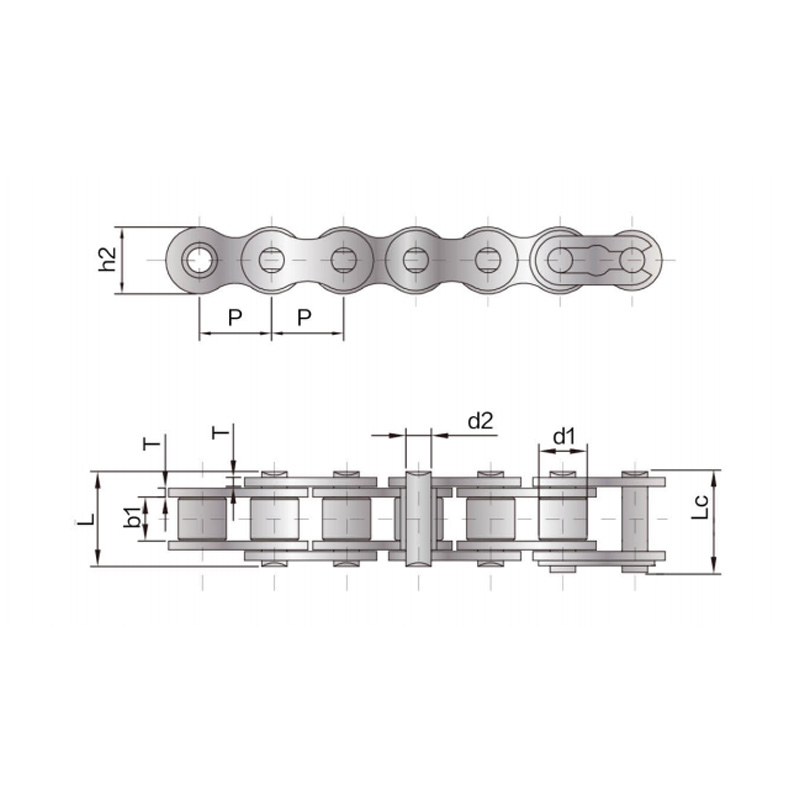
Our A series short pitch precision roller chains comply with various international standards and are...
See Details
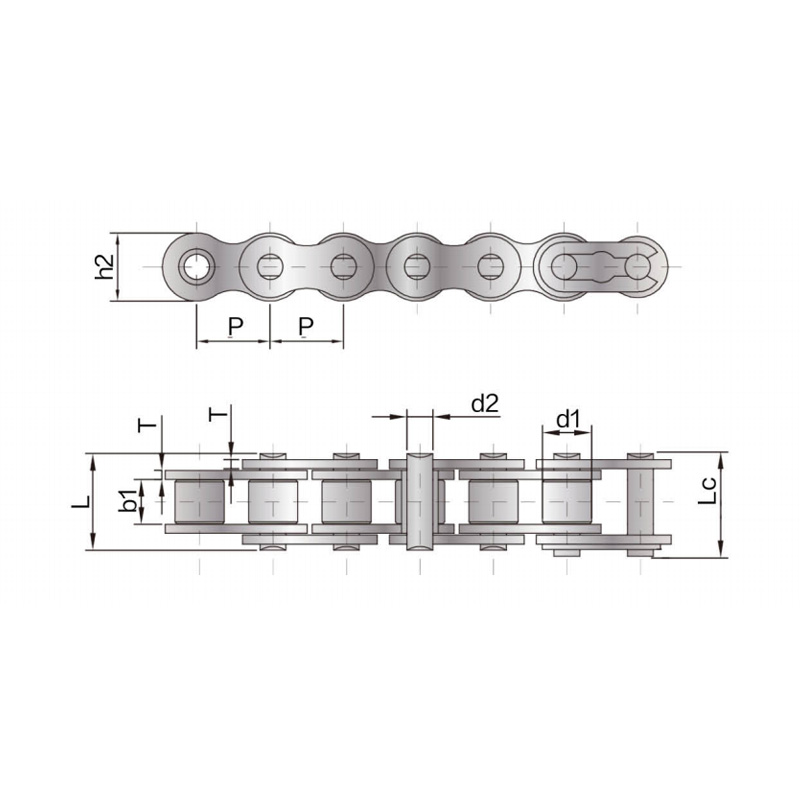
The tensile strength and fatigue strength of the B series short pitch precision roller chain reach 1...
See Details
The Heavy-duty precision roller chain adopts a thickened chain plate design based on the short-pitch...
See Details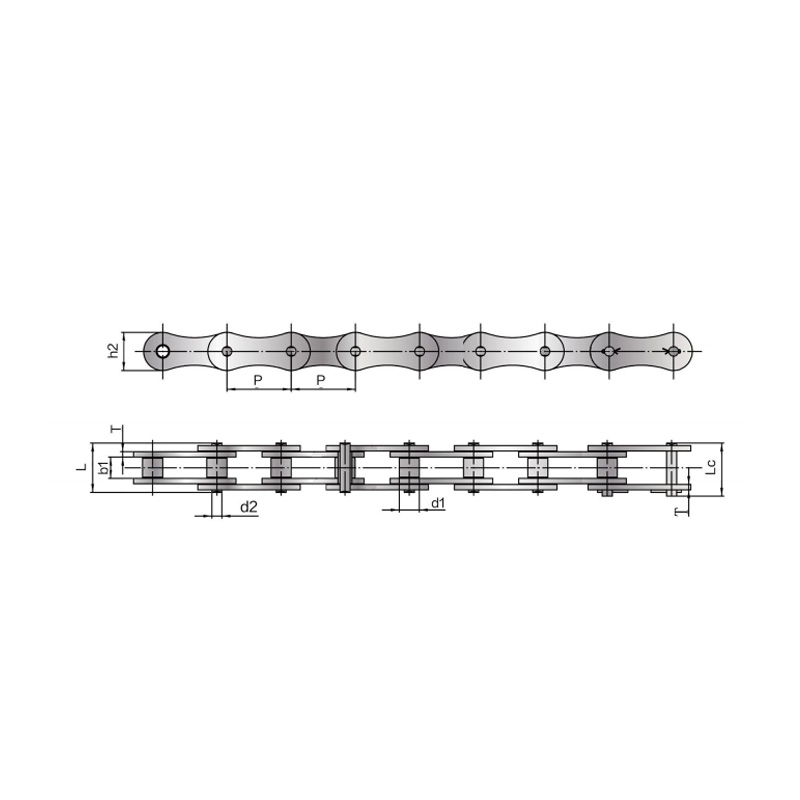
The double pitch driving chain complies with various international standards. The pitch of the doubl...
See Details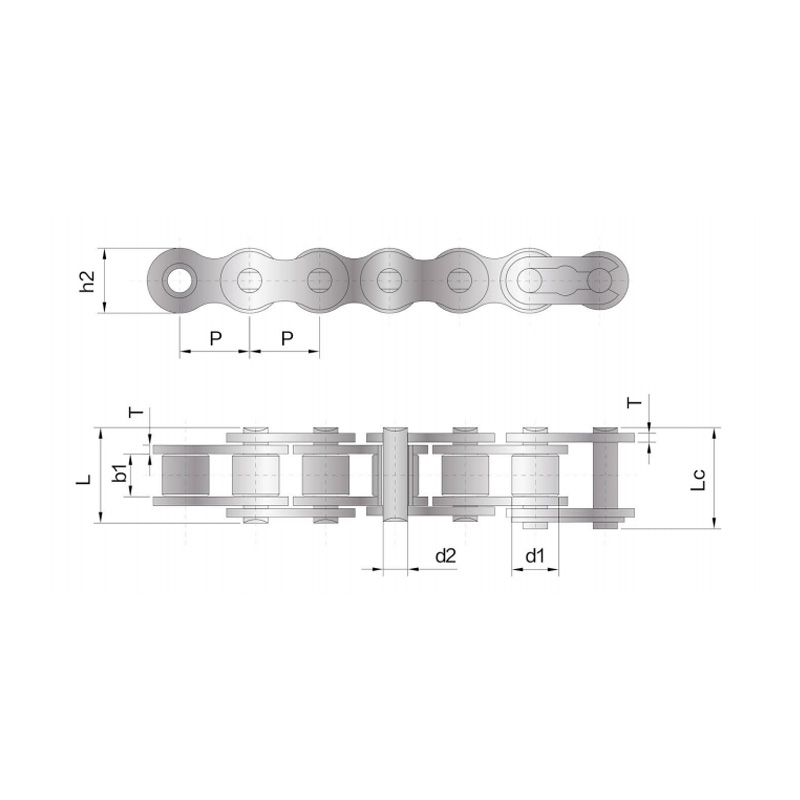
We also produce single row roller drive chains in more sizes and varieties. Customised products, sui...
See Details
Side bow chain refers to changing the size of parts in the design of short-pitch precision roller ch...
See Details
The Anti-Sidebow chain for pushing window is a functional product with specially designed parts and ...
See Details
The A series short-pitch straight plate precision roller chain has a smaller pitch, a relatively lar...
See Details© Suzhou Fubang Machinery Chain Transmission Manufacturing Co., Ltd. Stainless Steel Roller Chains Manufacturers Conveyor Chains Suppliers
