 简体中文
简体中文 English
 русский
 Español
Fubang is a professional manufacturer specializing in the design, production and sales of stainless steel chains.
Our A series short pitch precision roller chains comply with various international standards and are...
See Details
Content
Picture a packaging line stopped at 3 a.m. because a chain snapped. The maintenance crew replaces it, but the same failure returns three weeks later. In most cases, the root cause is not the chain as a whole; it is one specific component that was undersized, incorrectly heat-treated, or mismatched with the application. For anyone who buys, installs, or maintains industrial machinery, understanding the parts of a chain is practical knowledge. It decides whether a chain runs for years or fails after a few hundred hours.
An industrial roller chain is built from alternating inner and outer links. The outer link consists of two outer plates joined by two press-fit pins. The inner link consists of two inner plates joined by two press-fit bushings, with a roller free to rotate on each bushing. When the chain wraps around a sprocket, the pins pivot inside the bushings, and the rollers roll across the sprocket teeth. This repeating arrangement gives the chain its flexibility and its ability to transmit power across long distances.
Every chain specification, whether it is pitch, roller diameter, inner width, or plate thickness, refers to one of these parts. International standards such as ISO 606, ANSI B29.1, and DIN 8187 define these dimensions and their tolerances, so a chain from one manufacturer can run on sprockets designed to the same standard.
Not every chain contains all five components. A leaf chain, for example, uses only plates and pins, which gives it the strength-to-height ratio needed in forklift masts and lifting counterweights. Our BL series leaf chain delivers that tensile strength in a compact profile. But when engineers discuss the parts of a chain, they are usually describing the roller chain, so that is where we will focus.
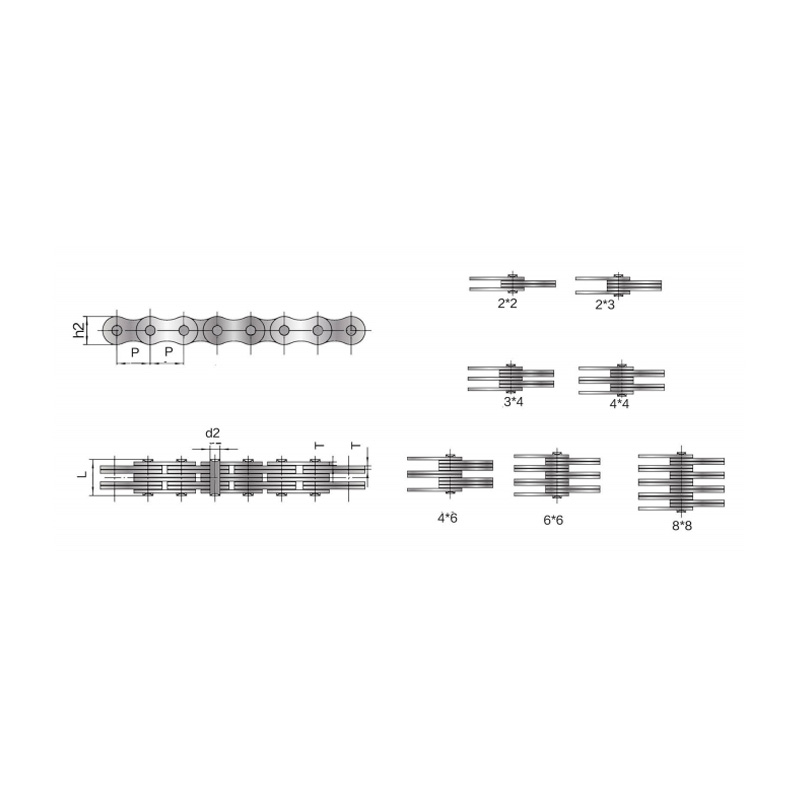 Leaf Chains ( BL Series ) Suppliers, Factory - Suzhou Fubang Machinery Chain TraSuzhou Fubang Machinery Chain: Wholesale Leaf Chain ( BL Series ) Suppliers and Leaf Chain ( BL Series ) Factory in China,BL series leaf ...View Product →
Although a chain looks like a single continuous product, it is assembled from five core components. Knowing what each part does makes it easier to compare products, diagnose failures, and match a chain to its application.
The pin is the pivot point of the chain. It passes through the bushing and is press-fit into the outer plates. Pin diameter directly affects the shear strength and fatigue life of the chain. Pins are case-hardened to resist bending and wear, and their surface finish determines how smoothly the chain articulates.
The bushing is a cylindrical sleeve pressed into the inner plates. It forms the bearing surface against which the pin rotates. Each articulation cycle generates wear at this interface, so bushing hardness is one of the main durability factors. When the bushing wears, the chain pitch increases, which leads to noise, vibration, and eventually skipping on the sprocket.
The roller fits over the bushing and rotates independently. It is the only component that contacts the sprocket teeth. As the chain engages the sprocket, the roller absorbs impact and reduces friction between the chain and the tooth profile. A cracked or worn roller accelerates damage to the sprocket and adjacent links, which is why roller condition should be checked first during an inspection.
The inner plates hold the bushings and transfer the load between the pin and the chain. Their thickness and the distance between them define the inner width of the chain. Plates are heat-treated to balance tensile strength with fatigue resistance. Fatigue cracks usually start at the plate edge next to the pin hole, so visual inspection should focus on that area.
The outer plates connect the pins and form the outside of the chain. They carry the highest tensile stress when the chain is under load. Many chains use contoured outer plates that remove material where stress is low, which saves weight and material cost while preserving strength. Straight plates are simpler and are common in conveyor chains.
| Component | Position | Main function | Typical failure |
|---|---|---|---|
| Pin | Through the bushing, fixed in the outer plates | Pivot point that connects the outer links | Bending, fatigue fracture |
| Bushing | Pressed into the inner plates | Bearing surface for the pin | Wear, chain elongation |
| Roller | Rotates on the bushing | Contacts the sprocket teeth and absorbs impact | Cracking, spalling |
| Inner plate | Side of the inner link | Holds the bushings and carries the load | Fatigue cracks near the pin holes |
| Outer plate | Side of the outer link | Connects the pins and carries tensile load | Fracture under overload |
The load path is straightforward. Tension passes through the outer plates, into the pins, then across the bushings and inner plates. When the chain bends around a sprocket, the pin rotates inside the bushing, and the roller rolls on the tooth. This two-stage articulation is what distinguishes a roller chain from a welded link chain. Each component has one main job, and the chain is only as strong as its weakest link.
This is also why field failures can be traced so often to a single part. A bent pin locks the joint and increases tension on the neighboring pins. A worn bushing reduces clearance and accentuates impact. A broken roller places the load directly on the pin and changes the effective pitch. Different symptoms, same conclusion: inspect the sprocket, replace the complete chain, and verify that the replacement matches the original dimensions.
Beyond the five core components, chains use several add-on parts for installation, adjustment, and special functions.
A connecting link, also called a master link, joins the two ends of a chain so it can be installed without a chain press. The link has a removable pin or a spring clip that locks it in place. For high-load or high-speed applications, a riveted connecting link is stronger than a clip-type link.
An offset link is required when a chain loop must be shortened by an odd number of pitches. It combines an inner plate on one side and an outer plate on the other, creating a half-pitch offset. Because it creates an asymmetrical joint, it reduces the load capacity of the chain. Use offset links sparingly and avoid placing them near the drive sprocket.
Attachment links carry pins, lugs, or brackets that push products, transfer material, or mount fixtures. Common attachment types include K, H, L, and M series. Conveyor applications often require these accessories, and the spacing between attachments must match the product size and the conveyor layout. Our short pitch conveyor chain with attachment is a frequent choice for such material-handling lines.
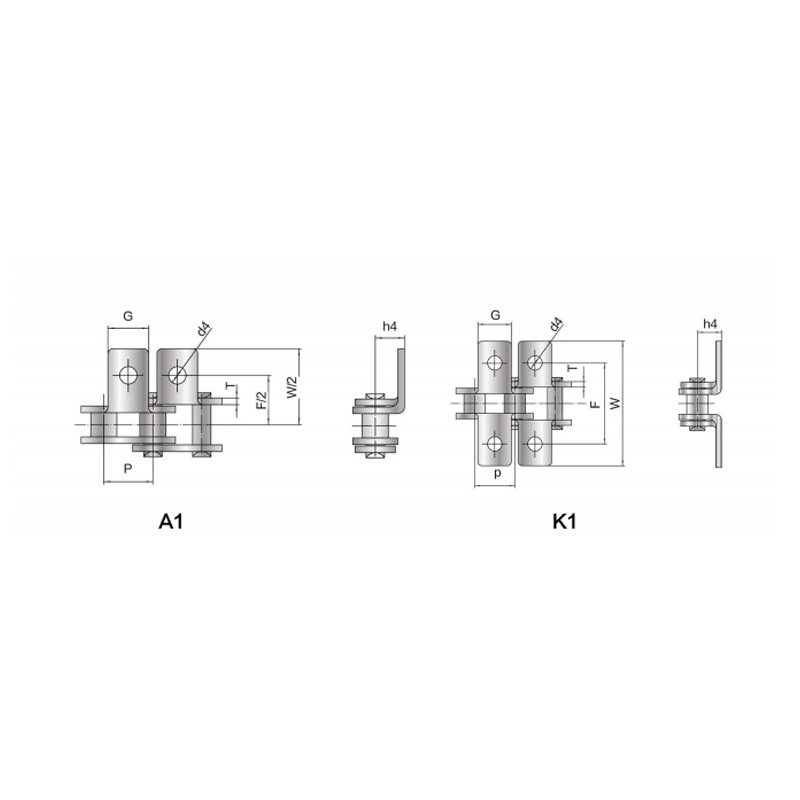 Standard Attachment Chains Manufacturers, Single Pitch Attachment ChainsFubang are China Standard Attachment Chains Manufacturers and Single Pitch Attachment Chains Suppliers, Factory offer Short Pitch Conveyo...View Product →
The sprocket is not part of the chain, but chain life depends on it. The tooth profile determines how the chain seats and releases, and it must match the chain pitch and roller diameter. A sprocket with worn teeth will damage a new chain quickly. When replacing a chain, always inspect the sprocket and replace it if the tooth profile shows visible wear.
Material selection affects every part of the chain. Carbon steel chains use case-hardened pins and bushings for wear resistance and heat-treated plates for fatigue strength. These chains are the standard choice for clean, dry, lubricated environments. In conditions with moisture, chemicals, or washdown procedures, carbon steel corrodes quickly, so stainless steel chains become the practical option.
Stainless steel is not a single material. The grade determines the balance between corrosion resistance, hardness, and cost. SS304 is the general-purpose choice for food and washdown environments, while SS316 adds molybdenum for chloride resistance. SS410 and SS420 provide higher hardness for wear-sensitive components, and SS2205 delivers a duplex microstructure for aggressive chemical service. We manufacture chains across these grades, including SS310, SS321, SS431, and SS630 for specific requirements. If you are comparing materials for a new application, our guide to stainless steel roller chain material grades explains the trade-offs in more detail.
Choosing the right chain starts with three questions.
Load determines the required tensile strength, which depends on plate thickness, pin diameter, and material grade. Speed determines the wear rate, which depends on bushing hardness and lubrication. Environment determines whether you need a stainless steel grade, surface treatment, or special seals.
Measure before you order. Check the sprocket pitch diameter, the chain pitch, roller diameter, inner width, and overall width. If you are replacing a chain with attachments, verify the distance between attachment links. A chain that looks similar from across the room can be completely incompatible once you measure it.
For standard power transmission, a short pitch precision roller chain provides a proven balance of strength and wear resistance. For conveyor lines with regular product spacing, attachment links make the difference. For lifting and height adjustment, a leaf chain handles tension without rollers. Whatever the application, start with the correct parts.
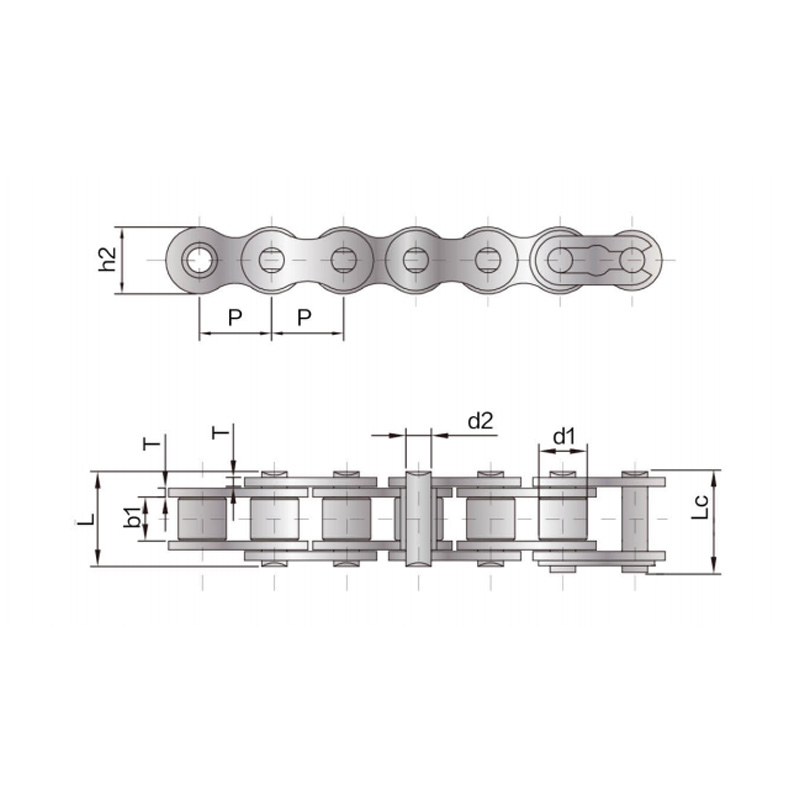 Short pitch precision roller Chains ( B series ) Manufacturers, Suppliers, FactoSuzhou Fubang: Wholesale Short pitch precision roller Chains ( B series ) Manufacturers, Short pitch precision roller Chains ( B series )...View Product →
Still not sure? Contact our engineering team with your application details. Include the chain number, sprocket teeth, operating environment, and load data. The correct solution begins with identifying the correct parts.
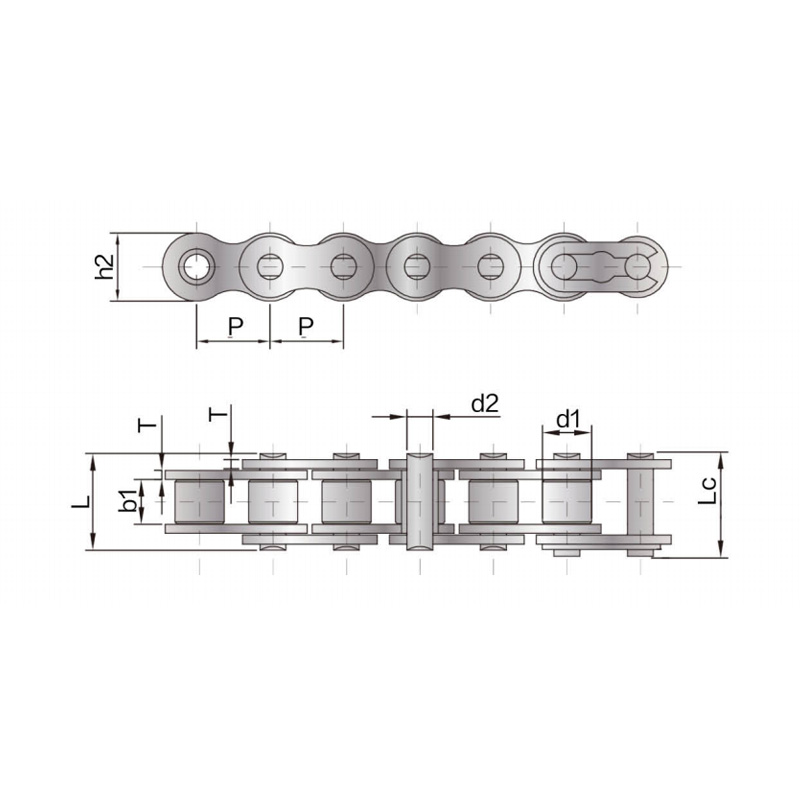
Our A series short pitch precision roller chains comply with various international standards and are...
See Details
The tensile strength and fatigue strength of the B series short pitch precision roller chain reach 1...
See Details
The Heavy-duty precision roller chain adopts a thickened chain plate design based on the short-pitch...
See Details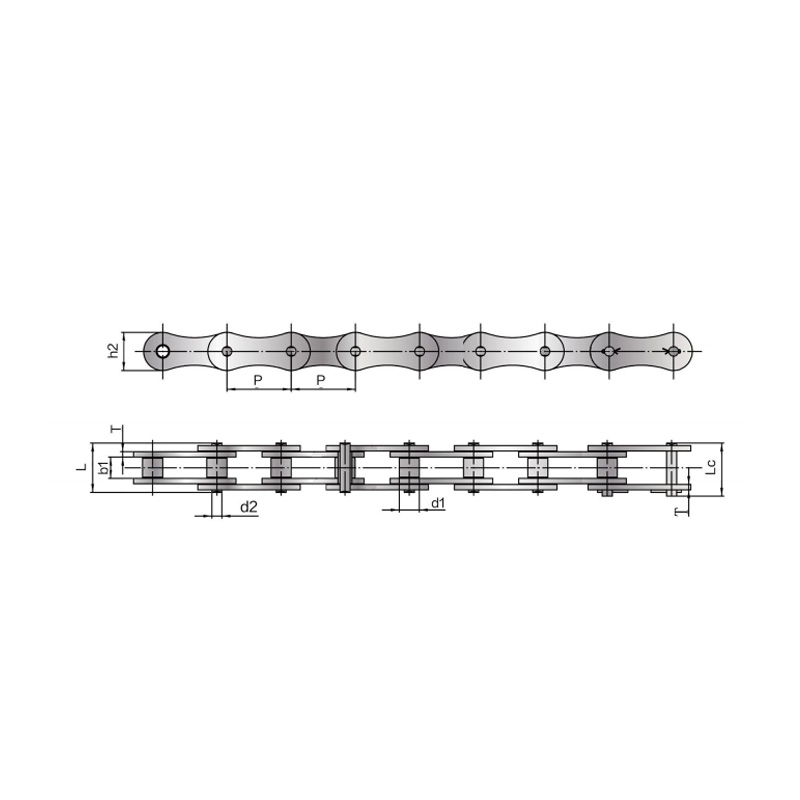
The double pitch driving chain complies with various international standards. The pitch of the doubl...
See Details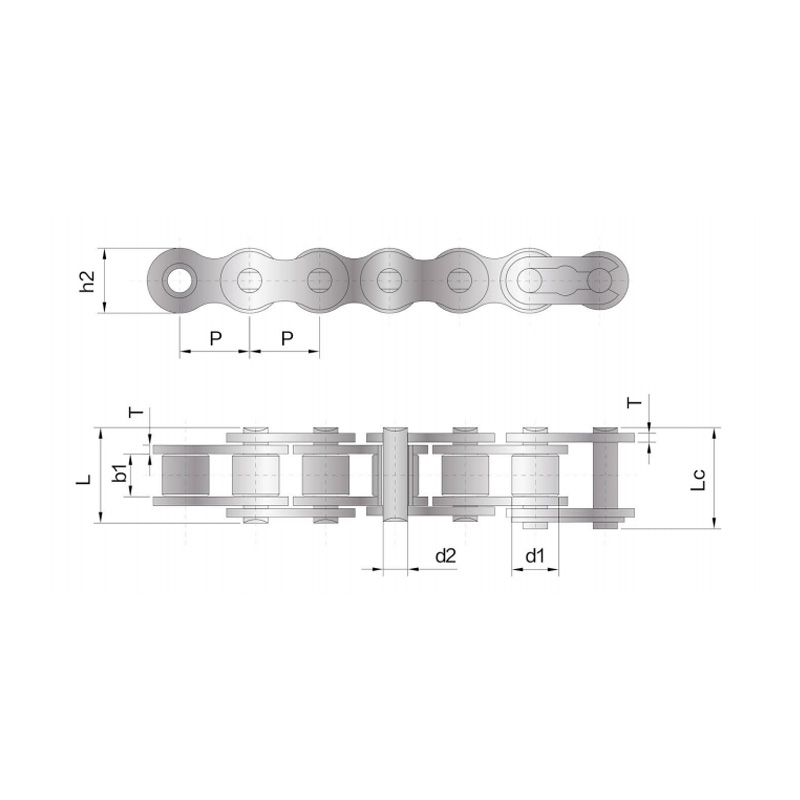
We also produce single row roller drive chains in more sizes and varieties. Customised products, sui...
See Details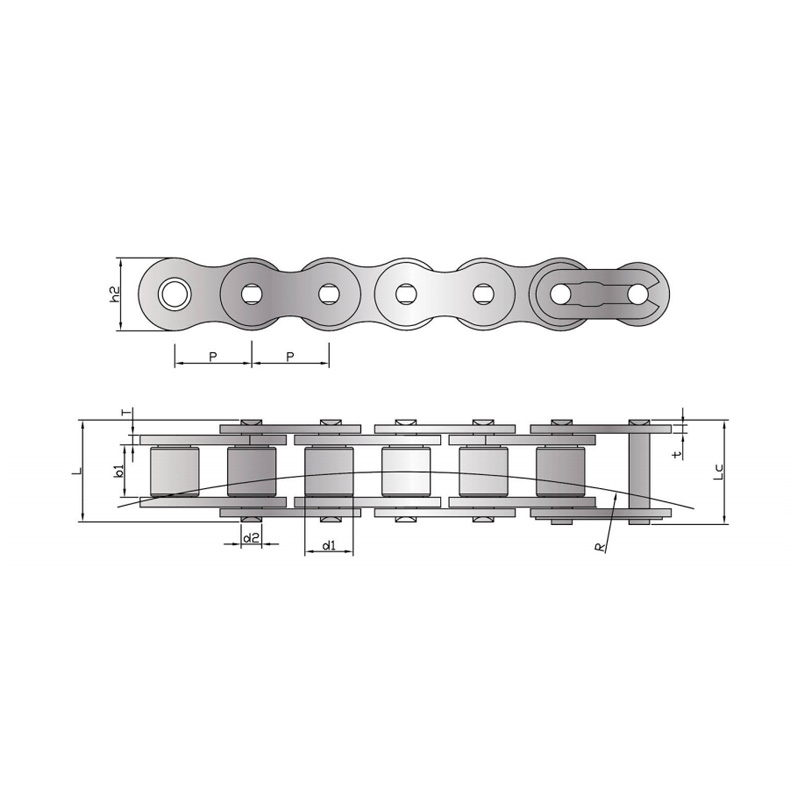
Side bow chain refers to changing the size of parts in the design of short-pitch precision roller ch...
See Details
The Anti-Sidebow chain for pushing window is a functional product with specially designed parts and ...
See Details
The A series short-pitch straight plate precision roller chain has a smaller pitch, a relatively lar...
See Details© Suzhou Fubang Machinery Chain Transmission Manufacturing Co., Ltd. Stainless Steel Roller Chains Manufacturers Conveyor Chains Suppliers
