 简体中文
简体中文 English
 русский
 Español
Fubang is a professional manufacturer specializing in the design, production and sales of stainless steel chains.
Our A series short pitch precision roller chains comply with various international standards and are...
See Details
Content
An 18-tooth sprocket is the smallest tooth count that most drive designers treat as a normal working choice. Below roughly 17 teeth, noise, vibration, and roller wear climb quickly; at 18, you keep a compact pitch diameter without those penalties. That balance is why the same count turns up on motorcycle final drives, single-speed bicycles, packaging conveyors, and pump drives alike. If you are considering a change to or from 18 teeth, the practical question is always the same: what does one tooth do to speed, torque, and chain life?
The short answer: on a sprocket this small, a single tooth moves the drive ratio by roughly 5 to 6 percent. That is enough to feel on a machine, and rarely enough to force changes anywhere else in the drivetrain. The rest of this guide covers the geometry behind that number, how to match the sprocket to the chain you actually run, and the checklist that separates a sprocket that lasts from one that hooks and skips.
Tooth count and chain pitch together fix a sprocket's size. Pitch diameter equals the chain pitch divided by sin(180°/N); at 18 teeth the denominator is sin 10°, about 0.1736, so pitch diameter comes out at roughly 5.76 times the pitch. An 18-tooth sprocket for a 0.5 in pitch chain such as ANSI #40 therefore measures about 2.88 in (73 mm) across the pitch circle, with the outside diameter slightly larger to clear the rollers.
Standards define everything else. ANSI/ASME B29.1 governs the American tooth form, ISO 606 and DIN 8187/8188 describe the European form, and China's GB standards mirror both. The forms are not interchangeable: at the same 12.7 mm pitch, ANSI #40 and British Standard 08B chain use different roller diameters and plate thicknesses, so a sprocket profiled for one series will damage chain from the other. Hub style is a separate decision — plain plate, hubbed with set screws, or bored for a taper bushing — and on a small sprocket the hub often adds more overall diameter than the teeth themselves.
Chain manufacturers are direct about minimum tooth counts: 12 teeth is the accepted floor for slow, lightly loaded drives, around 17 is the recommended minimum at moderate speeds and loads, and 21 or more for high-speed duty. An 18-tooth sprocket sits just inside the recommended band, which is exactly why it is such a common default for the smaller wheel of a pair.
The engineering reason is chordal action. A chain does not run on a smooth circle; it bridges across the teeth, rising and falling slightly as each roller seats. Speed fluctuation works out to roughly 1 - cos(180°/N), and each roller articulates through 360°/N every time it wraps a sprocket. Sharper articulation means faster pin and bushing wear, which is why a very small sprocket shortens chain life long before it breaks anything.
| Teeth | Chordal speed variation | Articulation per link | Typical duty |
|---|---|---|---|
| 12 | about 3.5% | 30° | Slow, lightly loaded drives |
| 15 | about 2.2% | 24° | Compact drivers where space is tight |
| 18 | about 1.5% | 20° | All-round choice for moderate speed and load |
| 24 | about 0.9% | 15° | Smoother, quieter drives at higher speeds |
Small sprockets also work each tooth harder, because fewer teeth share the transmitted load, so a properly made sprocket in this range has induction- or through-hardened teeth. The same logic applies to tensioner idlers: keep them at 17 teeth or more and on the slack side, or the idler will wear the chain faster than the drive itself.
Drive ratio is driven teeth divided by driver teeth, so each tooth carries more weight on a small sprocket. Swapping a 19-tooth rear sprocket for an 18 on a bicycle or motorcycle — a classic single-tooth change — makes the gearing about 5.6 percent taller. Road speed at the same pedaling or engine speed rises by a similar margin, acceleration drops by about the same amount, and a speedometer driven from the gearbox will read roughly 5 percent low. Going the other way, fitting an 18-tooth driver where a 17-tooth was mounted shortens the gearing by about 5.6 percent and increases torque multiplication at the output.
Tooth count also changes chain pull, which the ratio alone hides. Chain tension equals shaft torque divided by pitch radius, so a smaller driver loads the chain harder for the same torque. Replacing a 20-tooth driver with an 18-tooth one raises working chain tension by roughly 11 percent, and that is usually the real limit on how far a driver can shrink before the chain, not the sprocket, becomes the weak link.
Because tooth form follows the chain series, the first step in ordering any 18-tooth sprocket is to identify the chain, not the sprocket. Confirm pitch, roller diameter, and the standard the chain is built to. If the drive runs A-series short-pitch precision roller chain — the ANSI-family side of most catalogs — the mating sprocket must be profiled for the A-series roller seat and plate thickness.
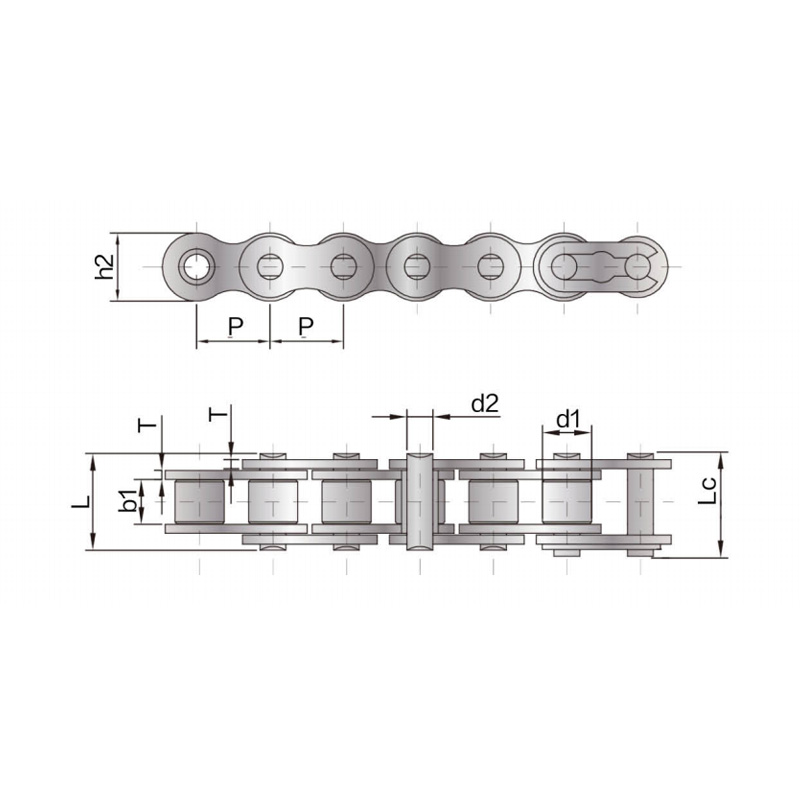 A Series Short Pitch Precision Roller ChainA-series ANSI-family roller chain used on many drives; identifying the chain series, pitch, and roller diameter is the first step before ordering a correctly profiled mating sprocket.View Product →
B-series chain, the British Standard family common on European machinery, looks almost identical at a glance but uses a larger roller and different plate dimensions at the same pitch, so it needs its own tooth profile and its own sprocket.
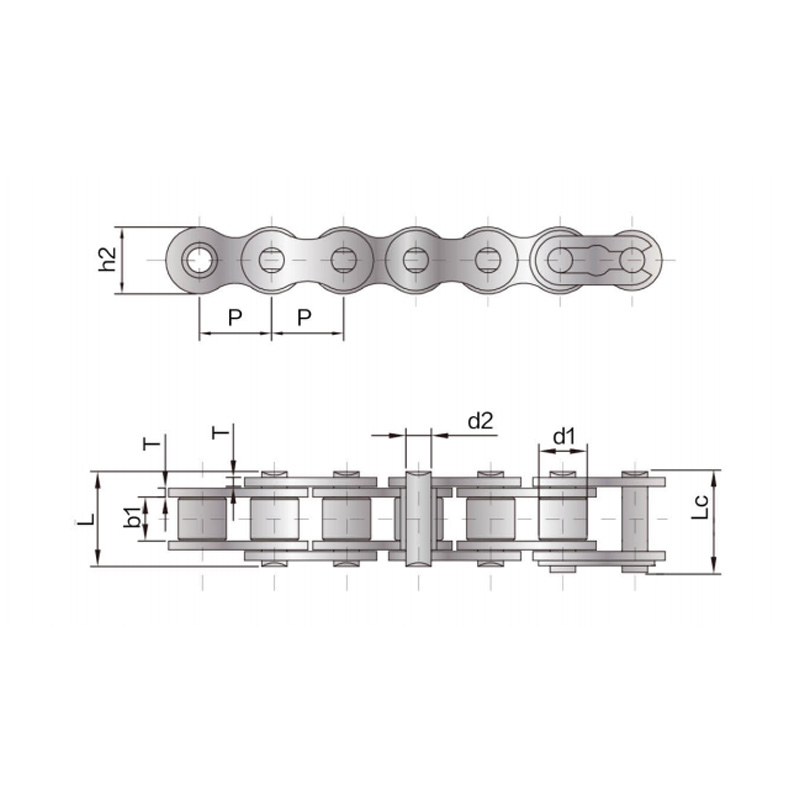 B Series Short Pitch Precision Roller ChainBritish Standard B-series chain with a larger roller and different plate dimensions than A-series at the same pitch, so it requires its own tooth profile and dedicated sprockets.View Product →
Material is the next decision. Hardened carbon steel covers most enclosed, indoor drives. Food lines, washdown areas, marine fittings, and chemical plants call for stainless steel — SS304 as the general-purpose grade, SS316 where chlorides are present — and ideally a stainless sprocket running against a stainless chain so the whole drive wears at a similar rate. One detail that has nothing to do with the sprocket but often gets blamed on it: whether the chain can be joined with a connecting link depends on its total pitch count, so cut chain to an even number of pitches whenever possible.
On two-wheelers, 18 teeth is a common count for riders trading a little acceleration for calmer cruising speed — the same one-tooth trade-off described above — and pitch series such as 428, 520, 525, and 530 serve the same role that #40 or 08B does in industrial drives.
In plants, an 18-tooth driver is typical on gearmotor outputs feeding packaging machines, bottling lines, bucket elevators, and medium-duty conveyors, where it provides a useful first reduction without wasting space. In food, pharmaceutical, and wastewater facilities the same tooth count is machined into stainless steel so the drive survives daily washdown. For the full ratio and torque calculations behind these choices, our guide on how an 18-tooth sprocket affects speed and torque works through the numbers step by step.
Before ordering or replacing an 18-tooth sprocket, work through this list:
Standard 18-tooth plate sprockets in carbon steel are commodity parts. The case for buying from a chain manufacturer appears when the requirement is not standard — stainless grades such as SS304 or SS2205, special bores, or a tooth count chosen to balance ratio and wrap on a redesigned machine. Fubang machines sprockets alongside its stainless chain ranges to GB, ISO, ANSI, and DIN specifications, and non-standard tooth counts, bores, and materials are a routine request rather than a special exception.
 Custom 18-Tooth Chain SprocketsSprockets machined to GB, ISO, ANSI, and DIN specifications, including stainless grades and special bores or tooth counts, sized to match the chain actually running in the drive.View Product →
An 18-tooth sprocket is rarely the most discussed part of a drive, but it sits exactly where compact size and chain-friendly geometry meet: large enough to protect the chain, small enough to keep the envelope tight and the first ratio reduction meaningful. Size it against the chain you actually run, respect the one-tooth percentages when re-gearing, and replace it together with its chain. If you want a tooth count, bore, or material checked against a specific drive before you order, send the specification through our contact page and the engineering team will confirm the details.

Our A series short pitch precision roller chains comply with various international standards and are...
See Details
The tensile strength and fatigue strength of the B series short pitch precision roller chain reach 1...
See Details
The Heavy-duty precision roller chain adopts a thickened chain plate design based on the short-pitch...
See Details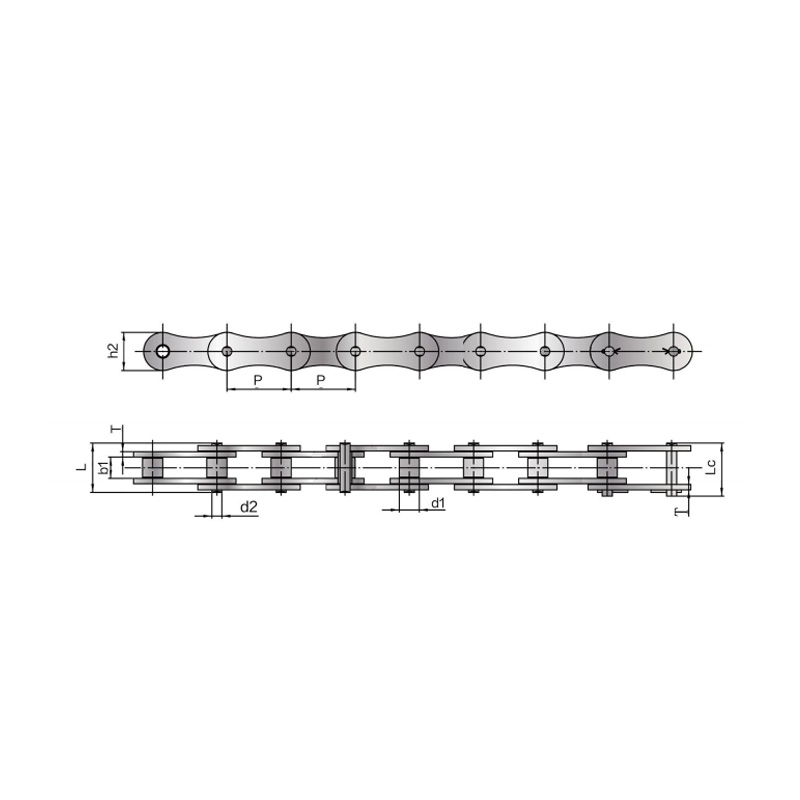
The double pitch driving chain complies with various international standards. The pitch of the doubl...
See Details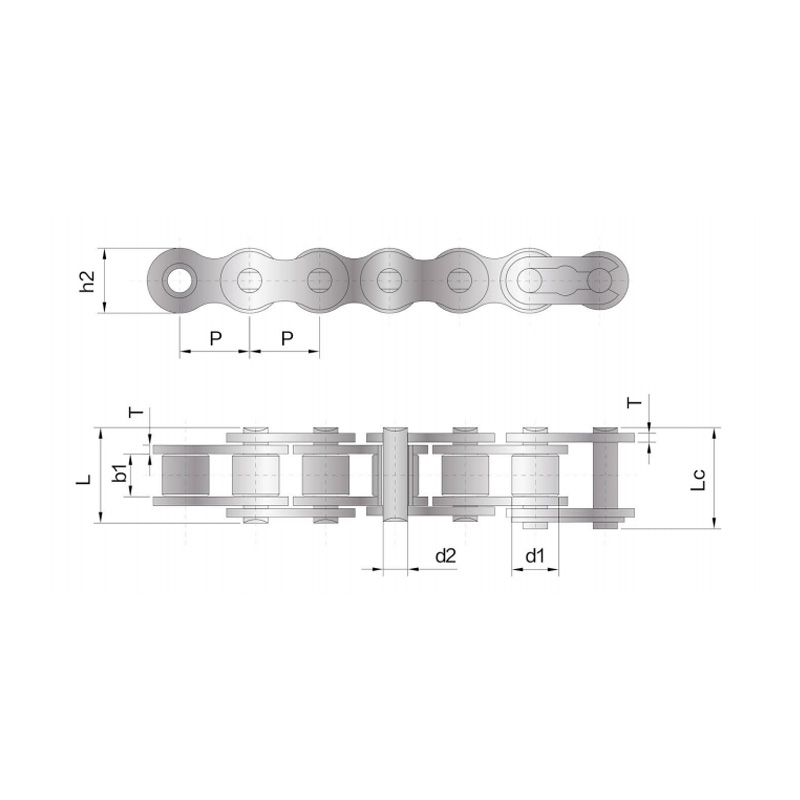
We also produce single row roller drive chains in more sizes and varieties. Customised products, sui...
See Details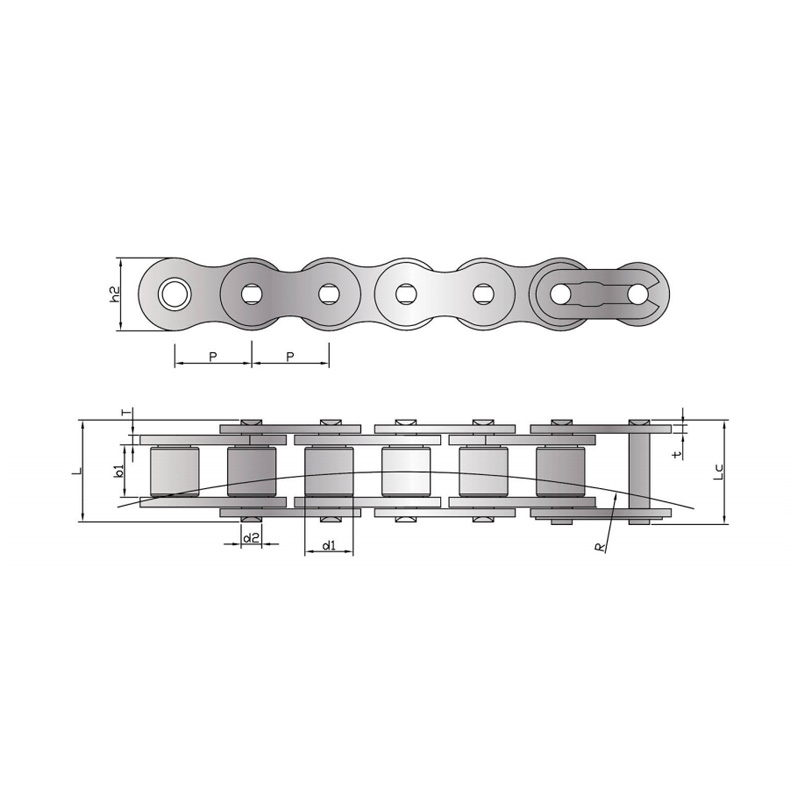
Side bow chain refers to changing the size of parts in the design of short-pitch precision roller ch...
See Details
The Anti-Sidebow chain for pushing window is a functional product with specially designed parts and ...
See Details
The A series short-pitch straight plate precision roller chain has a smaller pitch, a relatively lar...
See Details© Suzhou Fubang Machinery Chain Transmission Manufacturing Co., Ltd. Stainless Steel Roller Chains Manufacturers Conveyor Chains Suppliers
