 简体中文
简体中文 English
 русский
 Español
Fubang is a professional manufacturer specializing in the design, production and sales of stainless steel chains.
Our A series short pitch precision roller chains comply with various international standards and are...
See Details
Content
On a ketchup filling line, a carbon steel roller chain lasted about nine months before rust pits in the pins turned into elongation, and then into a skipped sprocket tooth on a night shift. The answer looked obvious: switch to stainless.
That decision works, but not for the reason most buyers assume. A 304 stainless steel chain fixes corrosion; it does not fix load. The chemistry that keeps the chain clean in a wash-down tunnel removes the hardness that gives a standard carbon chain its tensile strength and wear life. Buy 304 for the environment, then size it for the torque it will actually carry, and treat the sprocket and the lubricant as part of the same decision.
304 (AISI 304, EN 1.4301) is an austenitic chromium-nickel stainless steel with roughly 18% chromium and 8% nickel. Its passive oxide layer re-forms after a scratch, which is why it survives conditions that destroy plain carbon or nickel-plated chain.
The limits deserve equal attention. 304 is not a seawater grade: chlorides cause pitting and crevice corrosion, especially in warm, stagnant pockets where the chain sits idle. It also cannot be hardened by heat treatment, so it is softer than the through-hardened carbon steel used in standard pins and bushings.
Chain load capacity is decided at the pin and bushing joint. In a carbon steel chain, pins are through-hardened or case-hardened to roughly 40–50 HRC, which raises wear and fatigue resistance at the bearing surface. 304 only work-hardens during cold forming, and the finished pin stays far softer. Typical tensile strength for a 304 chain assembly lands roughly 30–50% below a carbon steel chain of the same number and standard, and wear life under high load is usually shorter.
The consequence is easy to miss: replacing a carbon steel chain with the same number in 304 quietly removes a large part of the safety factor. On drives, engineers commonly step up one or two chain numbers in 304 to restore the original margin, so a #40 drive may become #50 or #60 in stainless. On conveyors the better fix is usually different: lower the chain speed, add a second strand, or change attachment spacing instead of oversizing the pitch. Size from the stainless ratings published for the chain you are buying; a 20 kN carbon steel chain does not become a 20 kN stainless chain.
Stainless chain is often quoted under a single word, while the real material is settled somewhere between the sales desk and the workshop. Pins and bushings are sometimes made from a different grade than the plates, and that choice decides how the chain behaves in service.
| Grade | Corrosion behaviour | Typical chain duty | Main limit |
|---|---|---|---|
| 304 / 304L | Good in water, food and mild acids | Wash-down conveyors, dairy, bakery, general wet conveying | Chlorides, high load, galling |
| 316 / 316L | Better chloride and chemical resistance | Seafood, brine, chemical dosing, coastal sites | Crevice corrosion still possible, higher cost |
| 410 / 420 | Moderate corrosion resistance, hardenable | Pins and bushings, dry high-load drives | Rusts in wet service |
| 630 (17-4 PH) | Good corrosion plus high strength | Heavily loaded pins and drive chains | Higher cost, tight heat-treat control |
| 2205 duplex | High strength, strong chloride resistance | Heavy wet duty, wastewater, pulp and paper | Fewer small-pitch options, welding care |
Ask which grade applies to plates, pins, bushings and rollers separately. A 304 plate with a 420 pin is a legitimate design for a dry, high-load drive, but it will rust in a wash-down line. Our guide to stainless roller chain material grades explains where each grade belongs.
Most 304 stainless steel chain is supplied to ISO 606 (DIN 8187 / BS 228) or ANSI B29.1 short-pitch dimensions, in single or multiple strands. The chain number gives the pitch, so 08B is 12.7 mm and 40 is 1/2 in, but pitch alone never proves interchangeability.
For drives, A-series and B-series short-pitch precision roller chains are the common starting point, and both are produced in 304 for wet or food-facing installations.
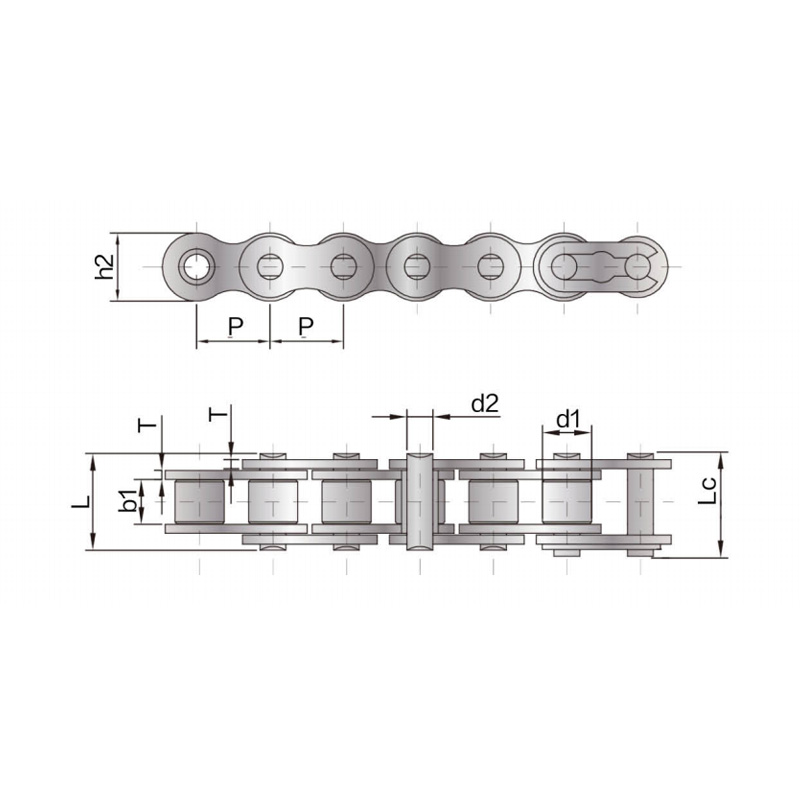 Short pitch precision roller Chain ( A series )Our A series short pitch precision roller chains comply with various international standards and are manufactured using high-quality raw materials and advanced process...View Product →
Conveyors are the strongest case for 304. The chain meets product, cleaning chemicals and open air at the same time, often in the worst spot on the line: a cooling tunnel, a blancher, a bottle washer, a cheese vat, a vegetable flume. In those positions a carbon steel chain may be replaced every 8–14 months, while a correctly sized 304 chain typically runs several times longer.
Two habits protect that gain. Keep the pin and bushing joint lubricated with a food-grade lubricant, because stainless resists rust but the joint still wears and dry stainless surfaces can gall under load. Keep carbon and stainless steel apart in the same assembly where moisture is present, since a stainless chain on a plain carbon sprocket transfers the corrosion problem to the softer part of the pair. HSS and HSC stainless steel conveyor chains with attachments cover most wash-down layouts.
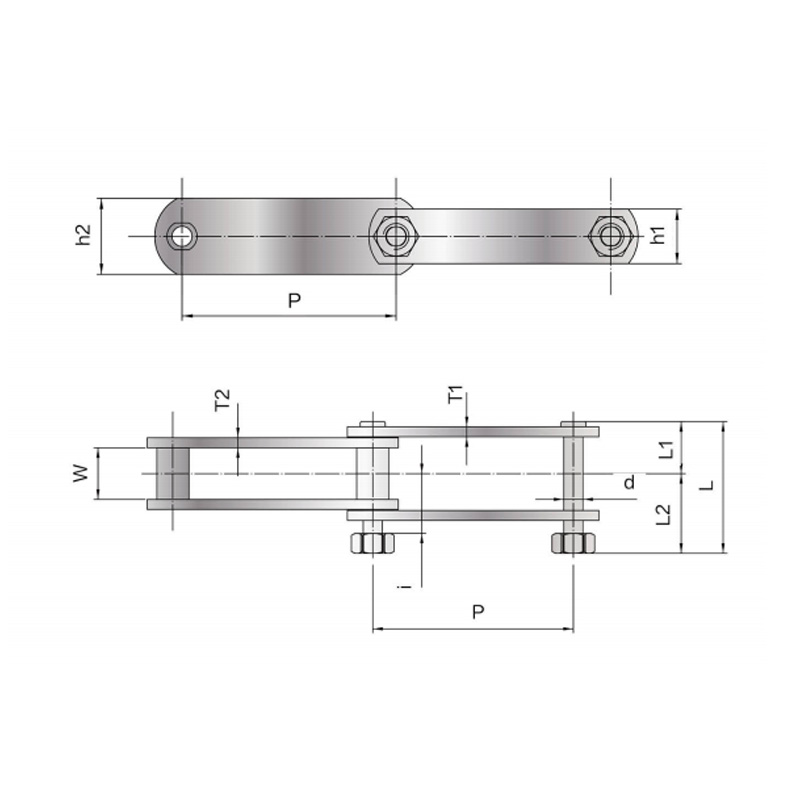 HSS HSC SAV stainless steel conveyor ChainWe can produce stainless steel transmission and conveyor chains used in traditional classic water treatment equipment, including HSS stainless steel chains, HSC stainl...View Product →
A stainless chain often arrives with a carbon steel sprocket already on the shaft, and that mismatch sits behind a fair share of "the stainless chain did not last" complaints. The chain stays clean, but the painted or unhardened sprocket rusts, sheds oxide into the joint and wears the chain from the inside.
Tooth count matters too. Fewer teeth increase chordal action and link articulation, which shortens chain life. Where the sprocket is replaced in stainless, choose a tooth count that keeps chain speed and the number of teeth in mesh reasonable, and confirm bore, keyway and hub dimensions before ordering. In many wash-down plants the practical answer is a hardened stainless sprocket on the drive with matching stainless idlers on the return.
 SprocketSprockets are widely used in mechanical transmission in chemical industry, textile machinery, food processing, instrumentation, petroleum and other industries. The cha...View Product →
The short version: 304 stainless steel chain is the right default for wet, food-contact and mildly corrosive duty, and the wrong answer when load is the only problem. Match the grade to the environment, derate for the strength you give up, and keep the sprocket and the lubrication inside the same decision. Suzhou Fubang produces stainless chain in 304, 316, 310, 321, 410, 420, 630 and 2205 and tests it on site; the plant and quality process is documented in more detail than any catalogue page.

Our A series short pitch precision roller chains comply with various international standards and are...
See Details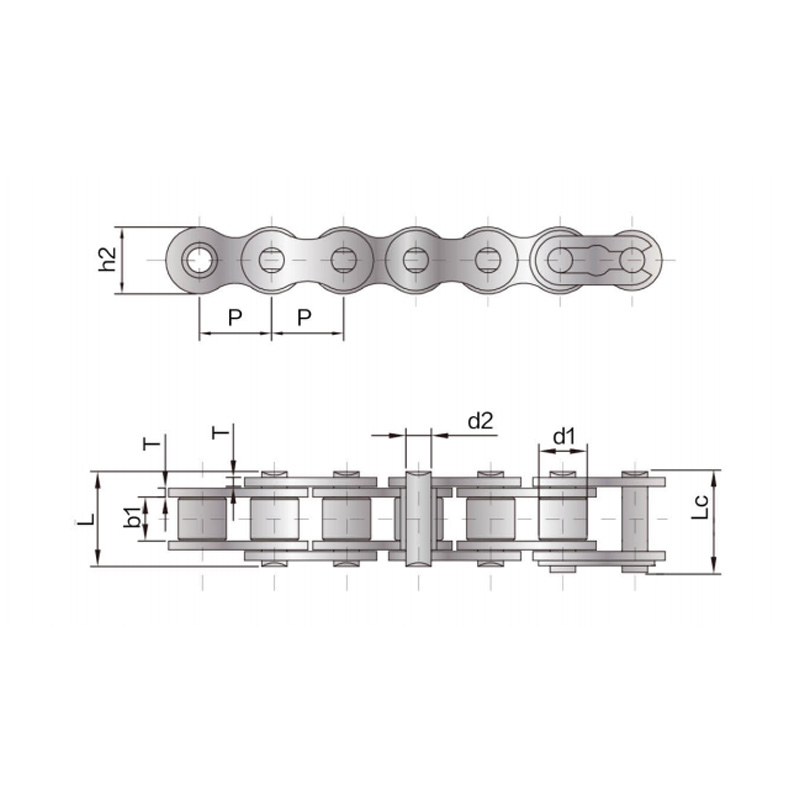
The tensile strength and fatigue strength of the B series short pitch precision roller chain reach 1...
See Details
The Heavy-duty precision roller chain adopts a thickened chain plate design based on the short-pitch...
See Details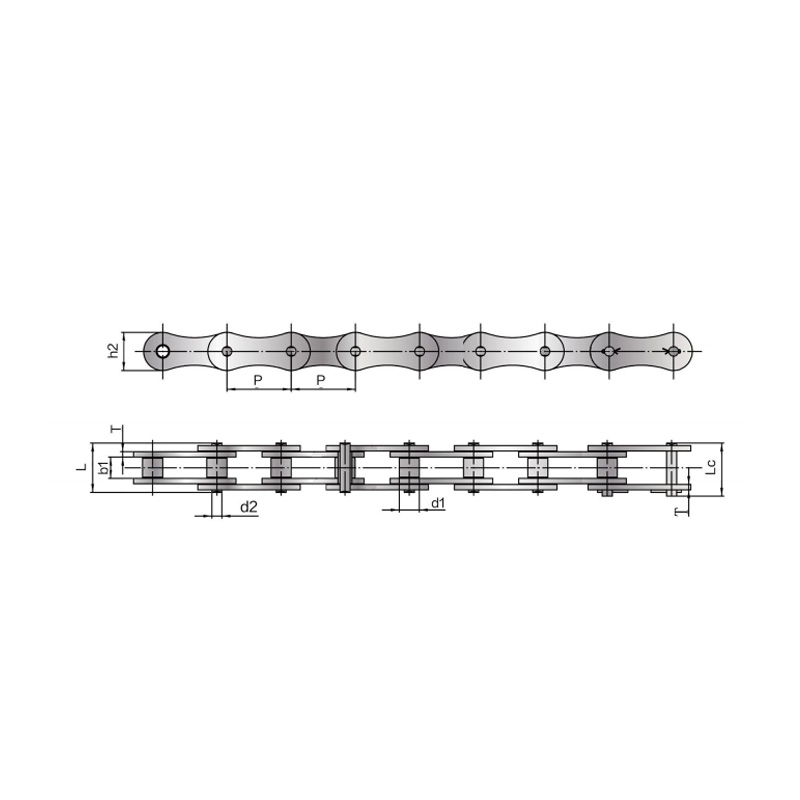
The double pitch driving chain complies with various international standards. The pitch of the doubl...
See Details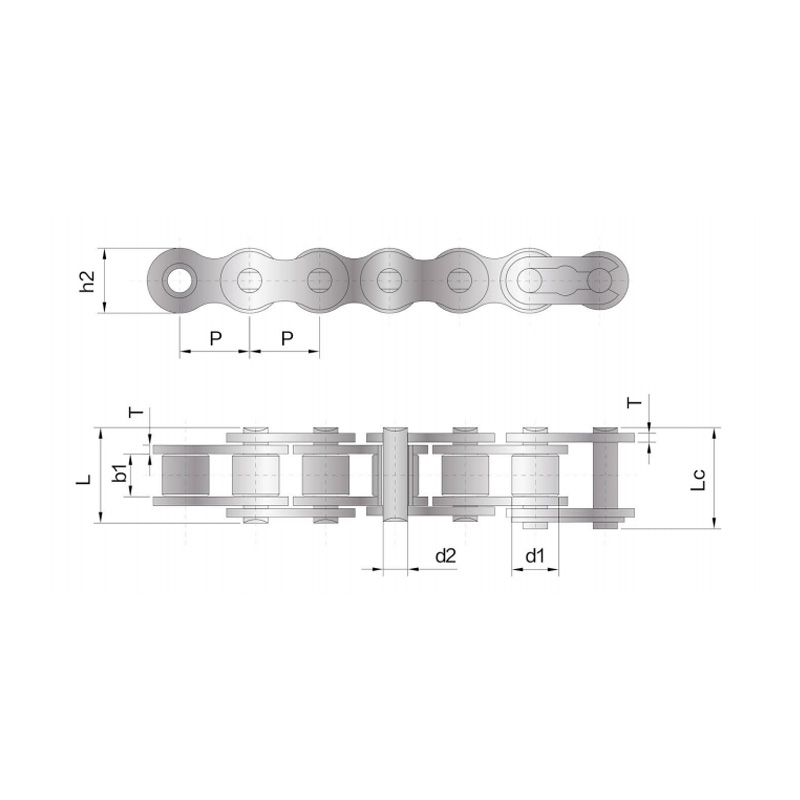
We also produce single row roller drive chains in more sizes and varieties. Customised products, sui...
See Details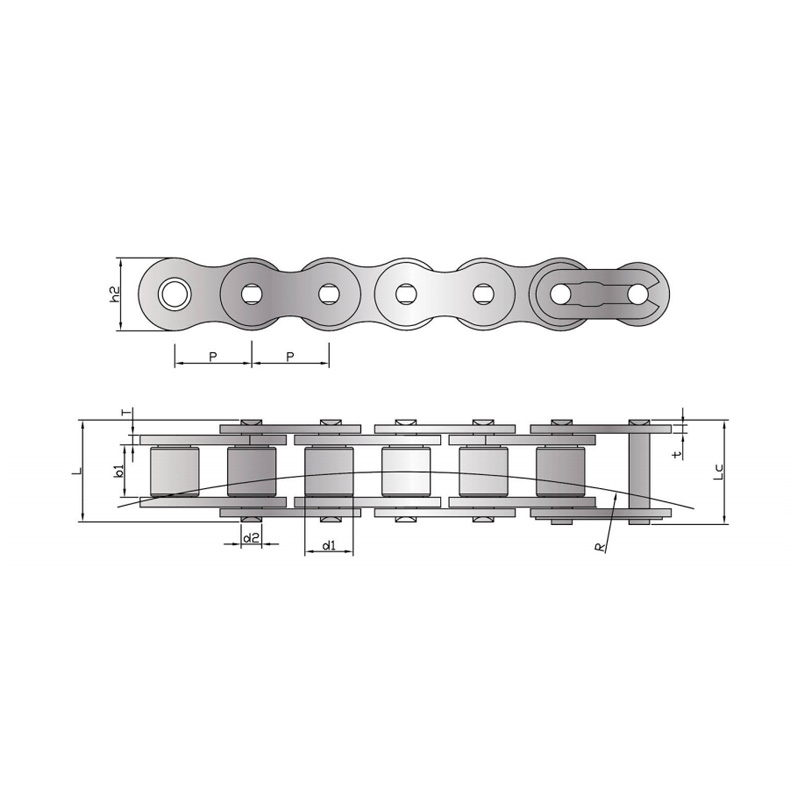
Side bow chain refers to changing the size of parts in the design of short-pitch precision roller ch...
See Details
The Anti-Sidebow chain for pushing window is a functional product with specially designed parts and ...
See Details
The A series short-pitch straight plate precision roller chain has a smaller pitch, a relatively lar...
See Details© Suzhou Fubang Machinery Chain Transmission Manufacturing Co., Ltd. Stainless Steel Roller Chains Manufacturers Conveyor Chains Suppliers
