 简体中文
简体中文 English
 русский
 Español
Fubang is a professional manufacturer specializing in the design, production and sales of stainless steel chains.
Our A series short pitch precision roller chains comply with various international standards and are...
See Details
Content
A 48T sprocket is a sprocket with 48 teeth, almost always working as the driven sprocket in a reduction stage: it cuts output speed by the ratio it creates and multiplies torque by nearly the same factor. But "48T" states tooth count only - chain pitch, bore, hub style, and material decide whether the part actually fits your drive.
The gap between what a designation says and what a part requires is where ordering problems begin. A planner orders a 48T sprocket against an old drawing, the tooth count arrives correct, and the sprocket still will not mount on the shaft because nobody confirmed pitch or bore. This guide covers what a 48-tooth sprocket specifies, how 48 teeth change speed and torque, what to confirm before ordering, and how to get full service life once it is running.
The designation states one fact: the plate carries 48 teeth. Size comes from the chain, not the tooth count. A sprocket's pitch diameter - the circle the chain's pitch line follows - depends on both values, per the formula PD = p / sin(180° / N), where p is chain pitch and N is tooth count. For 48 teeth, sin(3.75°) is about 0.0654, so pitch diameter works out to roughly 15.3 times the chain pitch. On #40 chain (12.7 mm pitch) that is about 194 mm across; on #60 chain (19.05 mm pitch) the same tooth count reaches about 291 mm.
| Chain pitch | Common chain designations | 48T pitch diameter (mm) | 48T pitch diameter (in) |
|---|---|---|---|
| 9.525 mm (3/8") | ANSI 35 / 06B | 145.6 | 5.73 |
| 12.7 mm (1/2") | ANSI 40 / 08B | 194.2 | 7.64 |
| 15.875 mm (5/8") | ANSI 50 / 10B | 242.7 | 9.56 |
| 19.05 mm (3/4") | ANSI 60 / 12B | 291.3 | 11.47 |
| 25.4 mm (1") | ANSI 80 / 16B | 388.4 | 15.29 |
Standard families matter as much as pitch. A 48T sprocket cut to ANSI/ASME B29.1 and one cut to the ISO 606 / DIN 8187 B-series share a pitch dimension but differ in roller seating and plate proportions, because the matching chains run different roller diameters. It is why a manufacturer will ask for the chain designation - #40, 08B, 12B - rather than the tooth count alone before quoting.
In a chain drive, the ratio is driven teeth divided by driver teeth. Pair a 12T driver with a 48T driven sprocket and you get a 4:1 reduction: 750 rpm in gives 187.5 rpm out, with ideally four times the torque - in practice about 3.8 to 3.9 times once meshing and bearing friction take their share. Swap the driven sprocket for a 24T and the same motor delivers only 2:1. That is the practical reason 48T gets specified: double the reduction of a 24T in one plate, with a pitch circle that still fits most conveyor head shafts.
Tooth count also smooths the ride. A larger sprocket engages more teeth at once, so chordal action - the speed ripple caused by a chain wrapping a polygon - shrinks as teeth are added. The wear-sensitive component is the small sprocket, not the large one: below roughly 12 teeth on the driver, meshing impact and wear climb sharply, which is why reductions of 4:1 and beyond keep the driver as large as the duty allows and let the driven sprocket carry the diameter. The guide to the 18-tooth sprocket on this site covers the small end of the same trade-off.
Once the ratio is settled, an order comes down to five questions:
 Industrial Sprockets for Chain DrivesAfter settling the drive ratio, sprocket choice completes the pairing. Available in A, B, C, and D hub types for chemical, textile, food, and petroleum machinery, with customized options to match the chain selected.View Product →
The chain side of the pairing deserves equal weight, because a new sprocket running a stretched chain will be worn out in weeks. Short-pitch precision roller chains in the A and B series are the standard partners for industrial sprockets, and B-series chains - common on European-built machinery - use larger rollers than ANSI equivalents at the same pitch, one more reason to confirm the standard family on both parts.
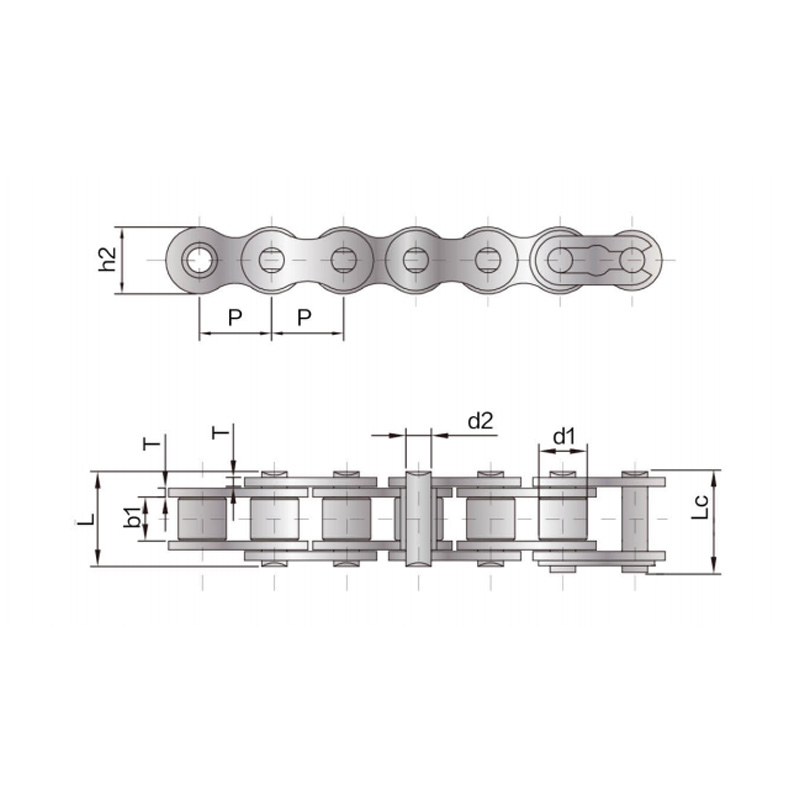 B Series Short Pitch Precision Roller ChainA standard partner for industrial sprockets, common on European-built machinery with larger rollers than ANSI equivalents at the same pitch. Its tensile and fatigue strength exceed ISO minimums for reliable transmission.View Product →
Environment decides material. On dry, protected drives, carbon steel with hardened teeth is the economical default. Where water, steam, or chemicals appear, stainless earns its cost: SS304 handles routine washdown in food and beverage plants; SS316 adds molybdenum for chloride exposure such as brines and seasoning lines; precipitation-hardened SS630 offers roughly twice the tensile strength of SS304 when a stainless sprocket must still carry real torque; and duplex SS2205 suits hot, chloride-heavy service. One trade-off to raise with suppliers: stainless teeth cannot always be surface-hardened like carbon steel, so corrosive-plus-high-load drives are often solved with a larger pitch or duplex material rather than added hardness.
This is everyday work in the industries Fubang supplies. Stainless conveyor chains and matched sprockets run food machinery lines, wastewater treatment trains, and metallurgical conveying systems, where a carbon steel plate would corrode through its tooth profile within a season. Drives that combine shock loads with demanding conditions usually pair heavy-duty roller chains with correspondingly robust sprockets.
 Heavy Duty Roller Chain with Thickened PlatesFor drives combining shock loads with demanding conditions, this chain uses thickened plates for better fatigue strength at the same size, pairing with correspondingly robust sprockets in harsh applications.View Product →
Two habits at installation decide most of the service life. First, alignment: the wide pitch circle of a 48T sprocket magnifies angular misalignment, so shim the shafts parallel rather than trusting the eye - otherwise the chain wanders to one side of the plate and cuts a groove. Second, tension: on a horizontal drive, aim for slack-side sag of about 2% of the span at mid-point; a dead-taut chain overloads bearings and tooth roots alike. Never mount a new sprocket on a worn chain, either. Stretched chain rides high on the teeth and files them into hooks within months, so replace the chain and both sprockets as a set.
After startup, inspect at 50 hours to confirm the chain is seating correctly, then monthly: watch for hooked or asymmetric tooth profiles, replace the chain around 2-3% elongation instead of waiting for visible skipping, and lubricate according to the drive's design. For a broader checklist across sprocket types and conveyor applications, the sprocket selection and maintenance guide goes deeper.
The ordering sequence, in short: tooth count sets the ratio, chain pitch sets the diameter, bore and hub decide whether it mounts, and environment picks the material. A 48-tooth sprocket with those four confirmed is among the most forgiving components in a drivetrain - larger engagement, smoother output, and years of predictable service.
Suzhou Fubang Machinery Chain Transmission manufactures chains and sprockets together at its 18,000 m² plant in Suzhou, cutting to GB, ISO, ANSI, and DIN standards in carbon and stainless grades from SS304 through SS2205, with custom bores, hubs, and strand counts produced to drawing. Production runs under ISO 9001:2015 quality management with an in-house test center, and quotations are free - when a 48T order is ambiguous, sending the old chain's specification is usually the fastest way to lock the drawing down.
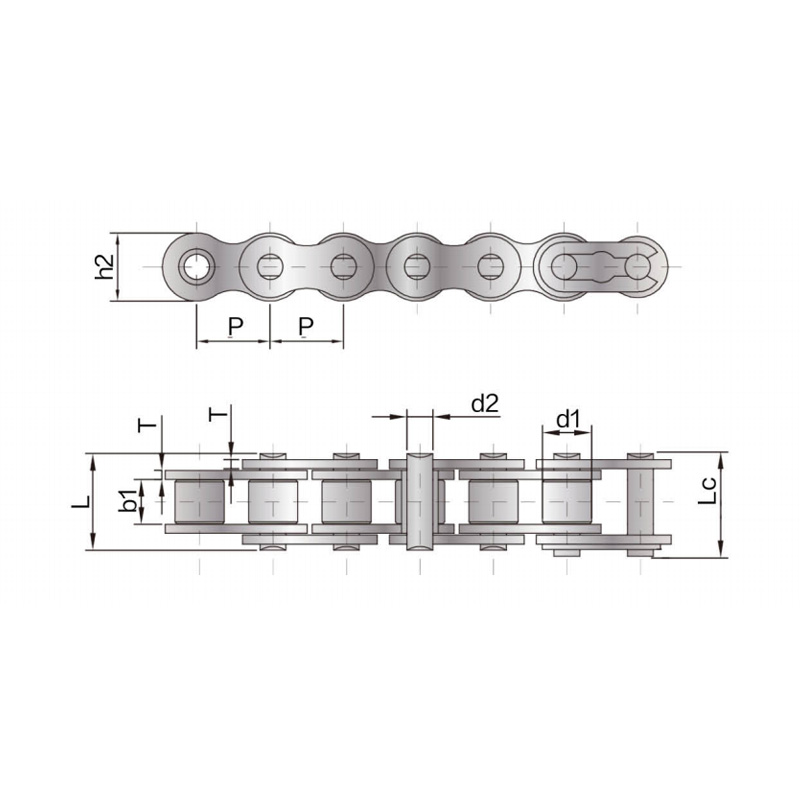
Our A series short pitch precision roller chains comply with various international standards and are...
See Details
The tensile strength and fatigue strength of the B series short pitch precision roller chain reach 1...
See Details
The Heavy-duty precision roller chain adopts a thickened chain plate design based on the short-pitch...
See Details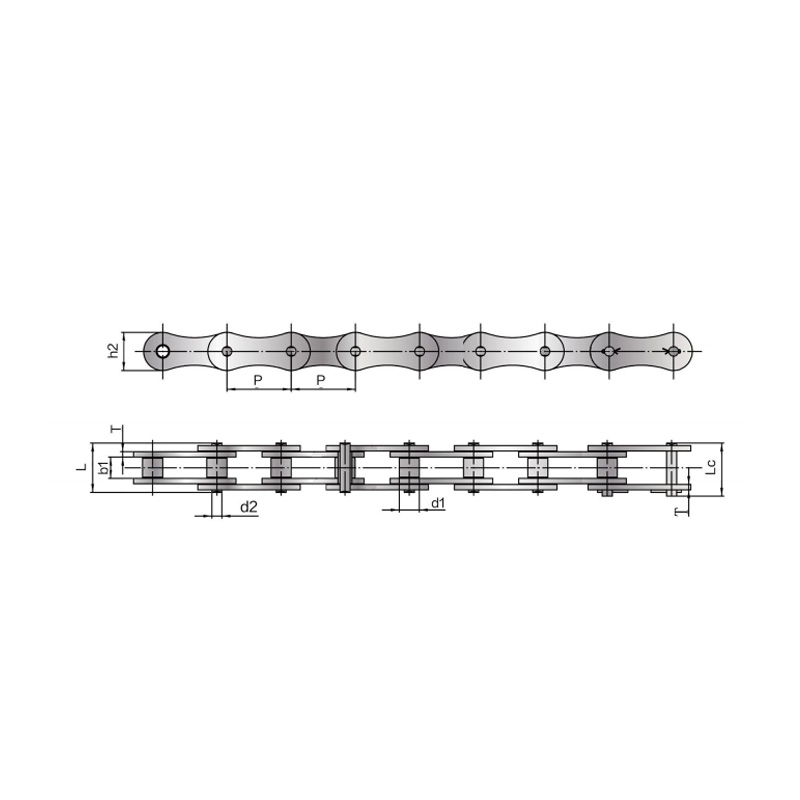
The double pitch driving chain complies with various international standards. The pitch of the doubl...
See Details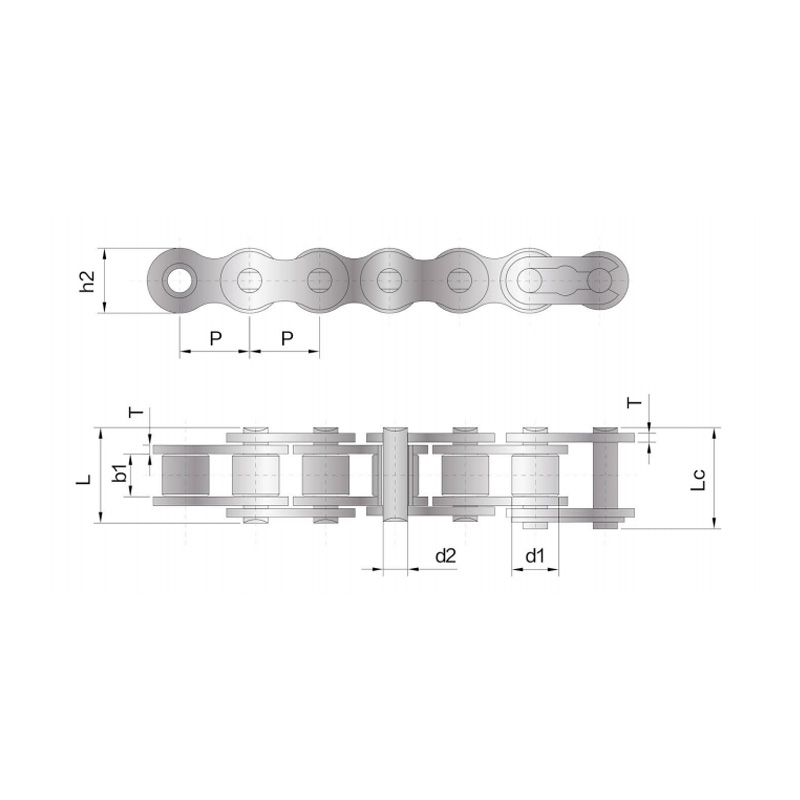
We also produce single row roller drive chains in more sizes and varieties. Customised products, sui...
See Details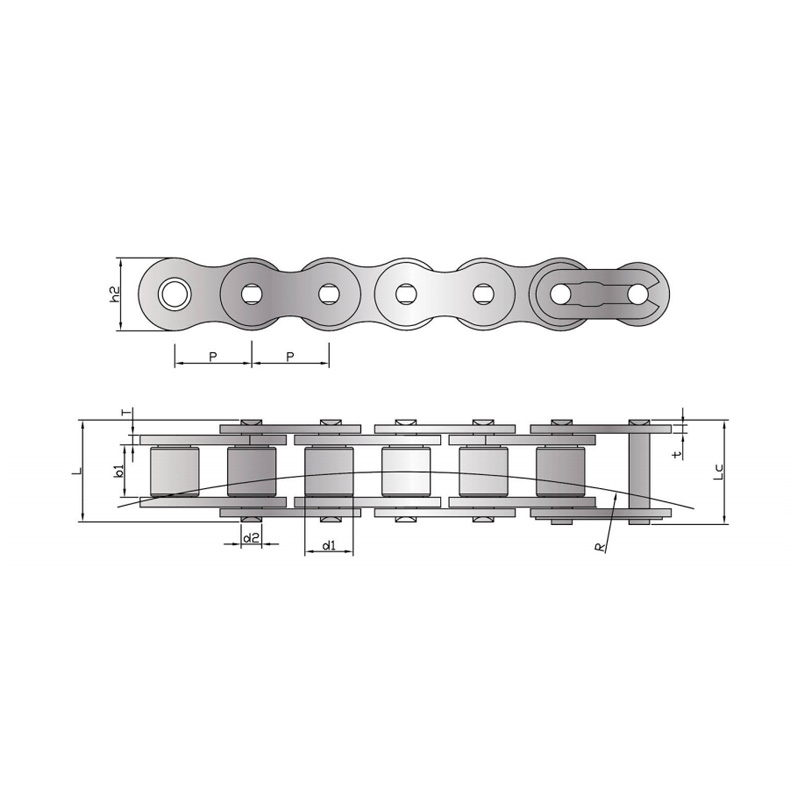
Side bow chain refers to changing the size of parts in the design of short-pitch precision roller ch...
See Details
The Anti-Sidebow chain for pushing window is a functional product with specially designed parts and ...
See Details
The A series short-pitch straight plate precision roller chain has a smaller pitch, a relatively lar...
See Details© Suzhou Fubang Machinery Chain Transmission Manufacturing Co., Ltd. Stainless Steel Roller Chains Manufacturers Conveyor Chains Suppliers
