 简体中文
简体中文 English
 русский
 Español
Fubang is a professional manufacturer specializing in the design, production and sales of stainless steel chains.
Our A series short pitch precision roller chains comply with various international standards and are...
See Details
Content
A 316 stainless chain can cost several times what the same pitch costs in carbon steel, and on a dry indoor drive that premium buys nothing you will ever notice. Move that chain onto a washdown line running chloride-based cleaning chemicals, or onto a dock conveyor breathing salt spray, and the arithmetic reverses: the carbon steel chain is scrap within a season while the 316 chain keeps running. Nearly every 316 chain buying decision comes down to one question, which corrosion mechanism is actually present in the application.
A 316 stainless chain is a roller, conveyor or leaf chain manufactured from AISI 316 (EN 1.4401) or its low-carbon variant 316L (EN 1.4404), an austenitic chromium-nickel stainless steel with 2 to 3 percent molybdenum added to resist pitting and crevice corrosion in chloride-bearing environments.
The molybdenum is the whole difference. Remove it and you have 304, an alloy that behaves well in fresh water, mild acids and general atmospheric exposure, then pits quickly once chlorides arrive. Molybdenum lifts the pitting resistance equivalent number from roughly 18 to 20 in 304 to roughly 23 to 28 in 316, which is why 316 became the default for coastal, marine, food processing and chemical duty.
Dimensionally, a 316 chain is usually built to the same standards as its carbon steel counterpart. Pitch, roller diameter, inner width and pin diameter stay inside ISO 606, DIN 8187 or ANSI B29.1 tolerances, so the chain drops onto the same sprockets that are already on the machine. What changes is the material behind those dimensions, and the load ratings that come with it.
A 316 stainless chain is a chain whose plates, pins, bushings and rollers are all formed from 316 or 316L austenitic stainless steel to standard chain dimensions, so pitch and roller geometry remain interchangeable with carbon steel chain of the same number.
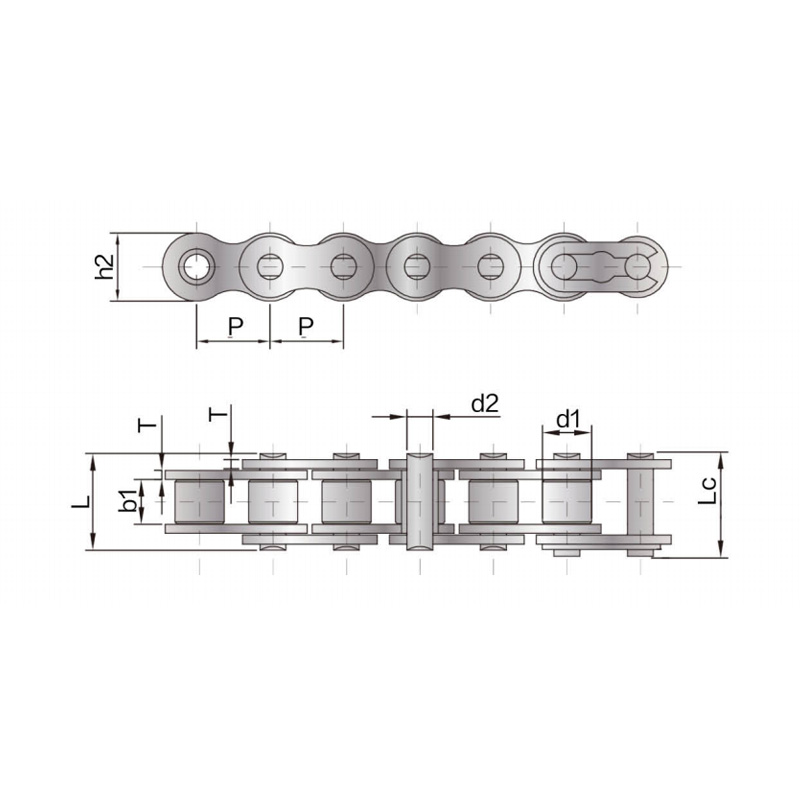 Short pitch precision roller Chain ( A series )Our A series short pitch precision roller chains comply with various international standards and are manufactured using high-quality raw materials and advanced process...View Product →
Choose 316 over 304 whenever chlorides are present in a concentration that matters; choose 316L over 316 whenever the chain will be welded or held at elevated temperature after fabrication.
| Grade | Chromium | Nickel | Molybdenum | Carbon max | Typical chain duty |
| 304 | 18.0-20.0% | 8.0-10.5% | 0% | 0.08% | Fresh water, general wet areas, mild chemicals |
| 316 | 16.0-18.0% | 10.0-14.0% | 2.0-3.0% | 0.08% | Chlorides, coastal air, food washdown, plating lines |
| 316L | 16.0-18.0% | 10.0-14.0% | 2.0-3.0% | 0.03% | Welded attachments, elevated temperature, heavy plate |
316L is not a stronger alloy. Its only real difference is carbon held to 0.03 percent or below instead of 0.08 percent, which blocks chromium carbide precipitation in the heat-affected zone of a weld. On a chain with welded attachments, that single change decides whether the seam stays passive or starts rusting within months.
Stainless steel resists corrosion by holding a passive chromium oxide film. Anything that strips that film, whether chloride, acid or abrasion from a dry-running chain, restarts the corrosion clock.
If you are still narrowing grades, our breakdown of stainless steel roller chain material grades covers how 304, 316, 410 and 420 behave under load and moisture.
316 chain pays for itself in three situations: continuous chloride exposure, aggressive chemical washdown, and any application where a rust stain is itself a product defect rather than a maintenance annoyance.
Chlorinated and acidic cleaning agents, brine, sauces and dairy residues attack 304 quickly. Loose rust particles are a contamination risk, not just a cosmetic problem.
Salt spray, sludge, effluent and chemical dosing lines keep the surface wet with chloride-bearing media for most of the working day.
Acid mist, electroplating baths and anodizing lines combine low pH with chlorides, the exact combination that makes 304 pit.
Corrosion resistance is not wear resistance. A 316 chain running dry against a 316 sprocket can elongate as fast as a carbon steel chain, and sometimes faster, because austenitic stainless has lower hardness and a strong tendency to gall.
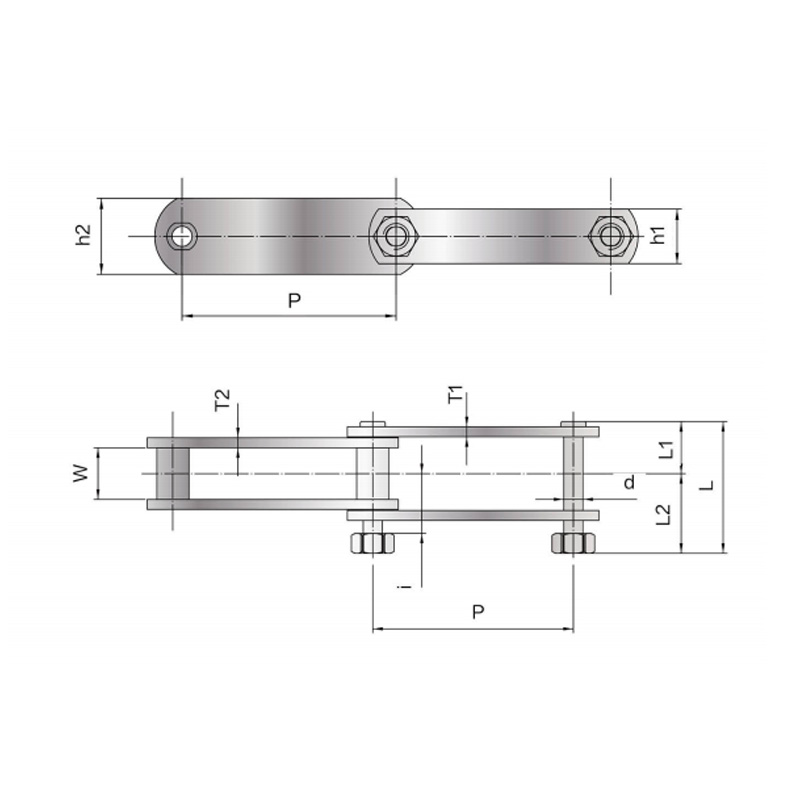 HSS HSC SAV stainless steel conveyor ChainWe can produce stainless steel transmission and conveyor chains used in traditional classic water treatment equipment, including HSS stainless steel chains, HSC stainl...View Product →
Five numbers decide whether a 316 chain fits and lasts: pitch, roller diameter, inner width, pin diameter and attachment spacing.
Working load for a stainless chain is commonly derated relative to the carbon steel version of the same pitch, and a 20 to 30 percent reduction is a reasonable planning figure. Always confirm the number against the published data for the exact chain you are buying.
 SprocketSprockets are widely used in mechanical transmission in chemical industry, textile machinery, food processing, instrumentation, petroleum and other industries. The cha...View Product →
The material certificate tells you what was melted; the hardness and dimensional reports tell you what was actually built.
A supplier who can walk you through in-house testing and inspection is usually a supplier who can explain why a batch behaved a certain way when something goes wrong in the field. Our own manufacturing and testing facilities exist for exactly that reason.
A 316 chain will not rust away, but it will still elongate, and lubrication remains the single largest factor in its service life.
Replace a drive chain once elongation reaches roughly 1.5 percent over the measured span, and around 2 to 3 percent on slower conveyor duty. Continuing to run past those points transfers the wear into the sprocket, which costs far more than the chain.
The four questions below come up in almost every stainless chain enquiry, and the answers are short enough to settle a specification argument in one pass.
In the annealed condition, austenitic stainless steel is essentially non-magnetic, so a 316 chain shows very little magnetic pull. Pins, rollers and bushings are cold formed, however, and cold working makes austenitic stainless slightly magnetic. A weak magnetic response on those parts is normal and is not evidence of the wrong material.
Yes, as long as both are built to the same standard and pitch. The dimensions are interchangeable, but the working load rating and the pin and bushing design may differ, so check the published data before swapping under a loaded drive.
No. Austenitic stainless steel has lower hardness and fatigue strength than the alloy steels used in standard roller chain, so stainless chains are usually derated for the same pitch. Plan for a meaningful reduction in working load and confirm the figure for the exact chain you are buying.
Yes. Corrosion resistance and wear resistance are separate properties. A 316 chain running dry will elongate from pin and bushing wear just as quickly as a carbon steel chain, and sometimes faster, because austenitic alloys gall easily under sliding contact.
If the application has no chlorides, no chemical washdown and no product-contact risk, a standard carbon steel chain with disciplined lubrication will usually outlast a 316 chain and cost far less. If any of those three conditions applies, the 316 premium is not a luxury, it is the cheapest way to avoid a repeat failure. Match the grade to the environment, confirm the numbers on paper, and inspect the chain on a fixed schedule rather than after something breaks.
Right grade, right pitch, right lubrication plan. Everything else about a 316 stainless chain follows from those three decisions.

Our A series short pitch precision roller chains comply with various international standards and are...
See Details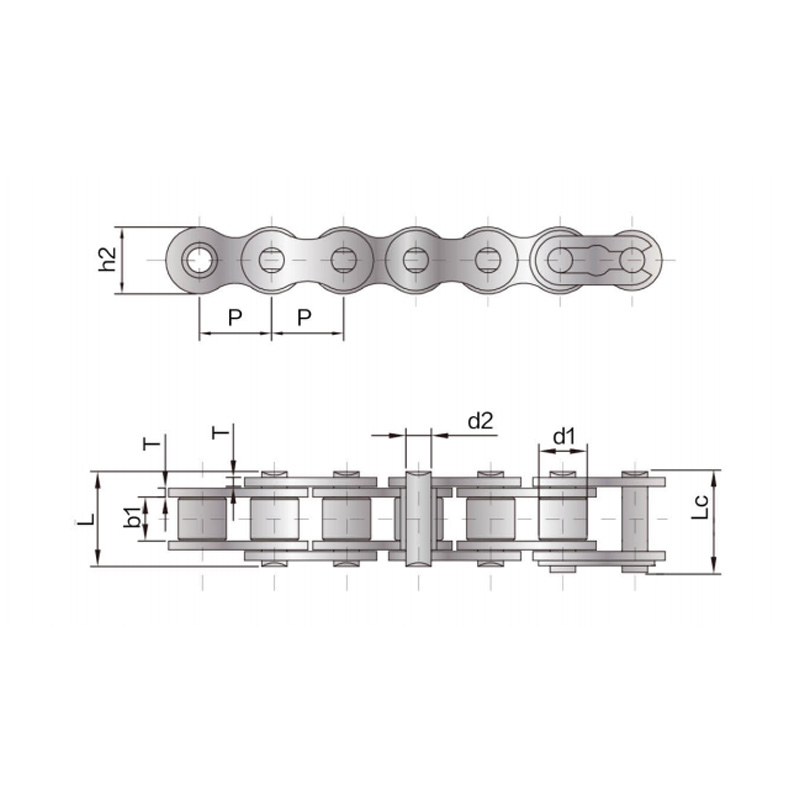
The tensile strength and fatigue strength of the B series short pitch precision roller chain reach 1...
See Details
The Heavy-duty precision roller chain adopts a thickened chain plate design based on the short-pitch...
See Details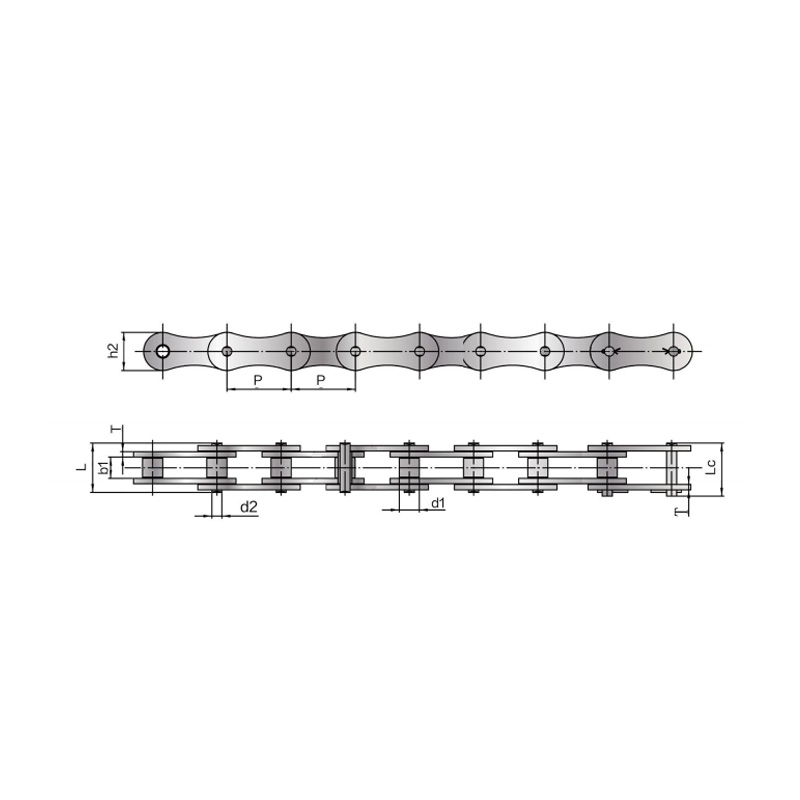
The double pitch driving chain complies with various international standards. The pitch of the doubl...
See Details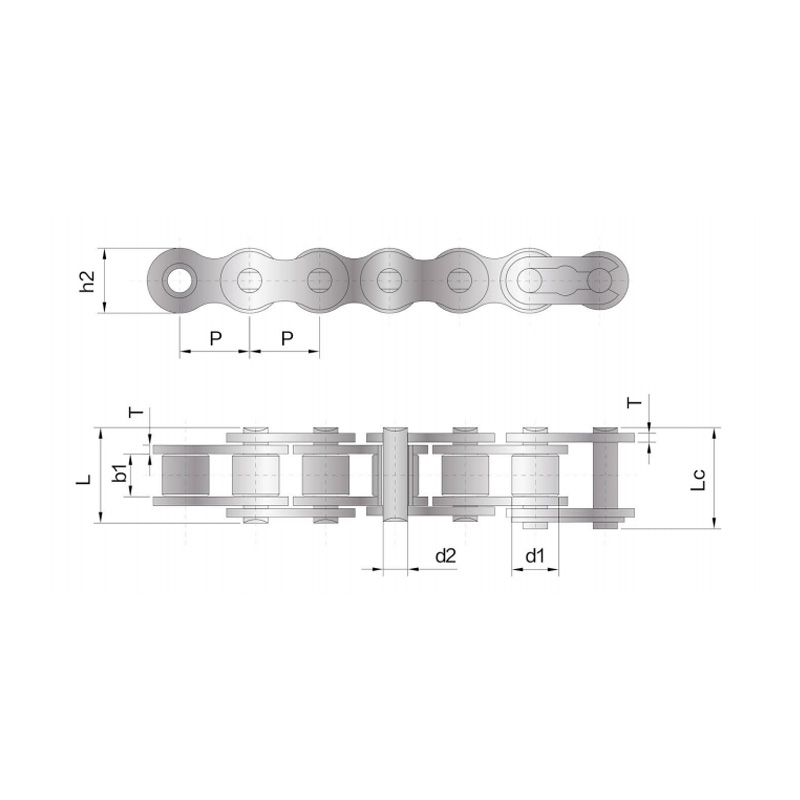
We also produce single row roller drive chains in more sizes and varieties. Customised products, sui...
See Details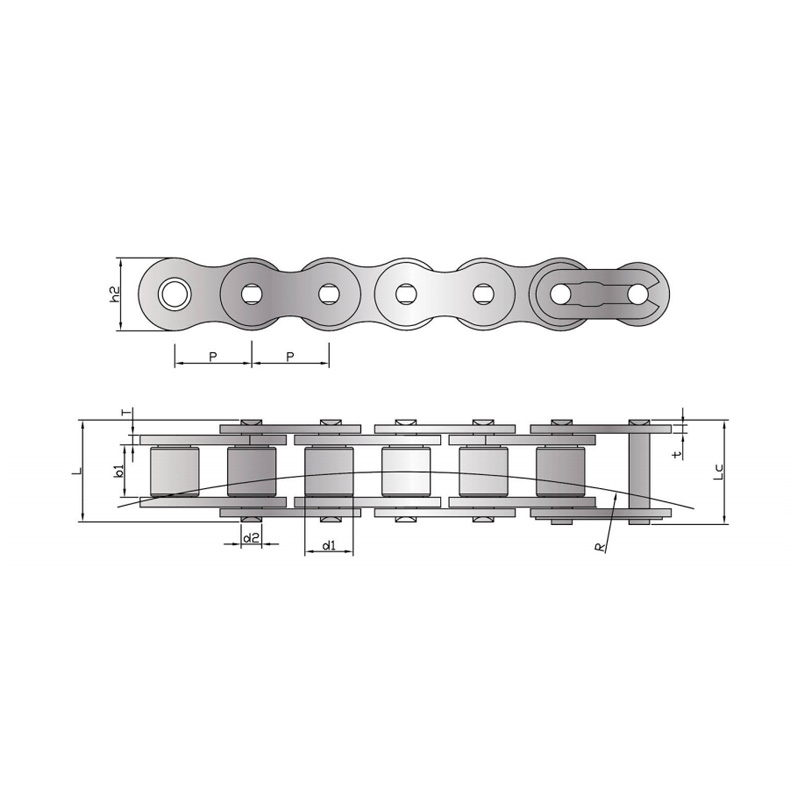
Side bow chain refers to changing the size of parts in the design of short-pitch precision roller ch...
See Details
The Anti-Sidebow chain for pushing window is a functional product with specially designed parts and ...
See Details
The A series short-pitch straight plate precision roller chain has a smaller pitch, a relatively lar...
See Details© Suzhou Fubang Machinery Chain Transmission Manufacturing Co., Ltd. Stainless Steel Roller Chains Manufacturers Conveyor Chains Suppliers
