 简体中文
简体中文 English
 русский
 Español
Fubang is a professional manufacturer specializing in the design, production and sales of stainless steel chains.
Our A series short pitch precision roller chains comply with various international standards and are...
See Details
Content
This guide covers what a 316 chain actually is, how it compares with 304 and duplex 2205, how to read the load and dimension figures on a datasheet, and where 316 genuinely pays for itself on a production line.
A 316 stainless steel chain is a roller or conveyor chain produced from austenitic stainless steel containing roughly 16-18% chromium, 10-14% nickel and 2-3% molybdenum, built to standard pitch dimensions such as ANSI B29.1, ISO 606 or DIN 8187.
The chemistry is the whole point. Chromium forms the passive oxide film that makes the steel stainless. Nickel keeps the structure austenitic and tough down to cryogenic temperatures. Molybdenum is what raises the pitting resistance equivalent number, usually shortened to PREN, from around 18 for 304 to somewhere between 24 and 27 for 316.
Before accepting a quotation for 316 chain, confirm five points:
Choose 316 stainless steel chain when chlorides, washdown chemistry, coastal air or mild acids are part of daily operation; stay with 304 for dry indoor conveying, and step up to duplex 2205 only when chloride levels or loads are high enough to justify roughly double the cost.
| Grade | Typical chain chemistry | PREN | Chloride pitting resistance | Relative chain cost | Typical duty |
| 304 | 18% Cr, 8% Ni | 18-20 | Limited | Baseline | Dry indoor conveying and packaging |
| 316 / 316L | 17% Cr, 11% Ni, 2.2% Mo | 24-26 | Good | 1.4-1.7x | Washdown, chemical and coastal lines |
| 2205 duplex | 22% Cr, 5% Ni, 3.2% Mo, N | 34-36 | Very good | 2.2-2.8x | High chloride or high strength duty |
| 410 / 420 | 12% Cr, hardenable | Around 12 | Poor | 0.6-0.8x | Pins and bushings only, not full chains |
The difference shows up at the failure sites. A 304 chain usually pits first at the pin holes, under washers, and in crevices where cleaning solution collects and cannot rinse away. A 316 chain tolerates chloride levels that would pit 304, but it is not immune. Above roughly 500 ppm chloride combined with elevated temperature, pitting is still possible and duplex becomes the safer selection.
316 pays off when
304 is enough when
A 316 chain is bought on two sets of numbers: the dimensional standard that fixes pitch, roller diameter and pin diameter so the chain runs on standard sprockets, and the strength figures that decide whether it survives the duty.
On dimensions, ANSI B29.1 covers the 25 through 240 series while ISO 606 and DIN 8187 cover the 06B through 32B range; both share the same 12.7 mm pitch at the most common washdown size. On strength, minimum tensile strength is a single pull-to-failure figure and is not a working load. Allowable load is that figure divided by a safety factor, usually 5:1 to 7:1 for drives and lower for slow conveyor duty.
| Field | What it tells you | Why it matters |
| Chain number and standard | Pitch, roller diameter and inner width, for example 08B-1 to ISO 606 | Determines sprocket compatibility and interchangeability |
| Minimum tensile strength | Load at which the chain fails in a single pull test | Sets the allowable load once divided by the safety factor |
| Pin and bushing hardness | Surface hardness after hardening or cold work | Controls the elongation rate in wet or abrasive duty |
| Material certificate | Heat number and grade, for example 316L to EN 1.4404 | Confirms the chain is 316 and not 304 |
| Attachment and temperature limits | Plate type, hole spacing, pin extension and lubricant range | Decides fixture options and where the lubricant, not the steel, sets the ceiling |
316 stainless steel chain earns its premium in five recurring situations: food and beverage washdown lines, pharmaceutical and chemical processing, coastal or marine installations, wastewater and sludge handling, and hot processes where heat and moisture arrive together.
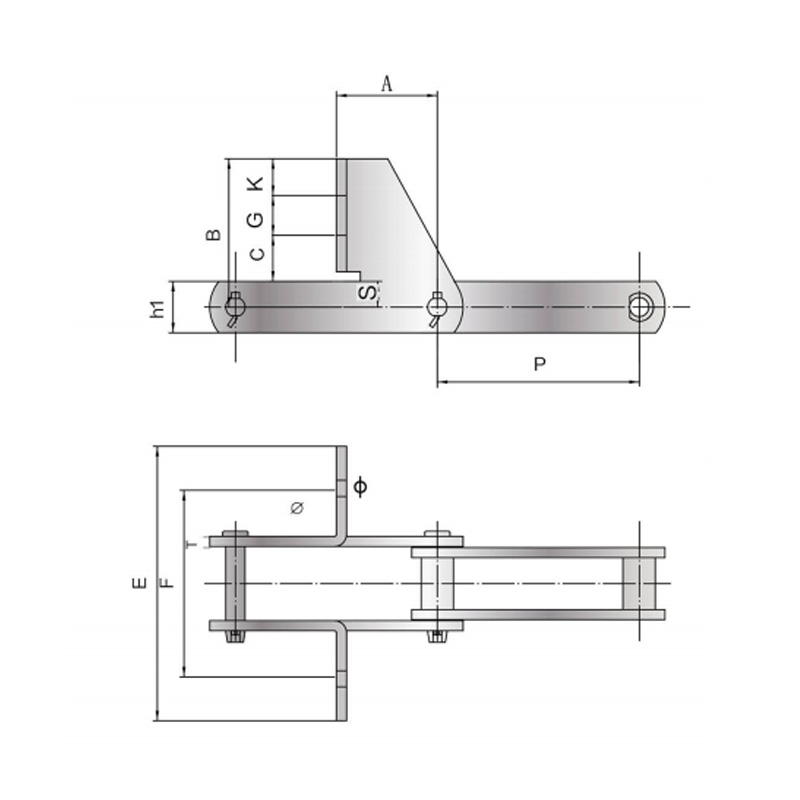 Stainless Steel Conveyor Chain with Attachment Plates for Sewage TreatmentStainless steel conveyor chain with adjustable attachment plates for removing solids in sewage and similar waste-handling duties, available in listed HSS/HSC models.View Product →
Specify a 316 chain by working through six points in order: environment chemistry, load, speed and shock, standard and pitch, lubrication, and the matching sprocket.
A 316 chain lasts longest when it is inspected on a fixed interval, lubricated with a compatible product, and replaced together with its sprockets once elongation passes roughly 1.5%.
 Custom Sprockets for Mechanical Transmission and Chain EngagementSprockets for mechanical transmission in chemical, textile, food, instrumentation, and petroleum industries, offered in flat, hub, and assembly types with custom options.View Product →
Slightly, yes. Cold working during plate stamping and pin forming transforms a small amount of austenite into martensite, so a 316 chain often attracts a magnet at the pin and plate edges. That is normal and is not evidence of the wrong grade, which is why a magnet test cannot confirm 316.
As a working range, expect 40% to 70% more per metre for an equivalent size and standard. The gap follows nickel and molybdenum prices and narrows on large pitches, where manufacturing cost takes up a bigger share of the total.
Yes, and it is the usual choice for washdown lines. Specify food-grade lubrication to NSF H1 and confirm that surface finish and cleaning regime meet the hygiene standard of the site. The alloy itself is rarely the limiting factor.
Ask for the material certificate showing a heat number and a grade such as 316L to EN 1.4404, and make sure it covers pins, bushings and rollers rather than side plates alone. Chemical analysis of a sample is the only conclusive test.
If you are specifying chain for a washdown, chemical or coastal line, send the application details, the standard and pitch you need, and the environment the chain will actually see. Grade verification, tolerances and lead time can then be confirmed against your real duty instead of a catalogue average, and you can start through the contact page.
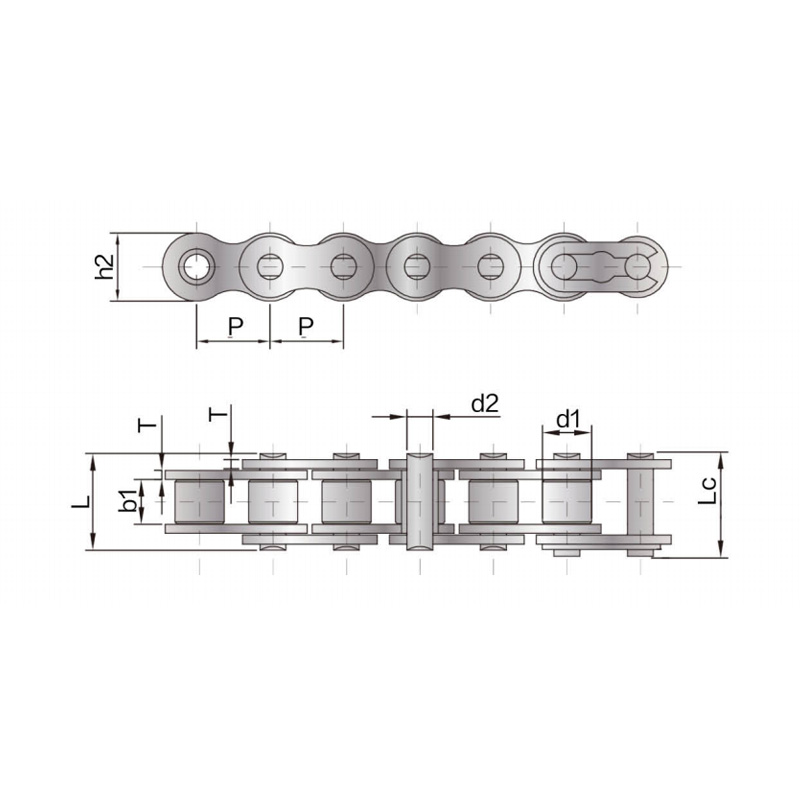
Our A series short pitch precision roller chains comply with various international standards and are...
See Details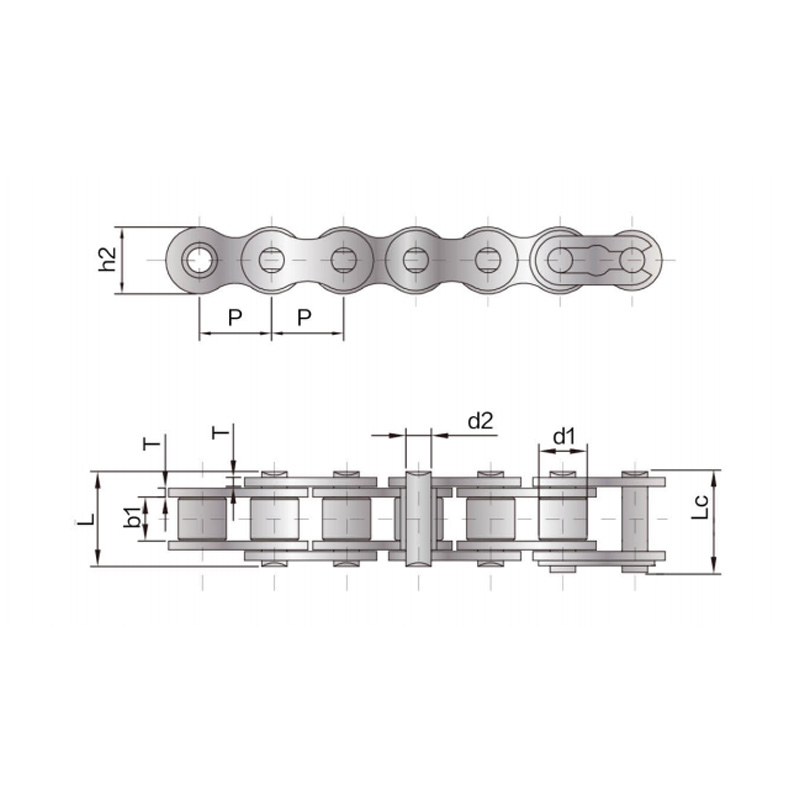
The tensile strength and fatigue strength of the B series short pitch precision roller chain reach 1...
See Details
The Heavy-duty precision roller chain adopts a thickened chain plate design based on the short-pitch...
See Details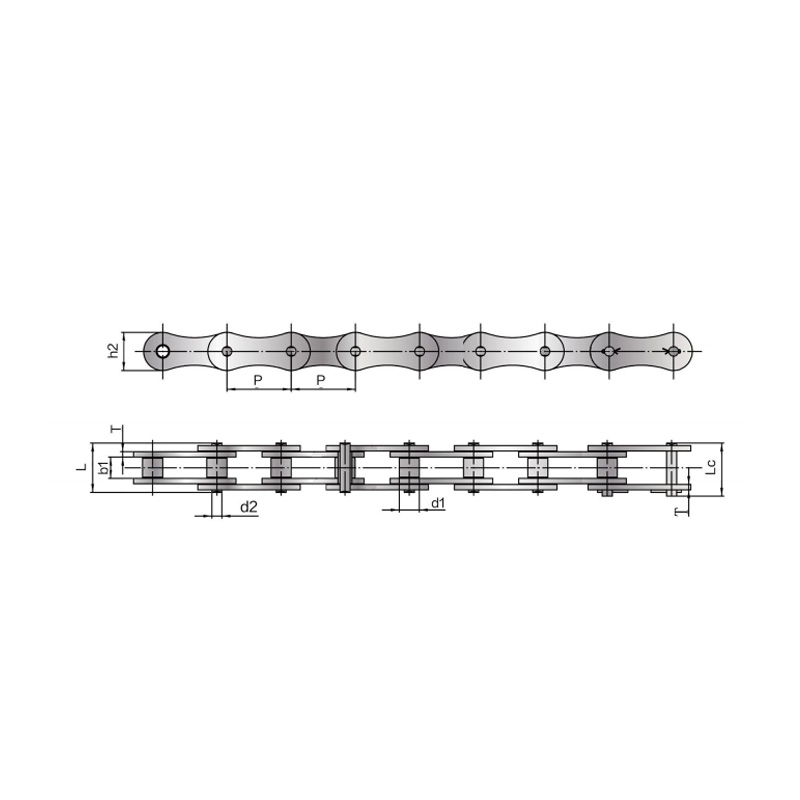
The double pitch driving chain complies with various international standards. The pitch of the doubl...
See Details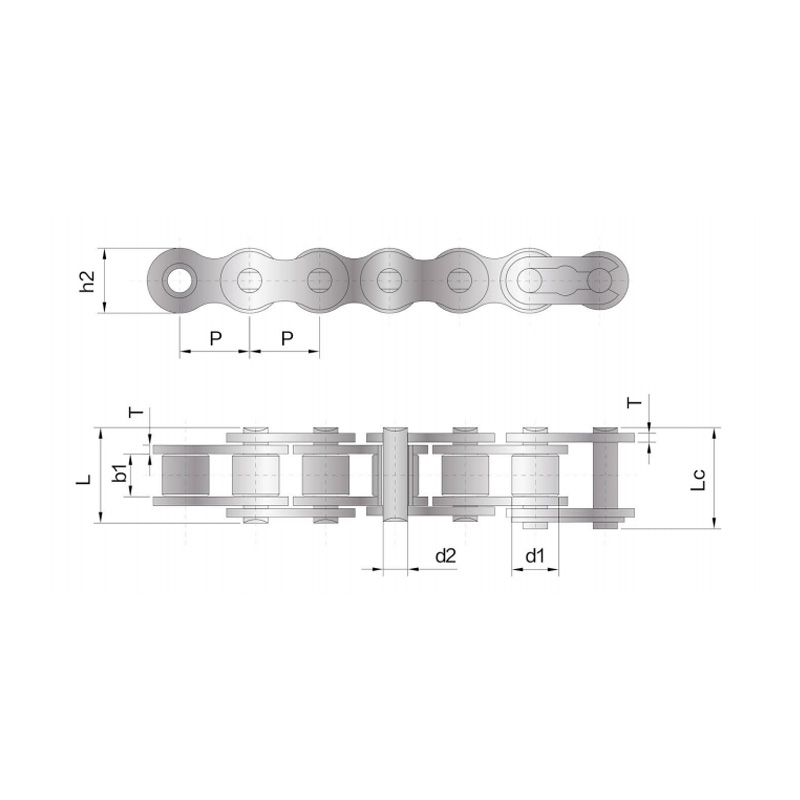
We also produce single row roller drive chains in more sizes and varieties. Customised products, sui...
See Details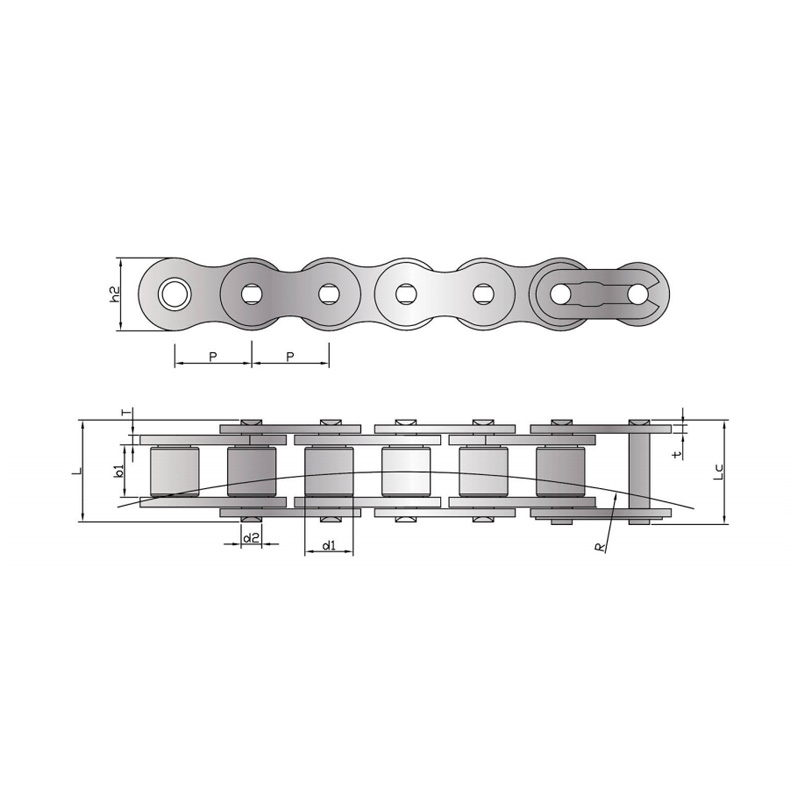
Side bow chain refers to changing the size of parts in the design of short-pitch precision roller ch...
See Details
The Anti-Sidebow chain for pushing window is a functional product with specially designed parts and ...
See Details
The A series short-pitch straight plate precision roller chain has a smaller pitch, a relatively lar...
See Details© Suzhou Fubang Machinery Chain Transmission Manufacturing Co., Ltd. Stainless Steel Roller Chains Manufacturers Conveyor Chains Suppliers
