 简体中文
简体中文 English
 русский
 Español
Fubang is a professional manufacturer specializing in the design, production and sales of stainless steel chains.
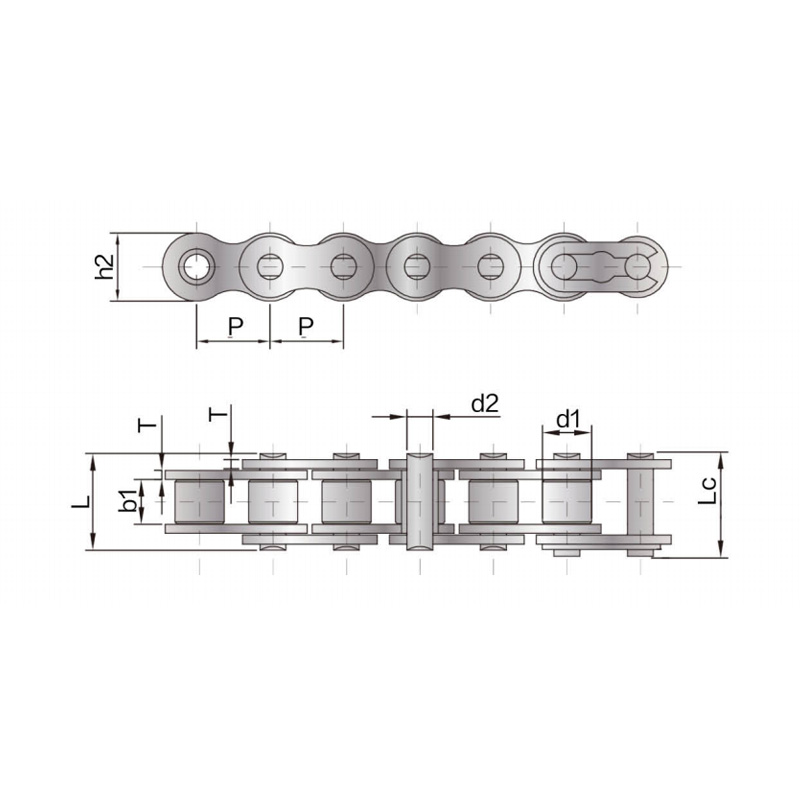
Our A series short pitch precision roller chains comply with various international standards and are...
See Details
Content
A speed conveyor chain doesn't move faster by spinning the motor harder. The chain itself runs at a fixed mechanical speed, but its structure lets the material riding on top travel at a different, adjustable rate. That distinction matters on real production lines, where one station needs parts to arrive slowly for inspection and the next needs them to clear fast for packing.
This is why the chain is built around two separable variables: chain travel speed and material conveying speed. Once a plant separates those two, line balancing stops being a constant battle of swapping motors and gearboxes for every speed change downstream.
It's a small structural difference on paper, but it reshapes how an entire system gets specified. Engineers no longer size the drive around the fastest station on the line; they size it around the chain's rated travel speed, then let the chain's own design absorb the output variation. That single change cuts down how many separate drive units a multi-station line actually needs.
Chain speed is not a number you pick freely. It's the output of three fixed variables: chain pitch, sprocket diameter, and tooth count. Larger pitch and smaller sprockets create a stronger "polygonal effect," where the chain doesn't travel in a smooth line but rather steps up and down slightly with each tooth engagement. At low speed this is invisible. Push the speed too high on the wrong pitch-sprocket combination, and that stepping becomes pulsing or surging that shortens chain and bearing life fast.
The fix is rarely a stronger chain. It's matching pitch to sprocket diameter so the chordal action stays smooth, then pairing the right sprocket selection and maintenance guide with your operating speed. Lines that need genuinely higher throughput, rather than just adjustable output speed, often do better with double-pitch conveyor chains designed for high-speed transfer, since the longer pitch is engineered for that load-speed balance from the start.
Specification sheets win or lose orders. Before confirming any speed conveyor chain, check pin diameter, roller dimension, and weight per meter against your existing sprocket set and frame width — a mismatch here is the most common cause of installation delays.
| Model | Pitch P (mm) | Roller dia. d1 max (mm) | Pin dia. d2 max (mm) | Pin length L max (mm) | Weight (kg/m) |
|---|---|---|---|---|---|
| SSC2030W | 19.05 | 11.91 | 3.28 | 24 | 0.52 |
| SSC2040W | 25.4 | 15.88 | 3.96 | 31 | 0.79 |
| SSC2050W | 31.75 | 19.05 | 5.08 | 39.5 | 1.36 |
| SSC2060HW | 38.1 | 22.23 | 5.94 | 48.8 | 2.19 |
| SSC2080W | 50.8 | 28.58 | 7.92 | 66.2 | 4.06 |
Note the jump in weight per meter from 0.52 kg/m to 4.06 kg/m across this single product line. Picking the heavier-than-needed model adds load on every bearing and sprocket downstream, while undersizing it on a fast-cycling line invites the pulsing problem covered above.
Two failure patterns show up repeatedly on high-cycle lines. The first is surging from excessive speed on long, unsupported spans — the chain effectively outruns its own tension control. The second is "slip-stick," which actually happens at the opposite extreme: low speed combined with over-lubricated rollers, where the roller stops rotating and skids instead, causing uneven wear strips and inconsistent product spacing.
Both are diagnosable from wear patterns, not guesswork. Flattened spots on rollers point to slip-stick; elongated pitch and loose plates point to surging. A conveyor chain maintenance and troubleshooting guide covers the inspection intervals that catch these before a full chain replacement becomes the only option. For lines moving lighter, friction-sensitive goods, switching to plastic conveyor chain for low-friction operation removes the lubrication variable from the equation entirely.
Start with your actual conveying speed target, not the chain speed you assume you need — they're rarely the same number. Then confirm pitch against your sprocket inventory, check the weight-per-meter against your drive motor's rated torque, and decide whether your application calls for fixed-speed transport or the adjustable output a speed conveyor chain provides.
If your line accumulates product at varying rates rather than running continuously, it's worth reviewing a free flow vs. standard conveyor chain comparison before committing to either design. None of this needs to be solved from a catalog alone — a five-minute review of your sprocket spec and motor rating against the chain's data sheet will tell you faster than trial-and-error ever will.
Suzhou Fubang manufactures both standard and double-pitch speed conveyor chain series in stainless steel SS304 through SS2205, and can match dimensions to an existing sprocket set on request. Send your current spec sheet, and our engineering team will confirm pitch and load compatibility before you place an order.
Our A series short pitch precision roller chains comply with various international standards and are...
See Details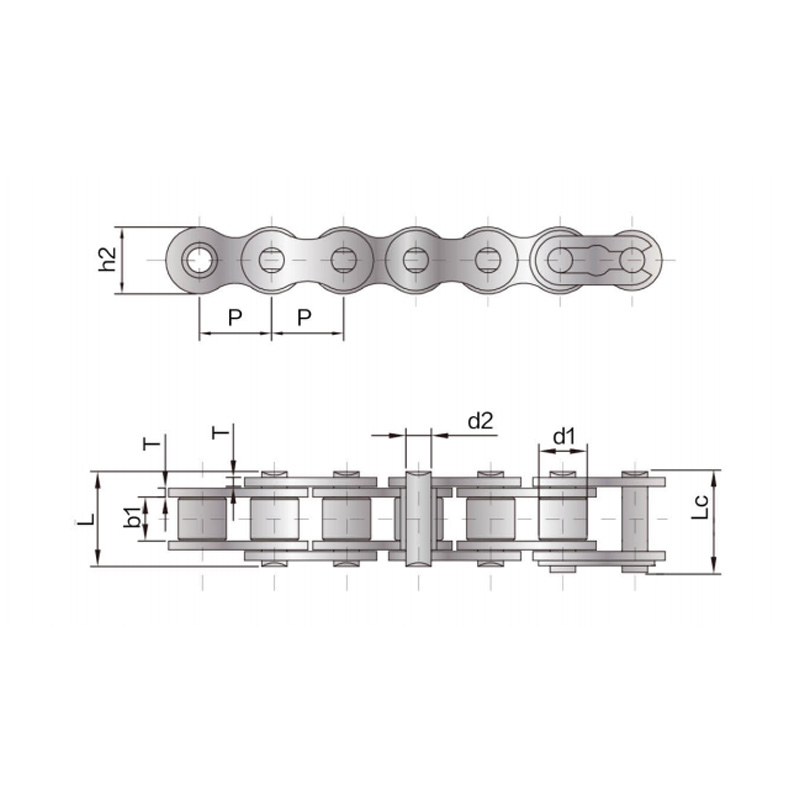
The tensile strength and fatigue strength of the B series short pitch precision roller chain reach 1...
See Details
The Heavy-duty precision roller chain adopts a thickened chain plate design based on the short-pitch...
See Details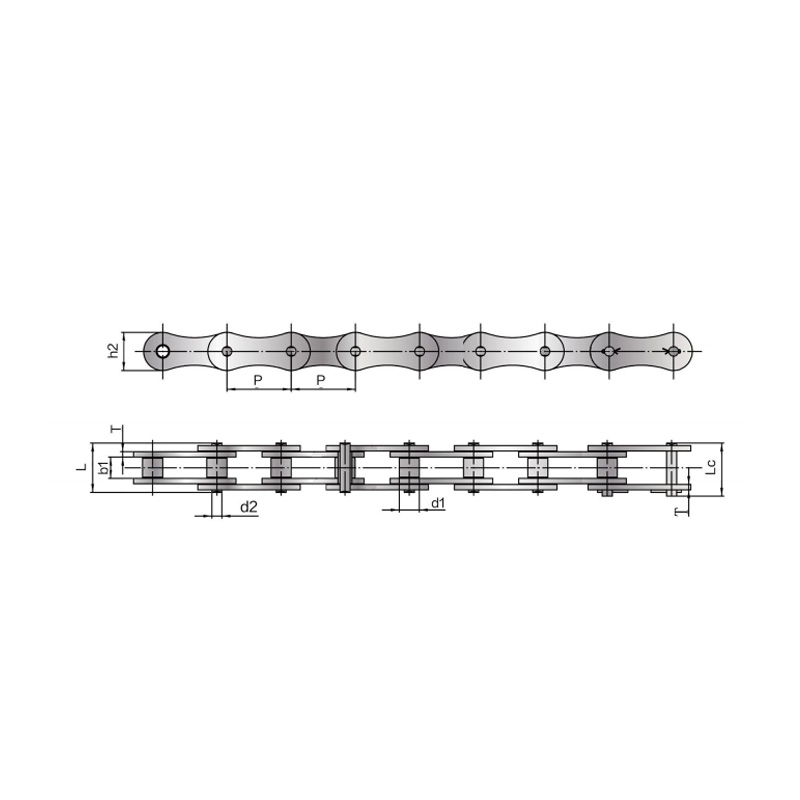
The double pitch driving chain complies with various international standards. The pitch of the doubl...
See Details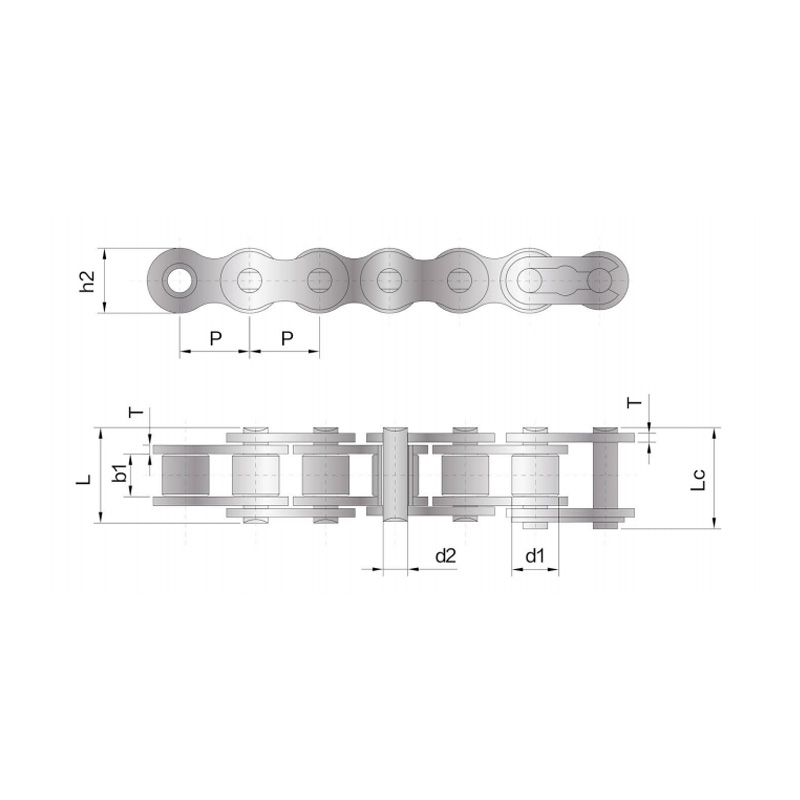
We also produce single row roller drive chains in more sizes and varieties. Customised products, sui...
See Details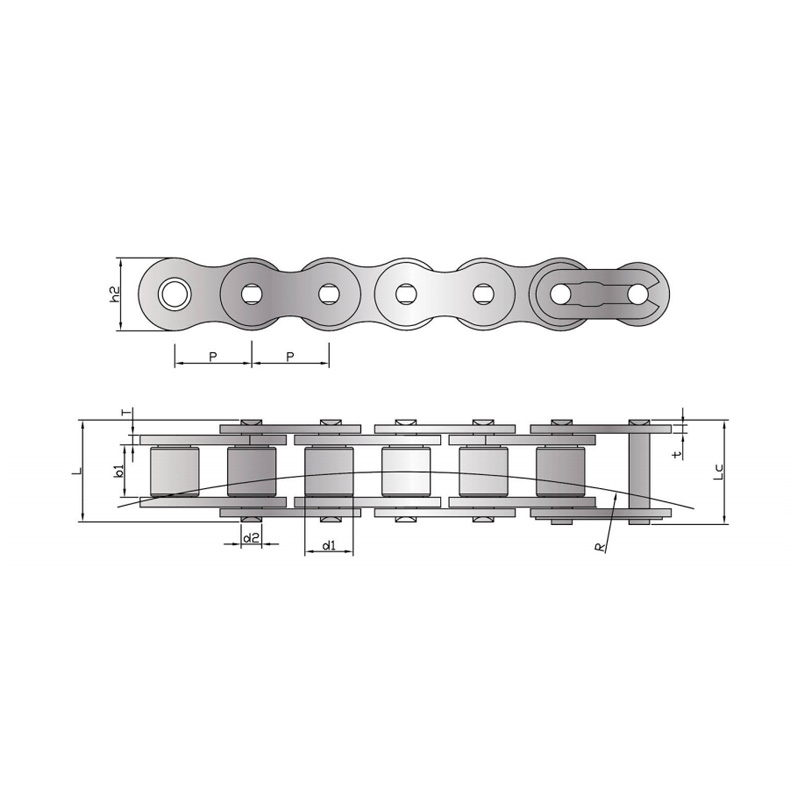
Side bow chain refers to changing the size of parts in the design of short-pitch precision roller ch...
See Details
The Anti-Sidebow chain for pushing window is a functional product with specially designed parts and ...
See Details
The A series short-pitch straight plate precision roller chain has a smaller pitch, a relatively lar...
See Details© Suzhou Fubang Machinery Chain Transmission Manufacturing Co., Ltd. Stainless Steel Roller Chains Manufacturers Conveyor Chains Suppliers
